| Stormwater BMP | General Overview | Drainage Area | Pollutant Removal Mechanism | Location in Treatment Train | Pollutant Removal 1,2 | Potential Application 1 | Cost | Maintenance Requirements 3 | Pre‐treatment 4 | Habitat Quality 5 |
|---|---|---|---|---|---|---|---|---|---|---|
Infiltration Basin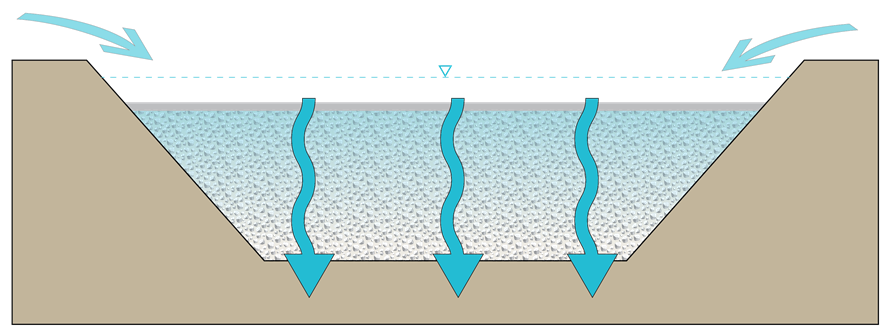 |
A natural or constructed impoundment that captures, temporarily stores and infiltrates the design volume of water into the surrounding naturally permeable soil over several days. In the case of a constructed basin, the impoundment is created by excavation or embankment. | 5 to 50 acres | Sedimentation / Infiltration | End | TSS: High TN: Medium/High TP: Medium/High Chloride: Low Metals: High Oils and Grease: High Pathogens: High |
Residential: Yes Commercial: Yes Ultra Urban: Limited Industrial: Limited Retrofit: Yes Highway/Road: Limited |
Low $0.5‐$1.3 CF | Simple‐Intensive | Needed Oil/Water Separator, Vegetated Filter, Sediment Basin, Water Quality Inlets |
Low |
Bioinfiltration Basin |
Often called rain gardens, bioinfiltration basins use engineered or mixed soils and plantings to capture and infiltrate runoff. Pollutants are removed using highly permeable soils that are able to draw the basin down in less than 48 hours. | < 5 acres | Sedimentation / Infiltration | Beginning | TSS: High TN: Low/Medium TP: Medium/High Chloride: Low Metals: High Oils and Grease: High |
Residential: Yes Commercial: Yes Ultra Urban: Limited Industrial: Limited Retrofit: Yes Highway/Road: Limited |
Low $0.5‐$1.3 CF | Simple‐Intensive | Needed Oil/Water Separator, Vegetated Filter, Sediment Basin, Water Quality Inlets |
Medium‐High |
| Infiltration Trench Synonym: Infiltration Gallery  |
A shallow excavated trench that is backfilled with a coarse stone aggregate allowing for the temporary storage of runoff in the void space of the material. Discharge of this stored runoff occurs through infiltration into the surrounding naturally permeable soil. | < 5 acres | Infiltration | nd | TSS: High TN: Medium/High TP: Medium/High Chloride: Low Metals: High Oils and Grease: High Pathogens: High |
Residential: Yes Commercial: Yes Ultra Urban: Yes Industrial: Limited Retrofit: Yes Highway/Road: Yes |
Low $1‐$4 CF | Medium | Needed Oil/Water Separator, Vegetated Filter, Sediment Basin, Water Quality Inlets |
None |
| Dry Well Synonym: Infiltration Tube, French Drain, Soak‐Away Pits, Soak Holes  |
A smaller variation of an infiltration trench. It is a subsurface storage facility (a structural chamber or an excavated pit backfilled with a coarse stone aggregate) that receives and temporarily stores stormwater runoff. Discharge of this stored runoff occurs through infiltration into the surrounding naturally permeable soil. Due to their size, dry wells are typically designed to handle stormwater runoff from smaller drainage areas. | < 1 acres | Infiltration | Throughout | TSS: High TN: Medium/High TP: Medium/High Chloride: Low Metals: High Oils and Grease: High Pathogens: High |
Residential: Yes Commercial: Yes Ultra Urban: Yes Industrial: Limited Retrofit: Yes Highway/Road: No |
Low $1‐$4 CF | Medium | Needed Oil/Water Separator, Vegetated Filter, Water Quality Inlets |
None |
Underground Infiltration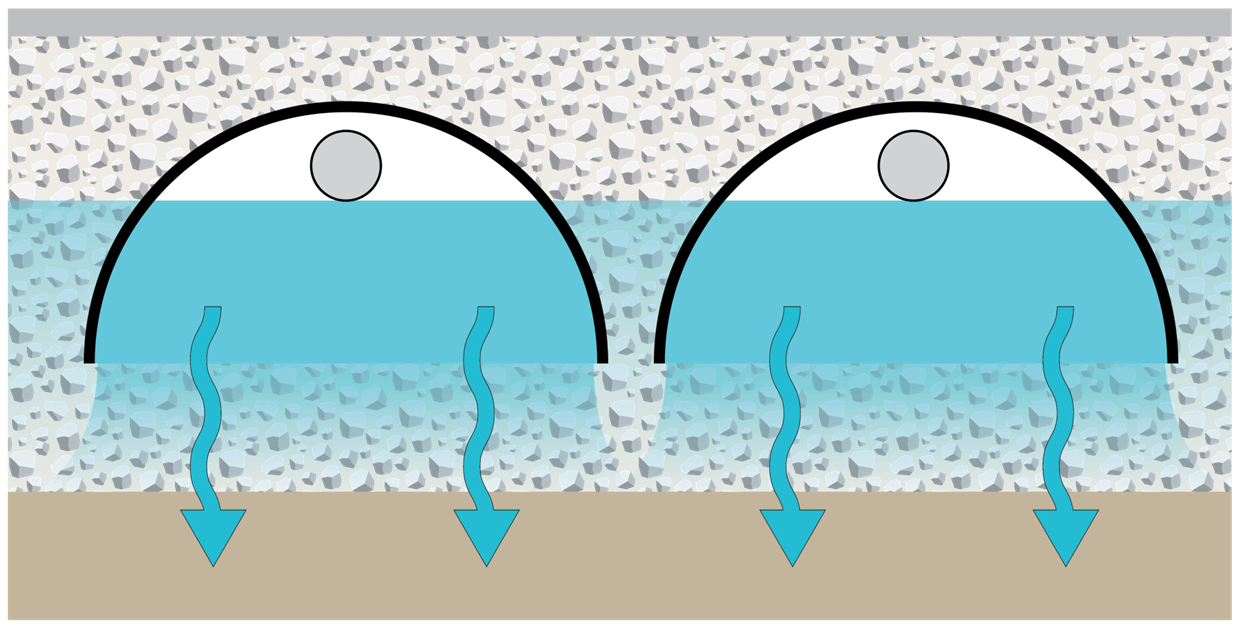 |
Several underground infiltration systems, including pre‐manufactured pipes, vaults, and modular structures, have been developed as alternatives to infiltration basins and trenches for space‐limited sites and stormwater retrofit applications. These systems are similar to infiltration basins and trenches in that they are designed to capture, temporarily store and infiltrate the design volume of stormwater over several days. Discharge of this stored runoff occurs through infiltration into the surrounding naturally permeable soil. | < 10 acres | Sedimentation / Infiltration / Flotation/Skimming | End | TSS: High TN: Medium/High TP: Medium/High Chloride: Low Metals: High Oils and Grease: High Pathogens: High |
Residential: Yes Commercial: Yes Ultra Urban: Yes Industrial: Limited Retrofit: Yes Highway/Road: Limited |
High 14 CF | Medium | Needed Oil/Water Separator, Water Quality Inlets |
None |
Dry Swale with Check Dams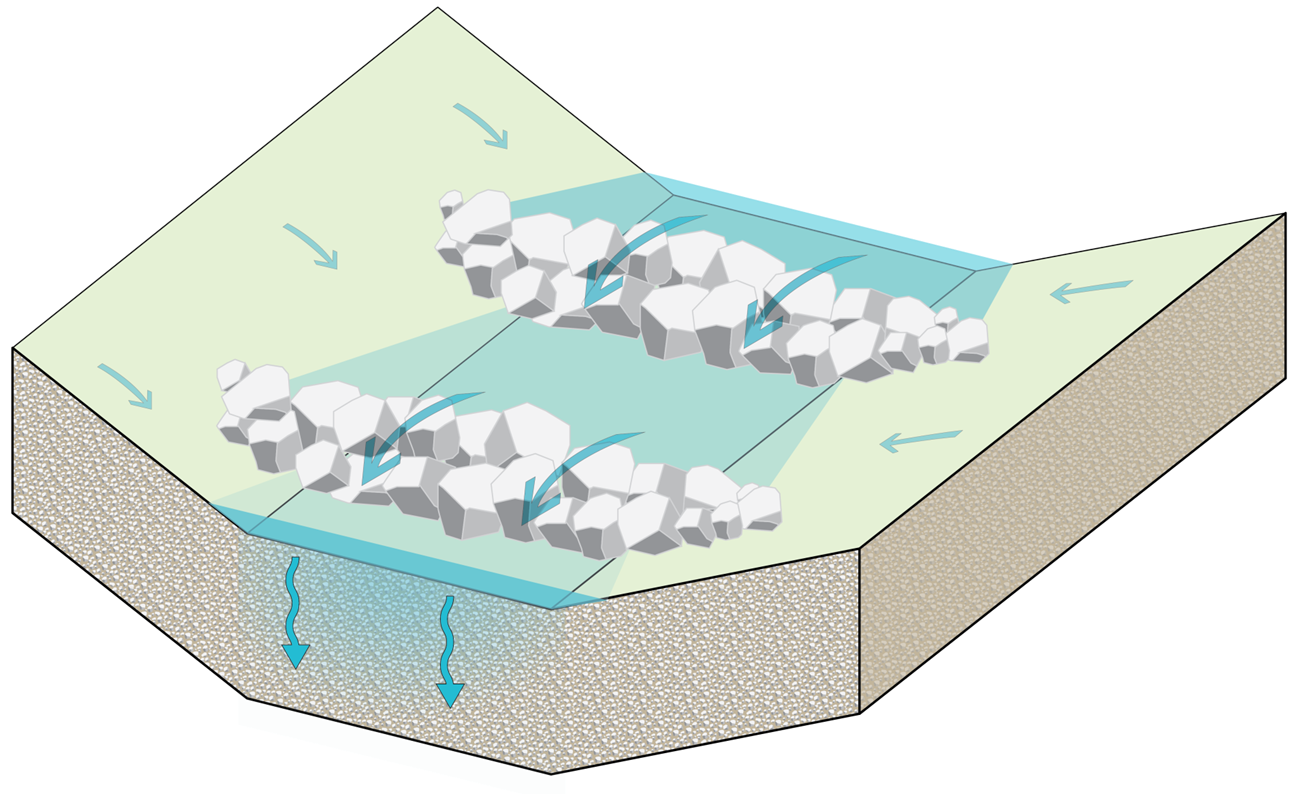 |
Similar to vegetated swales designed for stormwater conveyance, dry swales with check dams are designed as linear, multi‐celled stormwater infiltration BMPs. By incorporating earthen, structural or rock check dams, runoff is retained and infiltrated along a series of narrow, shallow basins or cells. Coarse vegetation such as decorative plantings or even turf grass slow runoff movement. This system is designed to move, store, and infiltrate runoff from impervious surfaces such as linear roadways or parking lots. | < 1 acres | Sedimentation / Infiltration | Throughout | TSS: High TN: Low/Medium TP: Low/Medium Chloride: Low Metals: High Oils and Grease: High Pathogens: Medium |
Residential: Yes Commercial: Yes Ultra Urban: Limited Industrial: Yes Retrofit: Limited Highway/Road: Yes |
Low $.5‐$1.3 CF | Simple‐Medium | Needed Vegetated Filter, Water Quality Inlets |
Low‐Medium |
Permeable Pavement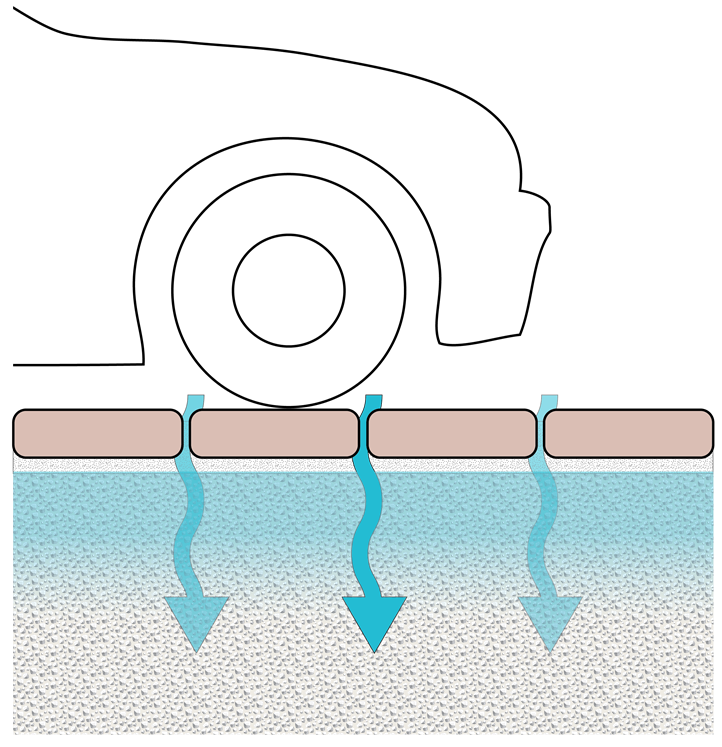 |
Permeable pavements are paving surfaces that allow stormwater runoff to filter through surface voids into an underlying stone reservoir for infiltration and/or storage. The most commonly used permeable pavement surfaces are pervious concrete, porous asphalt, and permeable interlocking concrete pavers (PICP). all permeable pavements have a similar structure, consisting of a surface pavement layer, an underlying stone aggregate reservoir layer, optional underdrains and geotextile over uncompacted soil subgrade. Discharge of this stored runoff occurs through infiltration into the surrounding naturally permeable soil. | not to exceed twice the surface area of the permeable pavement | Infiltration | Beginning | TSS: High TN: Medium/High TP: Medium/High Chloride: Low Metals: High Oils and Grease: High |
Residential: Yes Commercial: Yes Ultra Urban: Yes Industrial: Limited Retrofit: Yes Highway/Road: Limited |
Medium 3‐10 CF | Medium | No Pretreatment Required | None |
Tree Trench/Tree Box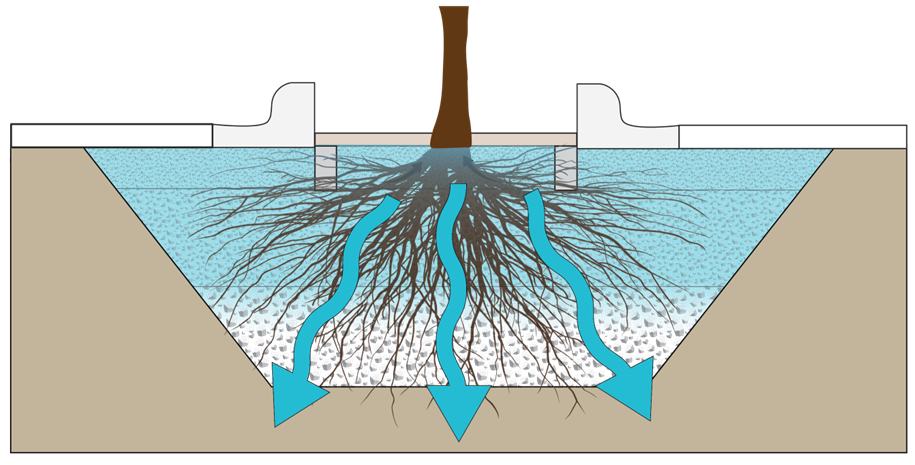 |
A system of trees that are connected by an underground infiltration structure. The system consists of a trench lined with geotextile fabric with structural stone, gravel or soil boxes in which the trees are placed. Tree systems consist of an engineered soil layer designed to treat stormwater runoff via filtration through plant and soil media, and through evapotranspiration from trees. Discharge of this stored runoff occurs through infiltration into the surrounding naturally permeable soil. | < 5 acres | Infiltration, Transpiration | Throughout | TSS: High TN: Medium/High TP: Medium/High Chloride: Low Metals: High Oils and Grease: High Pathogens: High |
Residential: Limited Commercial: Yes Ultra Urban: Yes Industrial: Limited Retrofit: Yes Highway/Road: Limited |
High $1.80 ‐ $12.70 CF based on recommended soil volume of 1,414 CF per tree |
Intensive | Needed Oil/Water Separator, Water Quality Inlets |
Medium |
|
||||||||||
References:
- Maniquiz et al., 2010; NPRPD, 2007
- Metropolitan Council. 2001. Urban Small Sites Best Management Practice Manual
- Minnesota Pollution Control Agency. 2000. Best Management Practices Manual.
- Pennsylvania Stormwater Manual, 2006
- Schueler, 1987, 1992; USEPA 1993b
- Hunt, W.F. 2011. Urban Waterways: Maintaining Permeable Pavements. Publication of North Carolina State University and North Carolina A&T State *University. August 2011.
- University of Wisconsin – Extension. 2000. Wisconsin Storm Water Manual: Technical Design Guidelines for Storm Water Management Practices.
- Winer, R. 2000. National Pollutant Removal Performance Database.