Green Infrastructure: Bioretention practices can be an important tool for retention and detention of stormwater runoff. Because they utilize vegetation, bioretention practices provide additional benefits, including cleaner air, carbon sequestration, improved biological habitat, and aesthetic value.
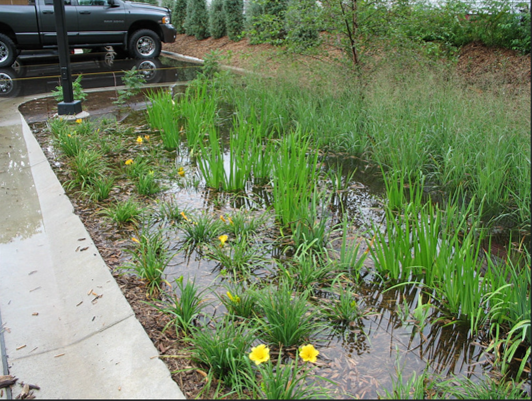
Bioretention practices include biofiltration and bioinfiltration best management practices. Biofiltration (bioretention with underdrains) is designed to retain solids and associated pollutants by filtering. A typical method for assessing the performance of of BMPs with underdrains is therefore measuring and comparing pollutant concentrations at the influent and effluent. Bioinfiltration (bioretention BMP without underdrains) are more difficult to assess, although considering only potential impacts to surface waters, a properly functioning infiltration system is considered to be highly performing.
Related pages
- Bioretention terminology (including types of bioretention)
- Overview for bioretention
- Design criteria for bioretention
- Construction specifications for bioretention
- Operation and maintenance of bioretention
- Cost-benefit considerations for bioretention
- Calculating credits for bioretention
- Soil amendments to enhance phosphorus sorption
- Summary of permit requirements for bioretention
- Supporting material for bioretention
- External resources for bioretention
- References for bioretention
- Requirements, recommendations and information for using bioretention with no underdrain BMPs in the MIDS calculator
- Requirements, recommendations and information for using bioretention with an underdrain BMPs in the MIDS calculator