Stormwater is an all-inclusive term that refers to water generated from precipitation events, including rainfall and snowmelt. When this water hits the ground, it eventually does one of the following:
- soaks (infiltrates) into the ground
- evaporates back into the atmosphere
- runs off the land to a nearby surface water (pond, lake, stream, river, etc.)
Stormwater runoff is the portion of stormwater that runs off to a surface water. Many factors affect how much of the stormwater will run off, including the following.
- The temperature determines if the precipitation is frozen and how fast it melts. Snow that accumulates during winter may melt quickly in spring, which can lead to flooding. High temperatures also increase the amount of water that evaporates.
- Vegetation can slow the rate of runoff and take up water, thus reducing the amount of runoff.
- Runoff will increase as the slope of the land surface increases.
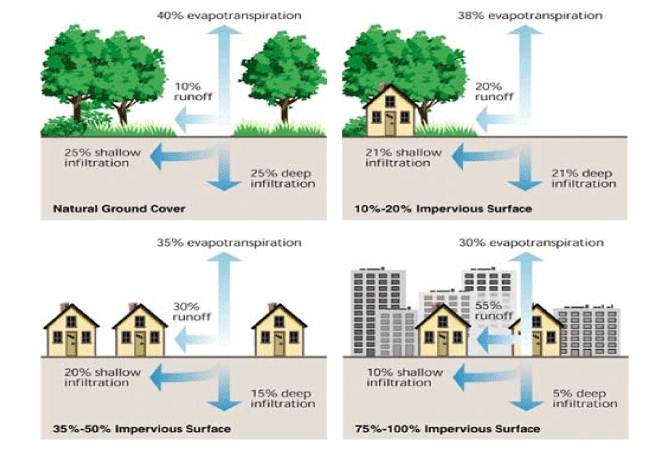
- The most important factor affecting stormwater runoff is the makeup of the surface that stormwater runs over. If the surface is sandy (pervious surface) more water soaks in than if the surface is clayey. Impervious surfaces, such as streets and roofs, allow for almost no infiltration. Thus, areas with a high percent of impervious surface will have a large amount of stormwater runoff.
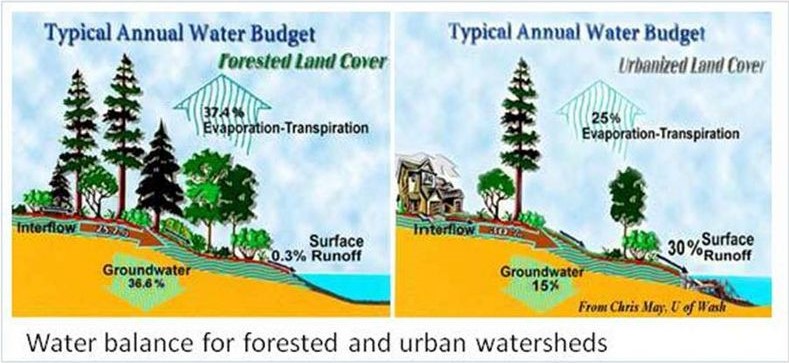
In natural or undeveloped areas, the majority of precipitation is either infiltrated into the soil or returned back to the atmosphere through evapotranspiration. In developed areas, vegetated surfaces may be replaced by hard, or impervious surfaces, resulting in a larger portion of precipitation running off the land to surface waters.
The schematic below illustrates differences in the water budget between forested and urban land uses. In forested watersheds, the majority of annual precipitation infiltrates the soil and is subsequently lost to deep percolation or evapotranspiration. In an urban watershed, increases in impervious surfaces result in increasing amounts of water lost as surface runoff. This surface runoff typically discharges to lakes, rivers or wetlands.