The passage of the Federal Clean Water Act (CWA) in the 1970s initiated a change in the view of pollution in the U.S. No longer was it acceptable to pollute our country’s water resources. The initial focus of implementing the provisions of the CWA was logically on point sources of pollution, or those discharges coming from the end of an industrial or municipal wastewater pipe. Progress in addressing these discharges was made rapidly, although vigilance is still required to assure continued protection.
In the 1990s the United States Environmental Protection Agency (USEPA) began to apply requirements of the CWA to stormwater runoff. Owners and operators of certain storm drainage systems are now required to comply with design, construction, and maintenance requirements set by the MPCA for the State of Minnesota. Manual users are also encouraged to check the Center for Watershed Protection for much more information on the behavior of stormwater and links to many additional sources of information.
Physical changes to the drainage system
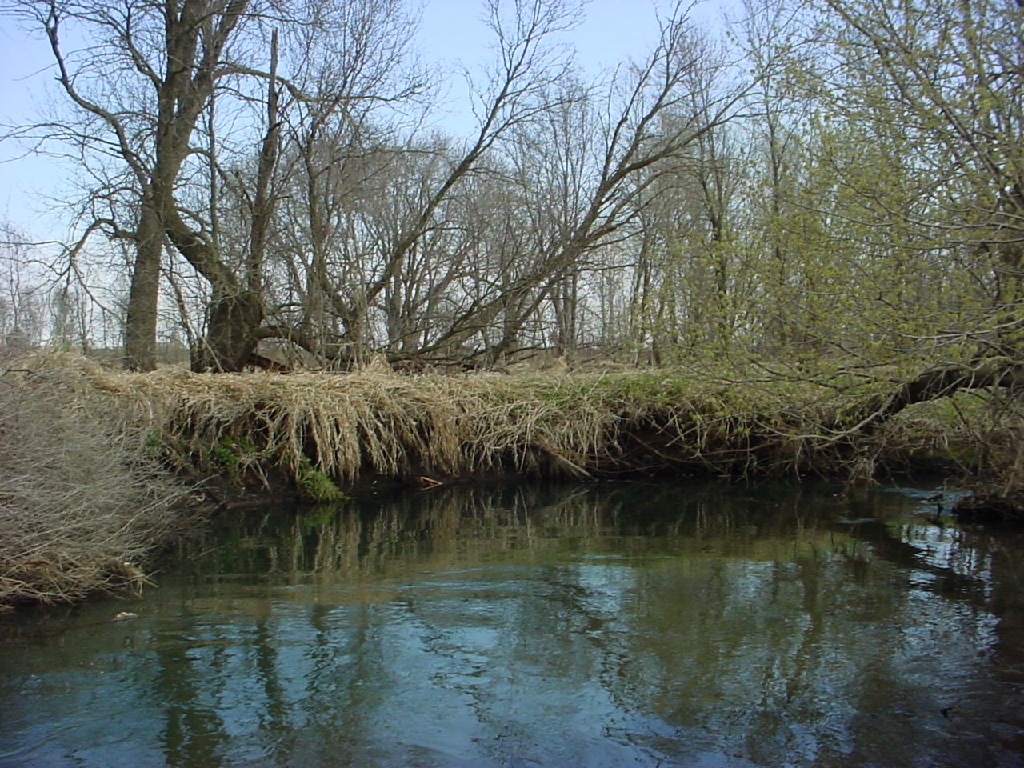
The changes in the landscape that occur during the transition from rural and open space to urbanized land use have a profound effect on the movement of water off of the land. The problems associated with urbanization originate in the changes in landscape, the increased volume of runoff, and the quickened manner in which it moves. Urban development within a watershed has a number of direct impacts on downstream waters and waterways, including changes to stream flow behavior and stream geometry, degradation of aquatic habitat, and extreme water level fluctuation. The cumulative impact of these changes should be recognized as a stormwater management approach is assembled.
Changes to stream flow
Urban development alters the hydrology (rate and volume) of watersheds and streams by disrupting the natural water cycle (Georgia Stormwater Manual, 2001). The changes in streams draining altered watersheds are very apparent as they respond to the altered hydrology during this transition. Although similar changes can occur from intensive agricultural or silvicultural activities, the Manual focuses on the impacts of changes associated with development. Notable responses include:
- Increased runoff volumes: Land surface changes can dramatically increase the total volume of runoff generated in a developed watershed through compaction of soils and introduction of impervious surfaces.
- Increased peak runoff discharges: Rainfall quickly runs off impervious surfaces instead of being released gradually as in more natural landscapes. Increased peak discharges for a developed watershed can be two to five times higher than those for an undisturbed watershed. Control programs that may address runoff rates do not fully address many of the problems associated with stormwater runoff.
- Greater runoff velocities: Impervious surfaces and compacted soils, as well as improvements to the drainage system such as storm drains, pipes, and ditches, increase the speed at which rainfall runs off land surfaces within a watershed.
- Shorter times of concentration: As runoff velocities increase, it takes less time for water to run off the land and reach a stream or other waterbody.
- Increased frequency of bank-full and near bank-full events: Increased runoff volumes and peak flows increase the frequency and duration of smaller bank-full and near bank-full events, which are the primary channel forming events.
- Increased flooding: Increased runoff volumes and peaks also increase the frequency, duration and severity of out-of-bank flooding.
- Lower dry weather flows (Baseflow): Reduced infiltration of stormwater runoff could cause streams to have less baseflow through shallow groundwater inflow during dry weather periods and reduces the amount of rainfall recharging groundwater aquifers.
Changes to stream geomorphology
The changes in the rate and volume of runoff from developed watersheds directly affect the morphology, or physical shape and character, of urban streams, rivers, and often ravines and ephemeral (intermittent) drainageways. Some of the impacts due to urban development include (adapted from the Georgia Stormwater Manual, 2001):
- Stream widening and bank erosion: Stream channels widen to accommodate and convey the increased runoff and higher stream flows from developed areas. More frequent small and moderate runoff events undercut and scour the lower parts of the streambank, causing the steeper banks to slump and collapse during larger storms.
- Higher flow velocities: Increased streambank erosion rates can cause a stream to widen many times its original size due to post-development runoff.
- Stream downcutting: Another way that streams accommodate higher flows is by downcutting their streambed. This causes instability in the stream profile, or elevation along a stream’s flow path, which increases velocity and triggers further channel erosion both upstream and downstream.
- Loss of riparian canopy: As streambanks are gradually undercut and slump into the channel, the vegetation (trees, shrubs, herbaceous plants) that had protected the banks are exposed at the roots. This leaves them more likely to be uprooted or eroded during major storms, further weakening bank structure.
- Changes in the channel bed due to sedimentation: Due to channel erosion and other sources upstream, sediments are deposited in the stream as sandbars and other features, covering the channel bed, or substrate, with shifting deposits of mud, silt and sand.
- Increase in the floodplain elevation: To accommodate the higher peak flow rate, a stream’s floodplain elevation typically increases following development in a watershed due to higher peak flows. This problem is compounded by building and filling in floodplain areas, which cause flood heights to rise even further. Property and structures that had not previously been subject to flooding may now be at risk.
Impacts to aquatic habitat
Perhaps the most significant impact that results from the physical change to urban streams occurs in the habitat value of streams. Impacts on habitat include (adapted from the Georgia Stormwater Manual, 2001):
- Degradation of habitat structure: Higher and faster flows due to development can scour channels and wash away entire biological communities. Streambank erosion and the loss of riparian vegetation reduce habitat for many fish species and other aquatic life, while sediment deposits can smother bottom-dwelling organisms and aquatic habitat.
- Loss of pool-riffle structure: Streams draining undeveloped watersheds often contain pools of deeper, more slowly flowing water that alternate with “riffles” or shoals of shallower, faster flowing water. These pools and riffles provide valuable habitat for fish and aquatic insects. As a result of the increased flows and sediment loads from urban watersheds, the pools and riffles disappear and are replaced with more uniform, and often shallower, streambeds that provide less varied aquatic habitat.
- Reduced baseflows: Reduced baseflows possibly due to increased impervious cover in a watershed and the loss of rainfall infiltration into the soil and water table adversely affect in-stream habitats, especially during periods of drought.
- Increased stream temperature: Runoff from warm impervious areas (e.g.. streets and parking lots), storage in impoundments, loss of riparian vegetation and shallow channels can all cause an increase in temperature in urban streams. Increased temperatures can reduce dissolved oxygen levels and disrupt the food chain. Certain aquatic species, such as trout, can only survive within a narrow temperature range.
- Decline in abundance and biodiversity: When there is a reduction in various habitats and habitat quality, both the number and the variety, or diversity, of organisms (e.g.. wetland plants, fish, and macroinvertebrates) are also reduced. Sensitive fish species and other life forms disappear and are replaced by those organisms that are better adapted to the poorer conditions. The diversity and composition of the benthic, or streambed, community have frequently been used to evaluate the quality of urban streams. Aquatic insects are a useful environmental indicator as they form the base of the stream food chain. Fish and other aquatic organisms are impacted not only by the habitat changes brought on by increased stormwater runoff quantity, but are often also adversely affected by water quality changes due to development and resultant land use activities in a watershed.
Water quality impacts
As impervious surfaces increase, more water flows off of urban surfaces and is delivered faster to receiving waters. The increased activity on these surfaces means that more polluting material is available, as well. Minimizing the mobilization of this material and its impact is the goal of good runoff management and the purpose of this Manual.
Sources of pollution
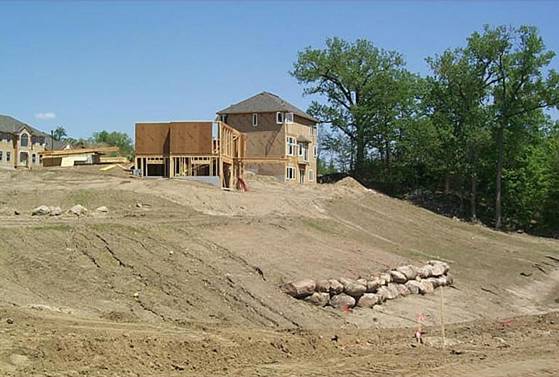
Diffuse sources of pollution, such as that resulting from construction, roadways, parking lots and farm fields, have been a focus for Minnesota water management because they surpass point sources in severity for many pollutants of concern. The conversion of rural and open space land to urban uses is the particular focus of this Manual.
The problems associated with the conversion of land emerge as the land surface changes from one that soaks water into the ground to one that inhibits this infiltration. What used to be a small portion of runoff from a rainfall or snowmelt event becomes a major source of runoff volume. Water that used to soak in collects and flows from these new surfaces with enough energy to erode soil that was formerly held in place with protective vegetative cover and strong roots. Streams generally depend on groundwater supplies during dry periods of the year. When infiltration is reduced or eliminated, this groundwater is no longer available to supply baseflow and support the life of the channel. For the same reason, deeper groundwater aquifer units receive less recharge.
Quantity is not the only problem resulting from changing runoff patterns. The water that washes over these new urban surfaces picks up materials laying upon those surfaces. The sediment from construction erosion, the oil, grease and metals from many automobiles, the fertilizer and pesticides from lawns, and many more new pollutants can adversely impact the receiving waters. There are several nonpoint sources of pollution, each with a distinct set of pollutants of concern.
| Pollution sources | Pollutants of concerna |
|---|---|
| Vehiclular traffic accounts for much of the build-up of contaminants on road surfaces and parking lots. Wear from tires, brake and clutch linings, engine oil and lubricant drippings, combustion products and corrosion, all account for build-up of sediment particles, metals, and oils and grease. Wear on road and parking surfaces also provides sediment and petroleum derivatives from asphalt. Spills from traffic accidents can occur on any street or highway. |
|
| Lawn and garden maintenance of all types of land uses including residential, industrial, institutional, parks, and road and utility right-of-ways accounts for additions of organic material from grass clippings, garden litter and fallen leaves. Fertilizers, herbicides and pesticides all can contribute to pollutant loads in runoff if not properly applied. |
|
| Air pollution fallout of suspended solids from traffic, industrial sources and wind erosion of soils builds up contaminants in soil and on urban surfaces. |
|
| Municipal maintenance activities including road repair and general maintenance (road surface treatment, salting, dust control, etc.). |
|
| Industrial and commercial activities can lead to contamination of runoff from loading and unloading areas, raw material and by-product storage, vehicle maintenance and spills. | Any raw material exposed to runoff |
| Illicit connections of sanitary services, roof/sump drains or industrial process water to storm sewers can cause contamination with organic wastes, nutrients, heavy metals and bacteria. |
|
| Improper disposal of household hazardous wastes can introduce waste oil and a multitude of toxic materials such as paint, solvents, auto fluids, and waste products to storm and sanitary sewers. Note that industrial and commercial hazardous materials are regulated under point source control programs. | Any household material deemed hazardous |
| Pet and wildlife feces and litter introduce organic contamination, nutrients and bacteria. |
|
| Construction activity can introduce heavy loads of sediment from direct runoff, construction vehicles and wind-eroded sediment. Sediment particles also: transport other pollutants that are attached to their surfaces including nutrients, trace metals and hydrocarbons; fills ditches and small streams and clogs storm sewers and pipes, causing flooding and property damage; and reduces the capacity of wetlands, reservoirs and lakes. Construction can also contribute construction debris, material spills and sanitary waste. |
|
| Combined sewer overflowsb (CSOs) and Sanitary Sewer Overflows (SSOs) contain a mixture of sanitary, commercial and often industrial waste, along with surface drainage. |
|
| Runoff from residential driveways and parking areas can contain driveway sealants, oil, salt, and car care products. |
|
|
aRepresentative list only; many additional pollutants can be associated with most of the activities listed Source: (Adapted from The Stormwater Pollution Prevention Handbook, Conservation Toronto and Region, 2001). |
|
Pollutant impacts
The impacts of the various pollutants from nonpoint sources are felt to varying levels. It is important to recognize that the hydrologic balance of most receiving water depends on this runoff water. Simply diverting all of the flow around a water body might help reduce a pollution load, but it could also cause the water body to dry up.
The receiving water quality impacts from urban runoff vary depending upon the quality and quantity of the stormwater and the assimilative capacity, or its natural ability to absorb or accommodate certain pollutants without adverse effects, of the receiving waterbody (Conservation Toronto and Region, 2001). Depending on the chemical, biological and physical character of the waterbody, its assimilative capacity can be quite different and tolerance to pollutants may vary greatly. Some waterbodies are inherently more sensitive to types or classes of pollutants than others. For example, lakes are more sensitive to phosphorus than streams and trout streams are more sensitive to increased temperature than non-trout streams.
Potential water quality concerns resulting from stormwater include (among others):
- Beach closures and potential illness from bacteria/virus from fecal material in pet and wildlife litter and sanitary wastes;
- Nuisance algal growth in lakes and streams from nutrient enrichment (nitrogen and phosphorous compounds);
- Choking of aquatic life and elimination of suitable habitat from deposits of sediments, exacerbated if the sediments are also contaminated;
- Toxicity from ammonia, metals, organic compounds, pesticides and other contaminants, including potential endocrine disruption effects from certain organics and pesticides;
- Oxygen depletion potential or biochemical oxygen demand (BOD) of the water from biodegradable organic material, which can lead to oxygen deprivation of the organisms in the receiving water;
- Temperature changes due to an influx of water warmed by the ‘heat island’ effect of roads and buildings. Warm water can hold less dissolved oxygen than cold water, so this thermal pollution further reduces oxygen levels in depleted urban streams. Temperature changes can severely disrupt certain aquatic species, such as trout and stoneflies, which can survive only within a narrow temperature range;
- Aesthetic impacts from floatable matter and sediments (e.g., litter, grass clippings, sanitary items, and soil erosion); and
- Contamination of ground water with soluble organic chemicals, metals, nitrates and salt.