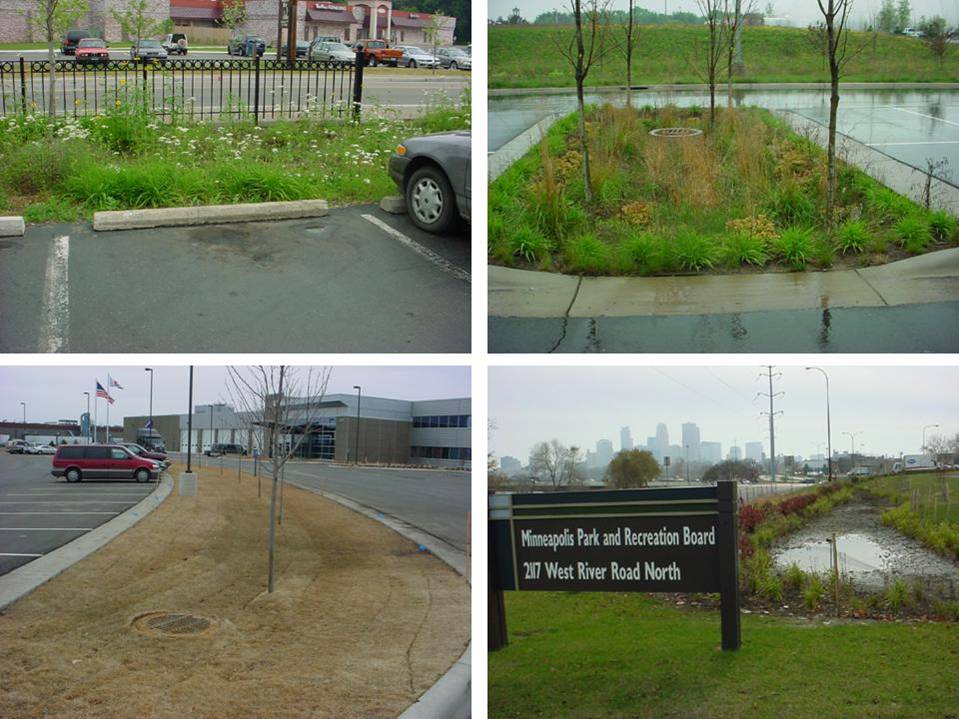
Green Infrastructure: The goal of better site design is to reduce runoff volume and mitigate site impacts when decisions are being made about proposed layout of a development site. These techniques are known by many different names, such as low impact development (LID), design with nature, sustainable development, sustainable site design (for LEED certification) and conservation design.
Sample applications
In this section, specific information is provided for:
Residential streets and parking lots
This residential conservation development uses minimum road widths and landscaped areas to reduce the amount of impervious surfaces and add to the rural character of the neighborhood. Vegetated channels and bioretention areas are used in the right-of-way to treat stormwater runoff. pollution. These development principles are not national design standards. Instead, they identify areas where existing codes and standards can be changed to better protect streams, lakes and wetlands at the local level. These principles are also highly suitable and effective in cold climates. Each principle is presented as a simplified design objective. Actual techniques for achieving the principle should be based on local conditions.
Examples
The key objective is to provide planners, developers, and local officials with benchmarks to investigate where existing ordinances may be modified to reduce impervious cover, conserve natural areas, and prevent stormwater pollution. These development principles are not national design standards. Instead, they identify areas where existing codes and standards can be changed to better protect streams, lakes and wetlands at the local level. These principles are also highly suitable and effective in cold climates. Each principle is presented as a simplified design objective. Actual techniques for achieving the principle should be based on local conditions.
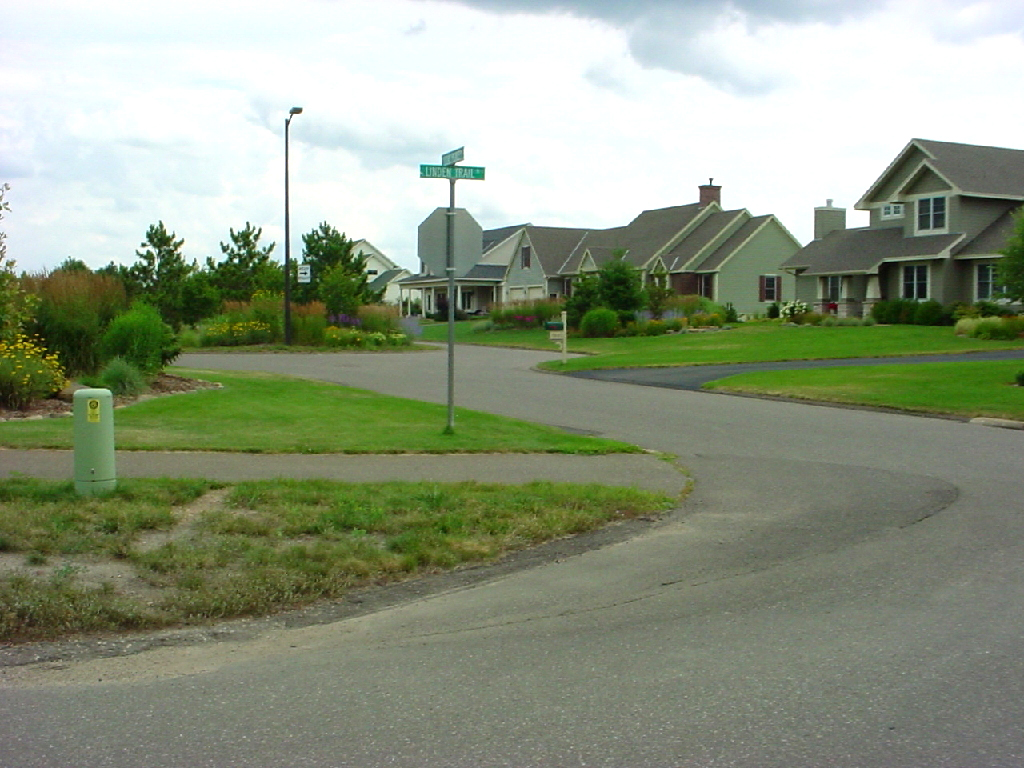
Fields of St. Croix - Lake Elmo
This residential conservation development uses minimum road widths and landscaped areas to reduce the amount of impervious surfaces and add to the rural character of the neighborhood. Vegetated channels and bioretention areas are used in the right-of-way to treat stormwater runoff.
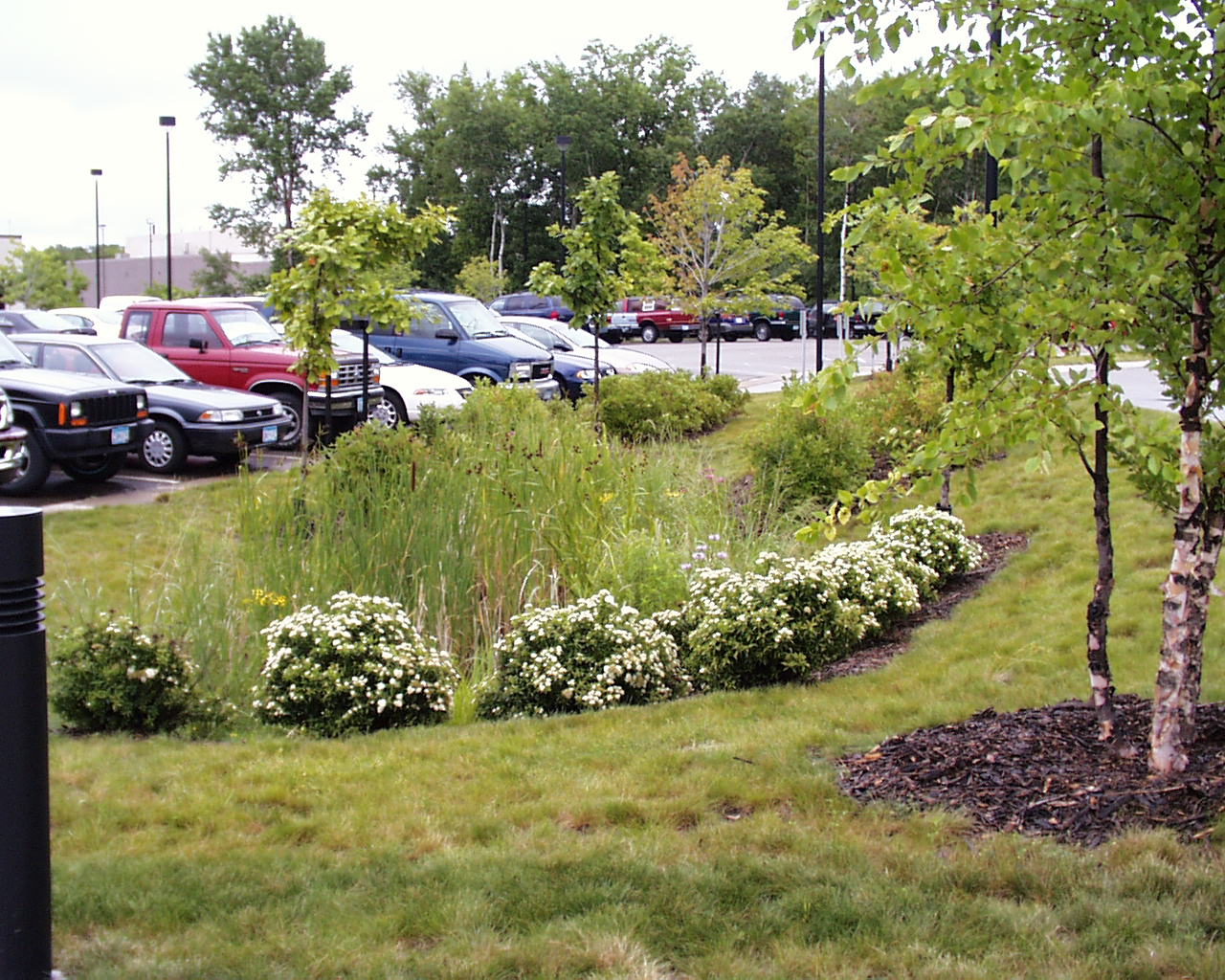
H.B. Fuller - Vadnais Heights
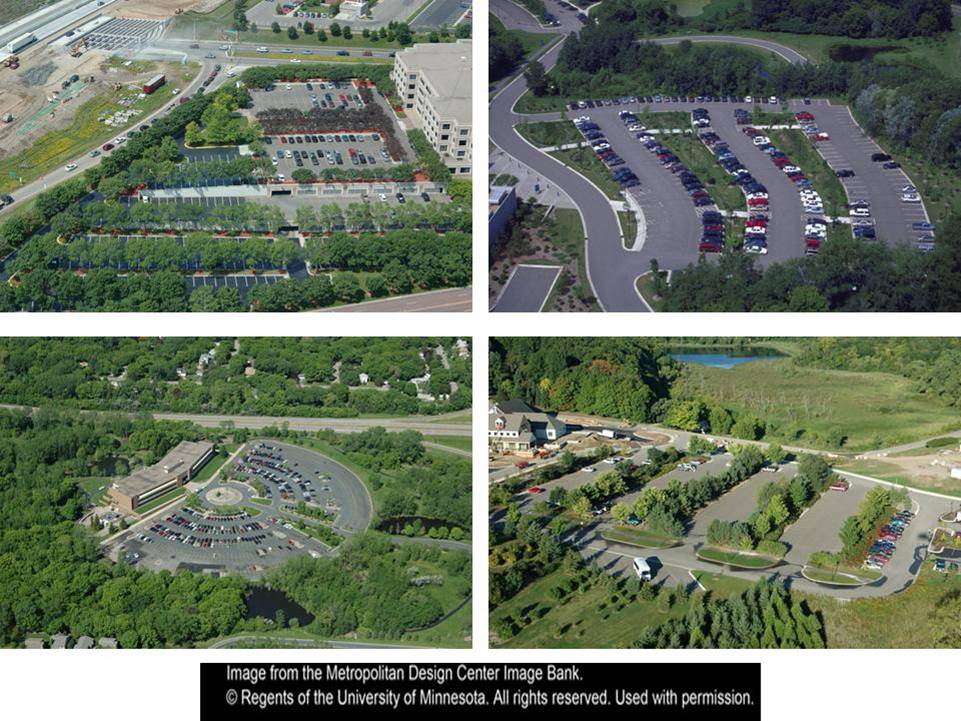
This parking lot incorporates bioretention strategies to treat stormwater runoff. The landscaped depressions provide stormwater treatment, snow storage, and improved parking lot aesthetics and climate. Low maintenance sedges are used in place of traditional turf grass to lower maintenance costs and pollution.
Use the following list as a tool to better site design (early on and throughout the design process) for street and parking lot development, redevelopment and retrofits.
- Design residential streets for the minimum required pavement width needed to support travel lanes, on-street parking, and emergency, maintenance, and service vehicle access. These widths should be based on traffic volume.
- Reduce the total length of residential streets by examining alternative street layouts to determine the best option for increasing the number of homes per unit length.
- Wherever possible, residential street right-of-way widths should reflect the minimum required to accommodate the travel-way, the sidewalk, and vegetated open channels. Utilities and storm drains should be located outside of the BMPs section of the right-of-way wherever feasible.
- Minimize the number of residential street cul-de-sacs and incorporate landscaped areas to reduce impervious cover. The radius of cul-de-sacs should be the minimum required to accommodate emergency and maintenance vehicles. Alternative turnarounds should be considered.
- Where density, topography, soils, and slope allow, vegetated open channels should be used in the street right-of-way to convey and treat stormwater runoff.
- Enforce the required parking ratio governing a particular land use or activity as both a maximum and a minimum, in order to curb excess parking space construction. Existing parking ratios should be reviewed for conformance, taking into account local and national experience to determine if lower ratios are warranted and feasible.
- Revise parking codes to lower parking requirements where mass transit is available or enforceable shared parking arrangements are made.
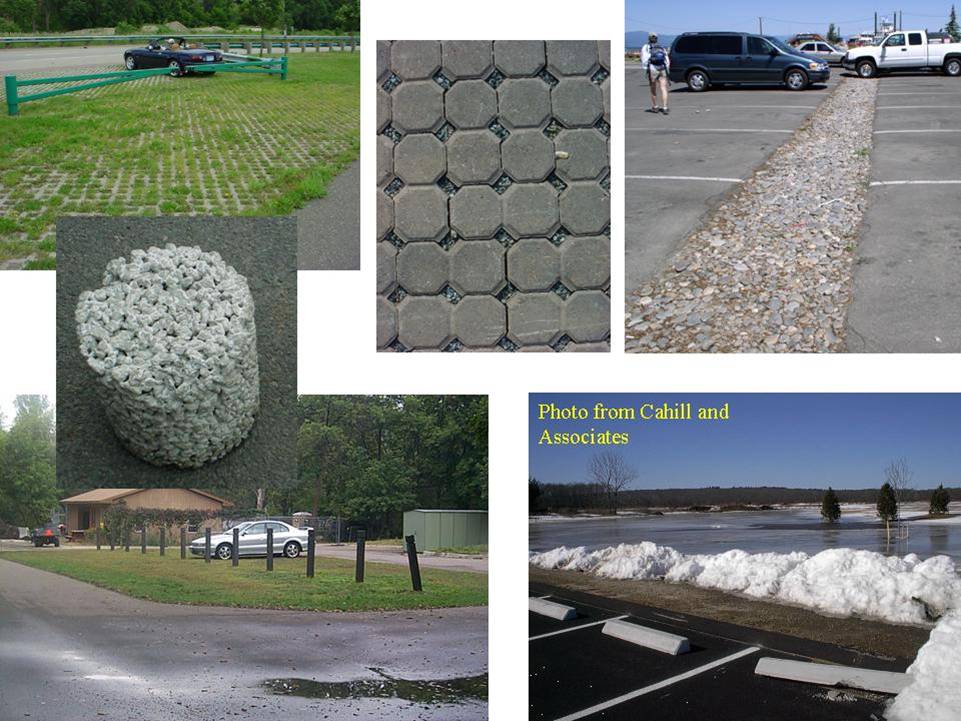
- Reduce the overall imperviousness associated with parking lots by providing compact car spaces, minimizing stall dimensions, incorporating efficient parking lanes, making use of vegetated parking islands, and using pervious materials in spillover parking areas where possible.
- Provide meaningful incentives to encourage structured and shared parking to increase economic viability.
- Provide stormwater treatment, wherever possible, for parking lot runoff using bioretention areas, filter strips, and/or other practices that can be integrated into required landscaping areas and traffic islands.
Highway and road runoff management
The construction and repair of the major road and highway system presents a major opportunity to incorporate new runoff management approaches throughout the State of Minnesota. Whether it is a Mn/DOT state highway, a county road or a municipal connector, the amount of runoff flowing off of the road surface and the pollutants it carries are a concern that can be managed with BSD/LID practices.
The challenges in dealing with potentially long linear road projects are numerous, and include
- limited space and right-of-way area to build/ retrofit and maintain BMPs;
- concentrated, high energy runoff from an impervious surface;
- safety of vehicles and maintenance workers;
- utility lines above and below the road;
- water entering the road right-of-way from adjacent sources;
- changing geologic, soil and receiving water conditions along the linear alignment;
- design changes that must be made to meet differing local requirements through which the road passes;
- intentional addition of pollutants to the road surface (salt and sand);
- the potential for hazardous material spills;
- the need for continual operation under all traffic and weather conditions; and
- different roadway design standards depending on state and local requirements
Although it is not simple, there are ways in which BSD/LID principles can be used to address the challenges noted above. The three key considerations that must always be kept in mind when dealing with highways and busy roadways are safety, BMP performance to meet expectations, and costs (capital and maintenance). This section of the Manual describes some approaches and directs users to additional resources that can further assist in meeting this goal. Emphasis is on the selection of BMPs that reflect a BSD/LID approach.
New and retrofit projects
When applied to a transportation corridor, the agency responsible for the BSD/LID design should follow the objectives contained in the Highway and Road BSD/LID Options sheet in mind. Although not typically thought of in the context of BSD/LID, highways do provide an opportunity because
- they are linear structures covering long distances, thus allowing for flow diffusion and long flow paths;
- they involve construction and maintenance, so incorporating small-scale distributed BMPs is not disruptive;
- capturing and routing water to treatment systems is possible as part of the overall drainage system; and
- financial resources from this less intense approach can be devoted to other related needs, such as maintenance or new treatment facilities.
The items contained in the Options sheet follow the BSD/ LID themes and include
- keeping or mimicking natural drainage paths and features;
- disconnecting impervious pavement from direct discharge to receiving waters;
- infiltrating as much clean water as possible;
- filtering and settling direct runoff water; and
- following a treatment train approach.
| Best Management Practice (BMP) Type | Objective | BMP Examples | Safety Considerations |
|---|---|---|---|
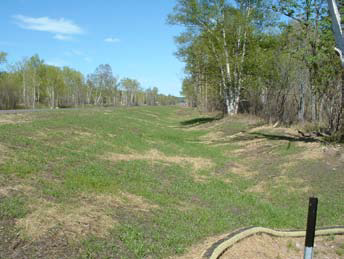 |
Diffuse flow energy from concentrated roadway surface before discharging over a slope; reinforce discharge point and slopes; promote sheet flow | Compost sock (see image), bio-slope, outlet reinforcement, spray mulch, compost rip rap matrix (between rocks) | May increase slipperiness of shoulder slope |
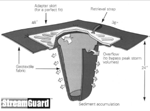 |
Filter litter and debris from flow as it enters catch basins; preferably with pollutant sorbents 2 | Catch basin insert (see image); hooded outlet pipe; oil and grease separator | Might become heavy for maintenance crews to lift; must be cleaned to prevent clogging |
 |
Route runoff through a screen or filter material to remove litter and treat particulate, and the associated nutrients, toxics and hydrocarbons | Gross Solids Removal Device (GSRD) (see image), compost tube inside of rock weep, | Often contained in confined space; maintenance crew will need confined space training |
 |
Diffuse heat from road and parking surfaces prior to discharge to sensitive waters | Geotextile wrapped rip rap thermal tube (see image), infiltration trench | None |
|
Provide vegetated swale drainage systems with low head grade breaks in rural sections | “Living ditch” (see image), check dams (rip rap, bio-weeper, bio-ditch filter) | Can hold water for a time after runoff occurs so need to keep design depths shallow; grade breaks can be obstruction hazard to recreational vehicles using swale |
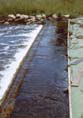 |
Retrofit stored water BMPs with proper outlet and skimmer devices | Particulate skimmer (see image), baffle weir, Faircloth skimmer (proprietary device) | None |
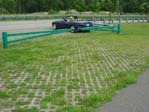 |
Use pervious paving material in areas that will support it | Pervious asphalt and concrete (see image), paving blocks | None for pavement; blocks can pose walking problems if not designed properly; recommendation for minimal salt use could mean ice might be present for short periods |
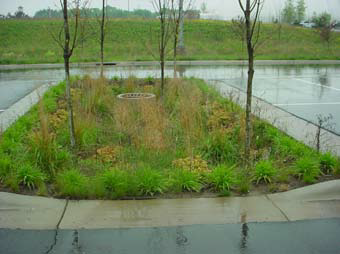 |
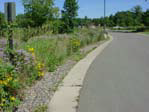
Route water to bioretention, filtration or infiltration areas where conditions appropriate | Rain garden (see image) | Near-road locations could possibly impede vision at intersections if vegetation not kept low; water might collect adjacent to roadway |
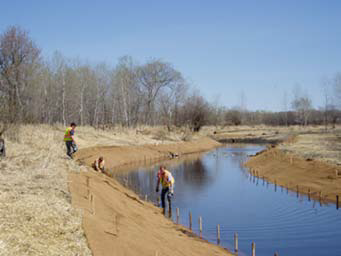 |
Geomorphically stabilize channels | Cross vanes, fish steps, curvilinear channel restoration (see image), reinforced streambank, grade adjustments, revetments, root wads | None |
 |
Use off-line storage in available floodplain, open space | Off-line pools (see image), enhanced floodplains, wetland restoration/preservation | None if kept away from areas where vehicles expected to travel or go off of the road |
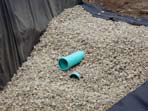 |
Use sub-grade storage with or without perforations to allow for storage and infiltration where drainage determined not to impact road structure | Under street infiltration trenches (see image), vault storage to replace surface ponds, rest areas parking lots | Maintenance crew will need confined-space training |
| 1Use of proprietary devices or images merely for illustrative purposes and does not mean endorsement of a product 2Note that housekeeping practices like street sweeping and chemical use are discussed in the Pollution Prevention section |
|||
There are many focal points to concentrate upon when designing new and retrofit BMPs for highways and roads. Most of the runoff management issues associated with new highway construction today are addressed by the various construction permitting programs in place. Many of the practices displayed in this Manual are routinely used in this design and building process, and will not be further described here.
The focus of this section of the Manual is on the many other repair, maintenance and reconstruction projects that can and should incorporate retrofit BMPs. The discussion that follows focuses on these approaches. Many of these approaches were suggested by Mn/DOT (Dwayne Stenlund, personal communication) as simple ways to retrofit highway runoff projects.
Inlet controls
This discussion focuses on litter control. Keeping pollutants from entering the drainage system associated with highways, rest stops, maintenance facilities, and related structures makes the downstream job of protecting receiving waters easier. Basic housekeeping practices, like sweeping these surfaces and providing waste containers, is a first line of defense. Once entrained in runoff, however, keeping pollutants out of the drainage system gets more complex.
Many varieties of catch basin inserts are available to screen or otherwise capture particulate debris on its way into the system. These inserts can be as simple as a bag or screen hanger that fills, to as complicated as a series of interlocking baskets each designed to capture a certain particle size. Recently, many of the insert vendors have begun to offer chemical sorbents that can be attached to the inserts to remove toxic materials, like oil and grease, heavy metals and various solvents. The key factor in successful use of any of these inserts is maintaining them such that they always operate as designed. That typically means emptying or replacing them when they fill and replacing sorbent products when they are saturated with the target pollutants. Some products even change colors as they reach the saturation point. Another very important feature of inserts is to make sure that high flows can by-pass the area where the debris gathers so that plugging and re-suspension does not occur.
Gross solids removal devices

A very large portion of the pollution coming off of highway and road surfaces is nothing more than litter. The cigarette butts, fast food wrappers, plastic packaging, dirty diapers and other debris all float very easily once enough runoff energy picks them up.
Gross Solids Removal Devices (GSRD) are BMPs that extend inlet pipes, dewater the inflow and leave the debris behind. There are also large mesh bags that fit over inlet pipes to hold back debris and swirl concentrators that concentrate and remove particulate material. All of these litter removal devices can easily be retrofit into existing drainage systems. Caution must be exercised, however, that these practices do not plug and result in flooding.
Runoff grade control
Perhaps the biggest problem associated with roadways is the concentrated runoff that comes off the impervious surfaces. Runoff can be intercepted before it becomes a problem by providing suitable grades, energy breaks and infiltration opportunities.
“Bio-slopes” or “Eco-slopes” are terms that describe the placement of amended soils material (like compost) on a slope to slow water down and allow it to soak in. The use of native vegetation in this amended soil or compost logs or slope terraces to divert flow where it can best be handled are all elements of slope protection. Diverting concentrated flow to a lateral flow spreader can turn that concentrated flow into sheet flow that can be spread out and more easily soaked into the ground. Caltrans (2006) reports on the success of using stabilized slopes for runoff treatment. Although grade control structures should be part of initial construction, they can also be retrofit after a project is complete.
Outlet controls
Highway drainage designers are ultimately left with the task of capturing runoff that does not infiltrate and then routing it via stormsewer to an outlet at some location. In the past, it was common to let this runoff discharge directly to a receiving water body, often resulting in an actively erosive area. Although riprap is still a very common solution to this problem, it is not always the most structurally sound nor is it the most aesthetic approach. Natural and synthetic geotextile reinforcements are often a suitable alternative and are available to fit a variety of needs. Choosing between these options depends to a great extent on the nature of the problem.
Product specifications for strength and applications should be examined to choose the proper material. Another option is compost-grouted riprap, in which compost is sprayed into voids and serves as a root medium for native plants. As with grade controls, these reinforcement methods can be part of an initial installation or easily retrofit if a problem is identified and in need of a solution.
Drainageways
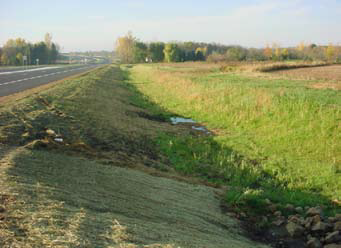
In most dense urban area applications, highway runoff is collected via the local stormsewer system, which is under the control of the highway agency or local MS4 community. In lesser developed urban and rural settings, however, water can be collected in a rural section with drainage via open water swales. Because of the narrow alignments that most highways follow, these swales by necessity are narrow and can extend for long distances before reaching any kind of receiving water.
A well-drained swale can be a very effective BMP for both reducing volume through infiltration and for improving water quality through filtration, settling and vegetative uptake. Installed occasional low level grade control structures (possibly with some kind of organic filter media) can supplement the treatment ability of the swale, as can keeping them dry so that they are fully able to perform as soon as water enters them. Routing swales through occasional pools or wetlands also enhances their ability to treat runoff. Drainageways are an essential part of any highway design, but improvements can be retrofit at any time an improvement is needed.
Channel Stabilization
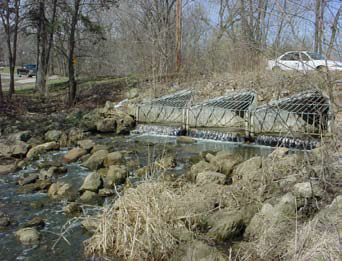
On many occasions, highway and road drainage is discharged into a stream. The energy associated with the volume and rate of runoff entering the channel can be disruptive and lead to environmental problems such as bottom and bank erosion, particle resuspension, habitat wash-out and high velocity.
Past efforts to move drained water along quickly led to the installation of many straightened channels (ditches). Today, we realize that maintaining or restoring the natural or curvilinear channel character handles this increased flow in a more environmentally stable manner. Meanders, pools and riffles, vegetated banks, and adequate woody debris are all measures of a stable and healthy stream that can absorb much of the change that comes with increased runoff. Today many of these improvements are part of initial design, but retrofitting past less natural designs is also possible.
Thermal Protection
Runoff from paved surfaces during warm weather invariably leads to the introduction of warm water into receiving waters. If water temperature is an issue for the receiving water body, such as for cold water fisheries, this runoff should be cooled. Infiltration is perhaps the most direct and easiest way to accomplish this, provided the infiltrating water stays under ground long enough to cool.
Another technique used by Mn/DOT (Dwayne Stenlund, personal communication) is a BMP called a “riprap thermo-cooler”. This device is merely a geotextile wrapped riprap tube covered by soil that allows base flow to exit an outlet and flow underground and cool until outletting in a controlled manner. As with many of the other BMPs listed, thermal protection is best incorporated in initial design but can be retrofit when an improvement is needed.
Structural BMPs
Finally, when non- or minimum-structural controls are not available for an initial design or a retrofit or might not be capable of doing an adequate job, structural BMPs might be appropriate. Each of the Manual’s BMPs can be adapted for a retrofit situation. Particular emphasis should be placed on sub-grade structures that can store and/or treatment water when available land is limited; filtration and infiltration techniques; stormwater wetlands; and supplemental treatment.
Conservation of natural areas
The key objective is to provide planners, developers, and local officials with benchmarks to investigate where existing ordinances may be modified to reduce impervious cover, conserve natural areas, and prevent stormwater pollution. These development principles are not national design standards. Instead, they identify areas where existing codes and standards can be changed to better protect streams, lakes and wetlands at the local level. These principles are also highly suitable and effective in cold climates. Each principle is presented as a simplified design objective. Actual techniques for achieving the principle should be based on local conditions. and environmental benefit.
Flexible design standards can allow for the conservation of a site’s natural areas and ecological function. Conservation design developments advocate preserving a site’s most distinguishing natural features and integrating them into the community of the new development. Open space should be consolidated to have the greatest recreational, aesthetic, Smaller lot sizes allow the same densities as a traditional development, with more open space dedicated as a community amenity. Flexible lot design allows less roads and stormwater infrastructure to be built, reducing imperviousness and infrastructure costs.
Use the following list as a tool to better site design (early on and throughout the design process) for development, redevelopment and retrofits.
- Create a variable width, naturally vegetated buffer system along all perennial streams and other water features that encompasses critical environmental features such as the 100-year floodplain, steep slopes and freshwater wetlands.
- Preserve or restore riparian stream buffers with native vegetation. Maintain the buffer system through the plan review delineation, construction, and post-development stages.
- Limit clearing and grading of forests and native vegetation at a site to the minimum area needed to build lots, allow access, and provide fire protection. Manage a fixed portion of any community open space as protected green space in a consolidated manner.
- Conserve trees and other vegetation at each site by planting additional vegetation, clustering tree areas, and promoting the use of native plants. Wherever practical, manage community open space, street rights-of-way, parking lot islands, and other landscaped areas.
- Encourage incentives and flexibility in the form of density compensation, buffer averaging,property tax reduction, stormwater credits, and open space development to promote conservation of stream buffers, forests, meadows, and other areas of environmental value. In addition, encourage off-site mitigation consistent with locally adopted watershed plans.
- Prevent the discharge of unmanaged stormwater from new stormwater outfalls into wetlands, sole-source aquifers, or ecologically sensitive areas.
Lot development
The key objective is to provide planners, developers, and local officials with benchmarks to investigate where existing ordinances may be modified to reduce impervious cover, conserve natural areas, and prevent stormwater pollution. These development principles are not national design standards. Instead, they identify areas where existing codes and standards can be changed to better protect streams, lakes and wetlands at the local level. These principles are also highly suitable and effective in cold climates. Each principle is presented as a simplified design objective. Actual techniques for achieving the principle should be based on local conditions.
Use the following list as a tool to better site design (early on and throughout the design process) for lot development, redevelopment and retrofits.
- Advocate open space design development incorporating smaller lot sizes to minimize total impervious area, reduce total construction costs, conserve natural areas, provide community recreational space, and promote watershed protection.
- Relax side yard setbacks and allow narrower frontages to reduce total road length in the community and overall site imperviousness. Relax front yard setback requirements to minimize driveway lengths and reduce overall lot imperviousness.
- Promote more flexible design standards for residential subdivision sidewalks. Where practical, consider locating sidewalks on only one side of the street and providing common walkways linking pedestrian areas.
- Minimize the number of residential street cul-de-sacs and incorporate landscaped areas to reduce impervious cover. The radius of cul-de-sacs should be the minimum required to accommodate emergency and maintenance vehicles. Alternative turnarounds should be considered.
- Reduce overall lot imperviousness by promoting alternative driveway surfaces and shared driveways that access two or more homes.
- Clearly specify how community open space will be managed, and designate a sustainable legal entity responsible for managing both natural and recreational open space.
- Direct rooftop runoff to pervious areas such as yards, open channels, or vegetated areas and avoid routing rooftop runoff to the roadway and the stormwater conveyance system.
- Restore the drainage and/ or biological capacity of damaged or lost soils through mechanical improvements or soil amendments.
Thinking outside of the big box - Parking Lot Surplus and Retrofit Opportunities
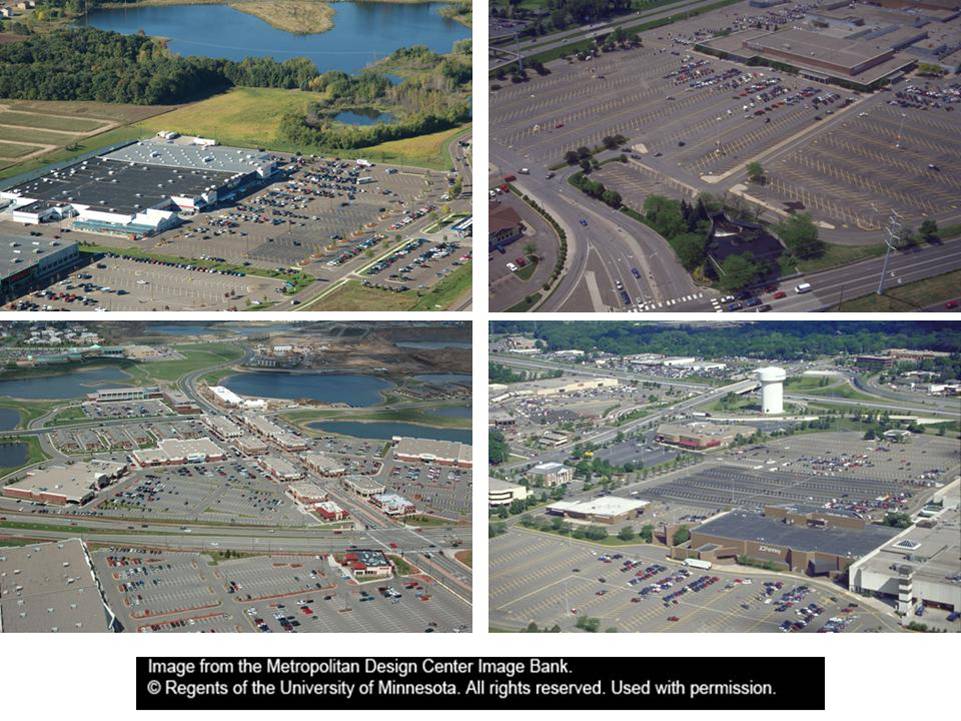
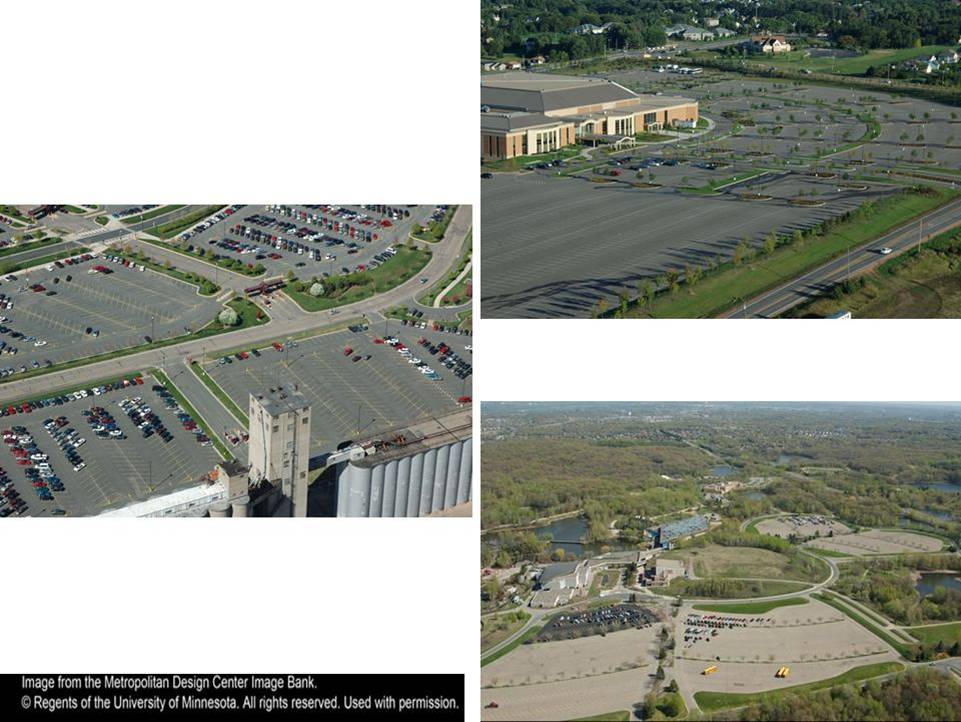
Excess parking lot stalls add a tremendous amount of impervious surface that is unnecessary for almost every day of the year except the day after Thanksgiving. This is just one of many situations where Minnesota stormwater managers can make a difference. The following figures provide examples for one of many land uses that substantially increase the amount of impervious area within a watershed. It provides some example alternatives that are possible to those who want to “think outside of the big box” and create resource oriented solutions.
The use of some simple solutions can reduce the amount of runoff and the pollution it carries. If every city in Minnesota approached stormwater with these ideas in mind, just think of the runoff we could reduce! For every ten acres of impervious parking lot replaced with a pervious surface, runoff is reduced by about eight million gallons of water.