Riverside Plaza is a 4,400-resident housing complex in downtown Minneapolis. In 2018, Metro Blooms Design+Build began working with the Riverside Plaza Tenant Association and owner Sherman Associates to develop a stormwater management plan and redesign outdoor spaces to address localized stormwater ponding and flooding issues. Community engagement was a central focus of the project. Metro Blooms Design+Build engaged residents on potential solutions. Through this input, several areas were selected to convert from impervious surface to rain gardens to divert and infiltrate stormwater and reduce stormwater pollution to the nearby Mississippi River. The project also provided new green spaces for the community to spend time outdoors.
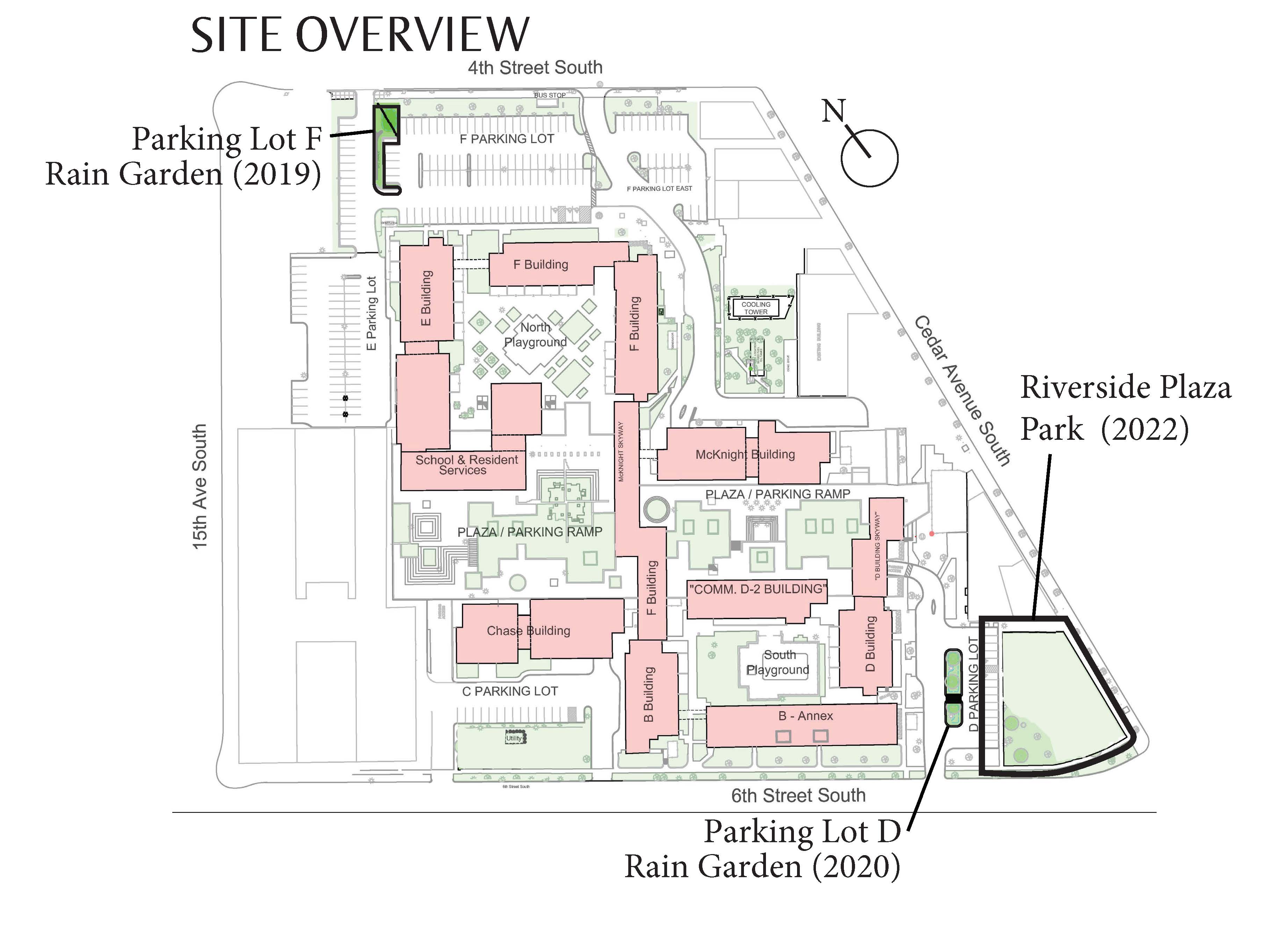
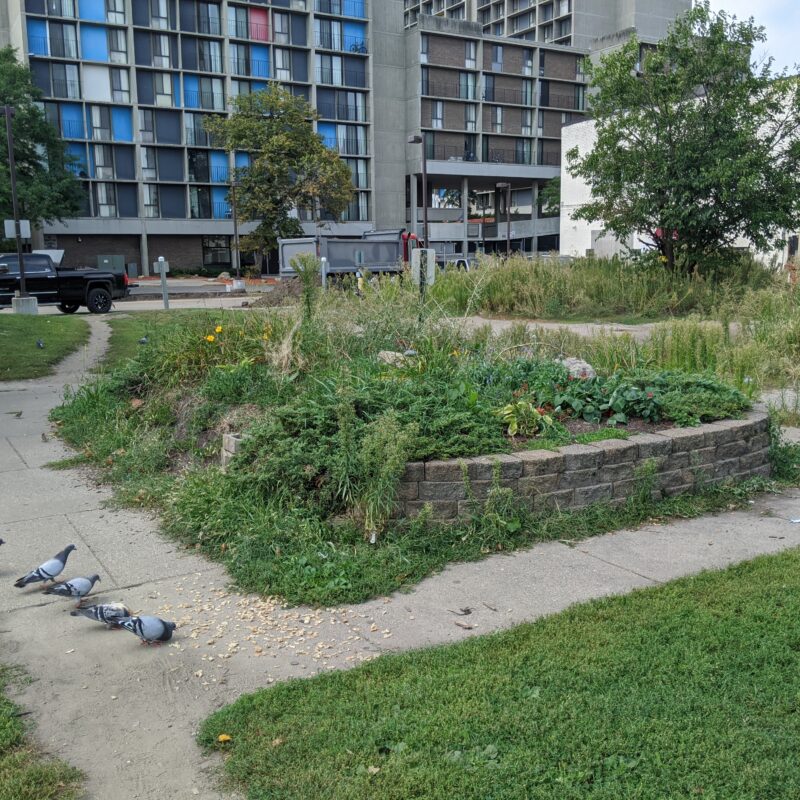
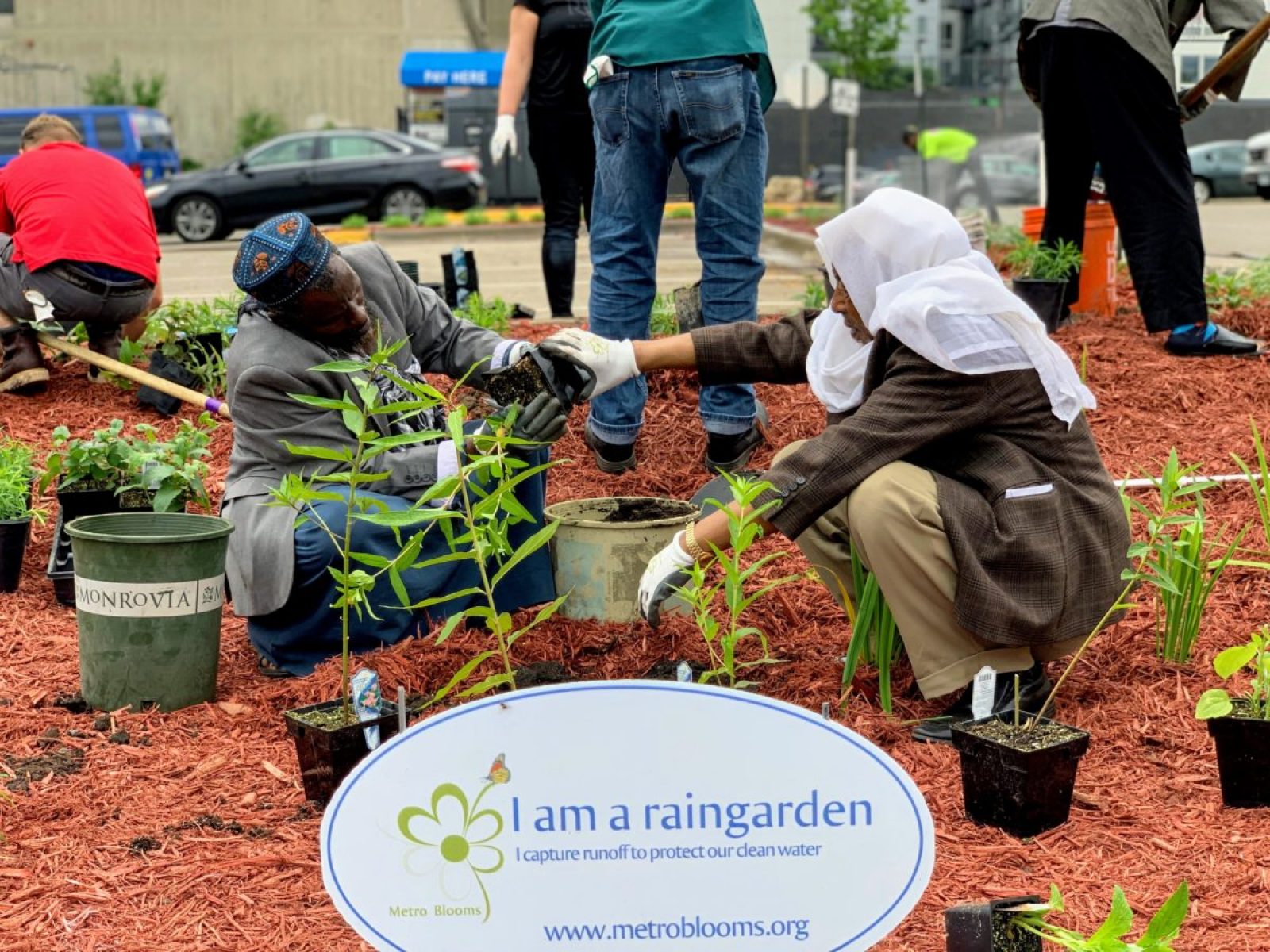
The first project was done in 2019 and converted an existing but failing stormwater BMP in parking lot F into a rain garden. The rain garden receives stormwater runoff from the parking lot and driveway. The runoff is captured first by a rock swale, which delivers the water to the rain garden. More than fifty residents, staff, and community volunteers helped build and plant the rain garden with native vegetation to attract pollinators. The rain garden was initially planted with several native species, but maintenance staff accidentally killed most of the native vegetation with herbicide. To remedy this problem, an operation and maintenance plan was developed so that future maintenance activities would not destroy the replanted native vegetation.
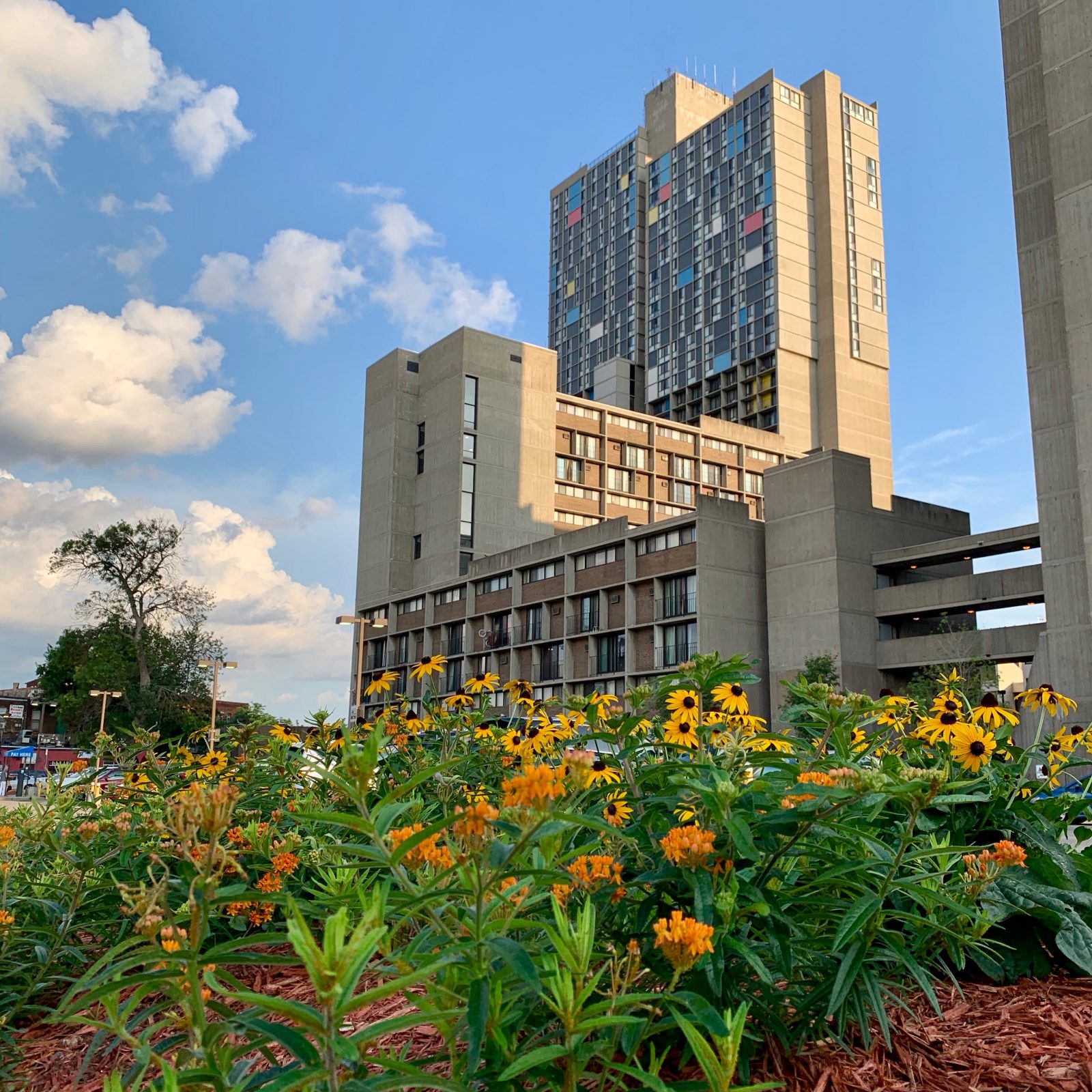
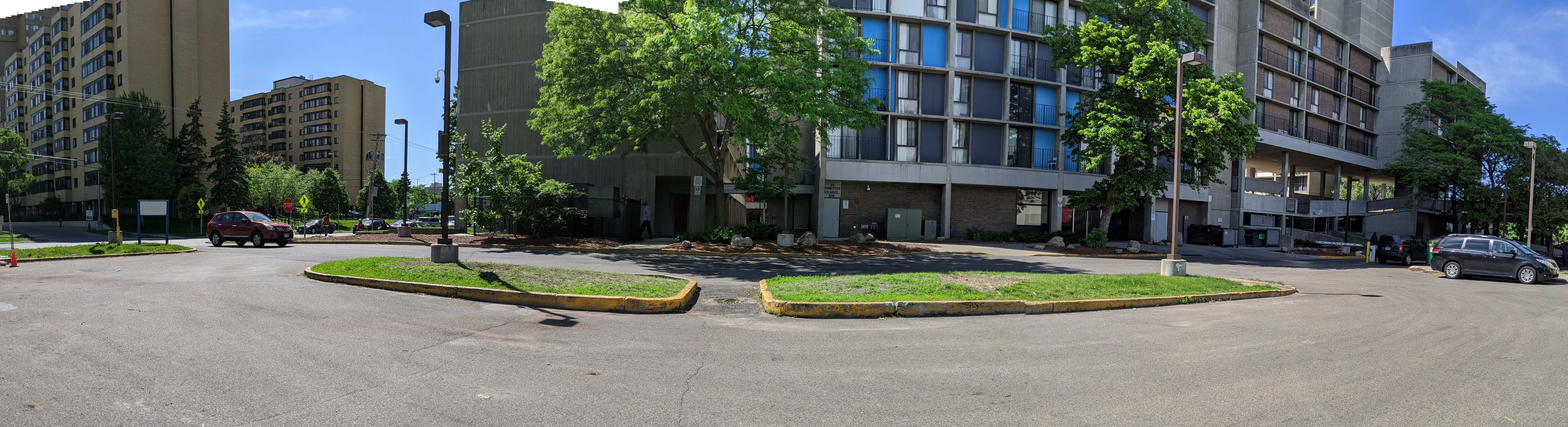
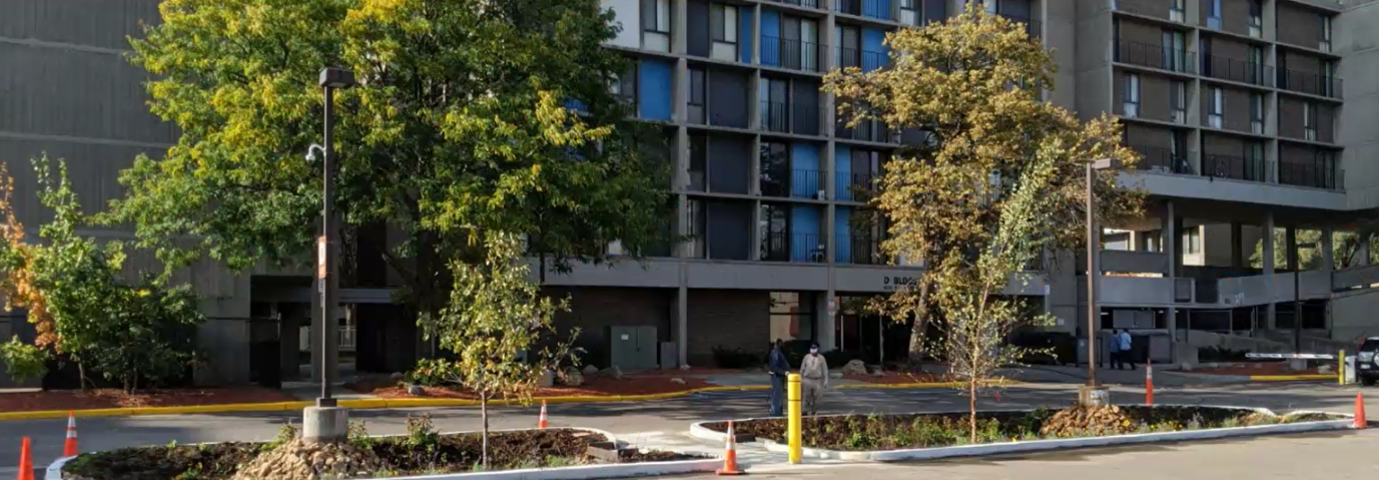
In 2021, Metro Blooms Design+Build designed and constructed a second rain garden in the center of parking lot D. This system captures stormwater from the parking lot, driveway, sidewalks, and landscape into two rain garden basins. This project included two pretreatment structures to filter coarse materials out of the stormwater before discharging into the rain garden. The rain garden also includes a raised overflow structure that allows stormwater that can’t be stored and infiltrated by the rain garden to overflow into the storm sewer. This project had to work around infrastructure constraints, including existing light poles that could not be moved. The community once again volunteered to plant the rain garden. A concept plan exists to build a similar third rain garden in Parking Lot C.
In 2024, Metro Blooms Design+Build again worked with the community to turn an underutilized open space next to parking lot D into a small park featuring rain gardens, pollinator plantings, native shade trees, benches, and walking paths. The park added curvature and elevation changes into the design to contrast the hard lines and concrete style of the housing complex. Two rain gardens were included in the park design to capture stormwater runoff from the roofs of a nearby buildings, sidewalks, and landscaped areas. The larger rain garden has underdrains with cleanouts, and a knife valve that connects the overflow to the nearby city storm sewer. The knife valve can be opened or closed as needed to maintain the desired water level in the rain garden.
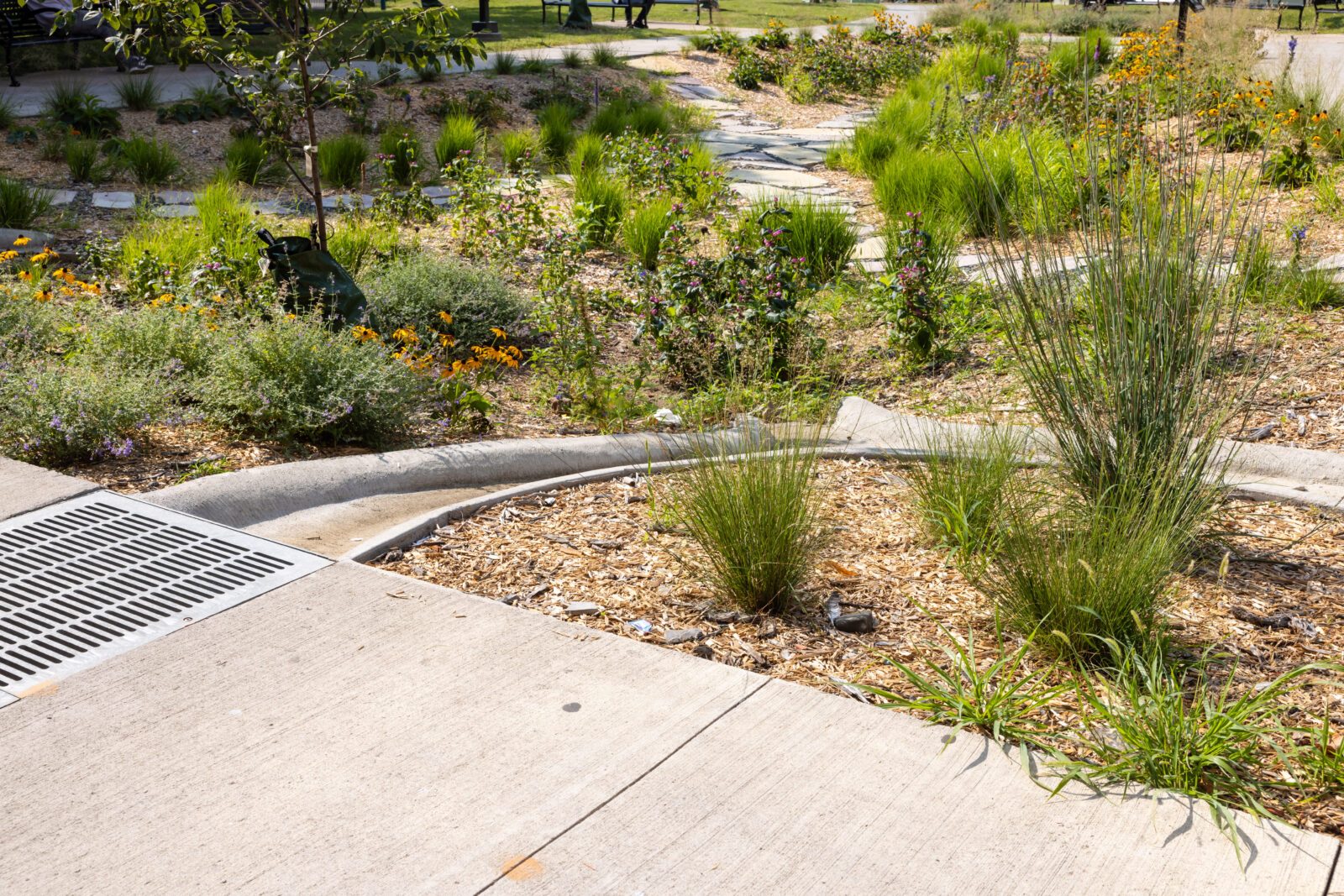
One challenge with this site was that it was heavily compacted from years of urbanization. Testing revealed that the compaction was primarily in the surface layer, while the subsurface layer was a sandy soil with very high infiltration capacity. The compacted layer was removed and amended to improve the soil quality and infiltration rate. This project was able to address stormwater drainage issues (ponding and flooding) from adjacent areas. The design of the park included safety features such as lighting, walking paths, and perimeter fencing to protect the park from the nearby street traffic. The park provides residents a place to gather with access to nature in the heart of Minneapolis.
Community engagement was front and center in the development of all three rain gardens and significant efforts were made to include the resident community. Presentations, handouts, and other materials were translated into Somali and Oromo to engage residents whose native language was not English. Multilingual signage was included to teach the community about the ecological functions of the park and rain garden. Recommendations made by the community were integrated into the design. For example, an outdoor water spigot was added to allow community members to irrigate and help care for the park.
The community members who participated in planting events were financially compensated for their time. Interested residents were provided with planting containers to put on apartment balconies to add more native vegetation around the site. This site is also used as an outdoor classroom for University of Minnesota students and for continuing professional education.
Quick facts:
- Location: Minneapolis, MN
- Owner(s): Sherman Associates
- Designer/architect/construction firm(s): Designed by Metro Blooms Design+Build, constructed by JL Theis
- Year of Completion: 2019 (Parking lot F rain garden) and 2024 (Parking Lot D rain garden and plaza park)
- Green Infrastructure Features Included: rain gardens, native plants
- Special Design Features: Integration into a park setting, creating new green space into a largely paved neighborhood.
- GI Pretreatment Features: Rain Guardian Bunker pre-treatment structures to capture sediment, leaves, trash, and other stormwater debris to prevent clogging of the rain gardens.
- Total Drainage Area:
- Parking lot F rain garden: 7,706 square feet
- Parking lot D rain garden: 20,317 square feet
- Plaza Park rain gardens: 13,500 square feet
- Pollutant Removal: (using P8 model and based on 31.44 inches of rain per year)
- Parking lot F rain garden: 251 lbs solids/yr (99.9% reduction), 0.74 lbs P/year (99.9% annual reduction)
- Parking lot D rain garden: 574 lbs solids/yr (98.30% reduction), 1.4 lbs P/year (98.3% reduction)
- Plaza Park rain gardens: 216 lbs solids/yr (100% reduction), 1.3 lbs P/year (100% reduction)
- Total Construction Cost: Not available; funding was provided by MWWO and Hennepin County
- Documented Maintenance Practices: Yes, available upon request by Metro Blooms Design+Build
- Is the Site Publicly Accessible: Yes
- Notable Challenges: Compacted soils, initial lack of operations & maintenance document.
- Missed Opportunities: n/a
- Co-Benefits: community amenity, butterfly and pollinator habitat.
References and external links
- https://metroblooms.org/projects/riverside-plaza/
- https://metrobloomsdb.com/riverside-plaza-rain-garden/
- https://metroblooms.org/our-work/riverside-plaza-community-green-spaces/
- https://www.nps.gov/articles/riverside-plaza-mn.htm
- Video: https://youtu.be/7AIvnotPJBY
- https://www.sherman-associates.com/properties/riverside-plaza/