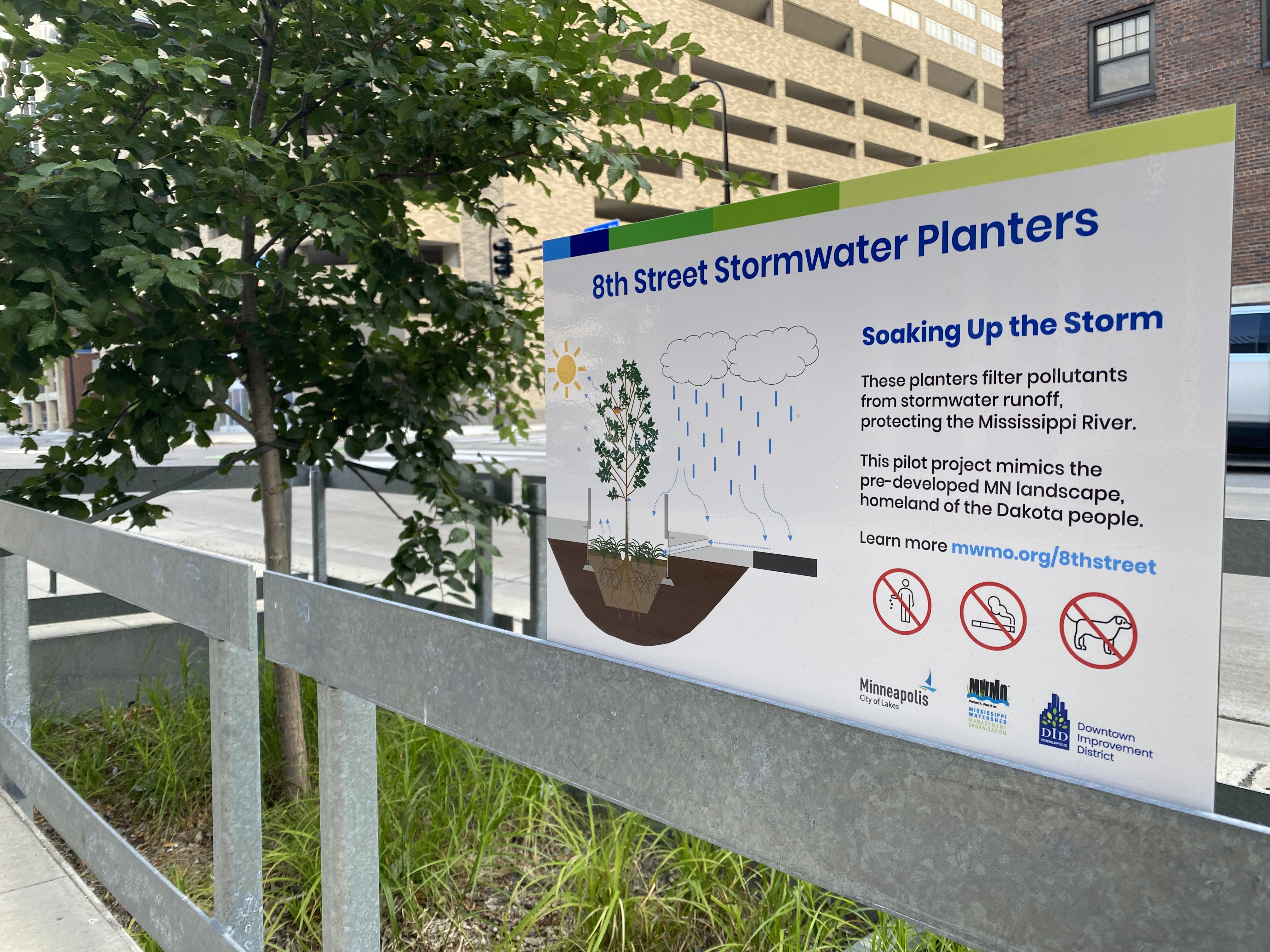
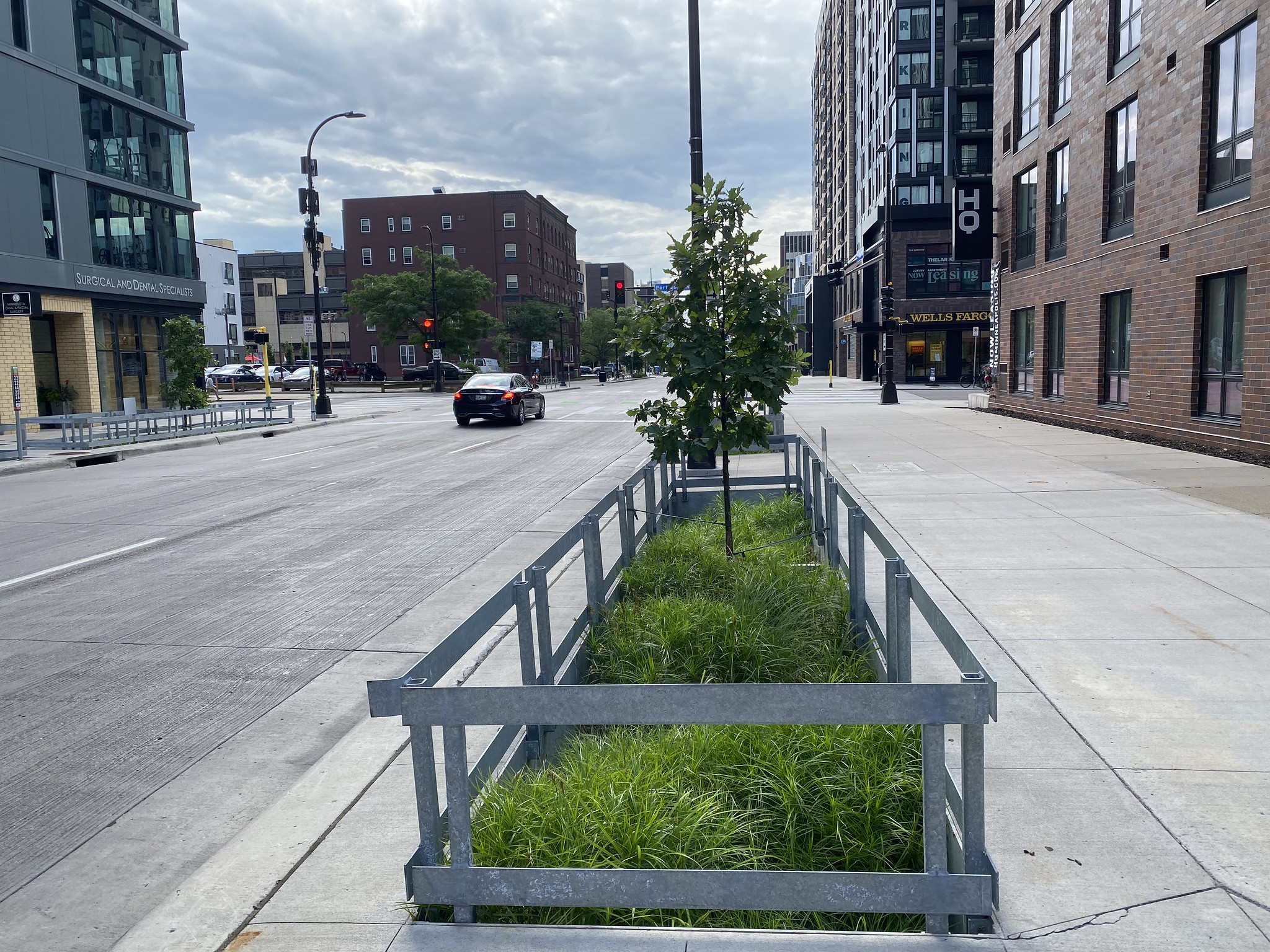
Located on South 8th street between 5th and Portland Avenue in downtown Minneapolis, the goal of Stormwater Planters project was to introduce green infrastructure during a street redesign and reconstruction project. Mississippi Watershed Management Organization (MWMO) and its partners, the City of Minneapolis Public Works and the Minneapolis Downtown Improvement District, spearheaded the project. The road was redesigned, reducing the width of the road and widening the sidewalks, allowing the opportunity to integrate stormwater planters. The stormwater planters reduce stormwater volume and pollutants and introduce green spaces in a dense urban core.
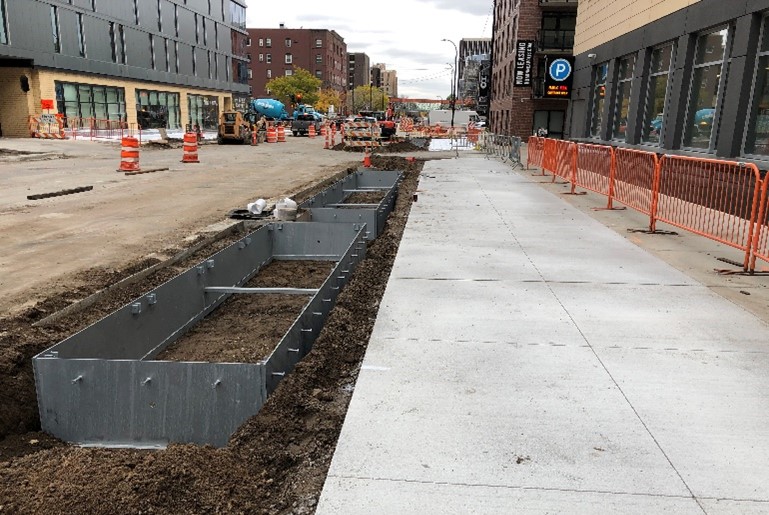
Barr Engineering and Alliant Engineering were retained by MWMO to design the stormwater planters. A total of five stormwater planters were installed, including two on the north side and three on the south side of this block of South 8th Street. The planters are composed of a series of cells, a modular design that can be installed in various configurations.
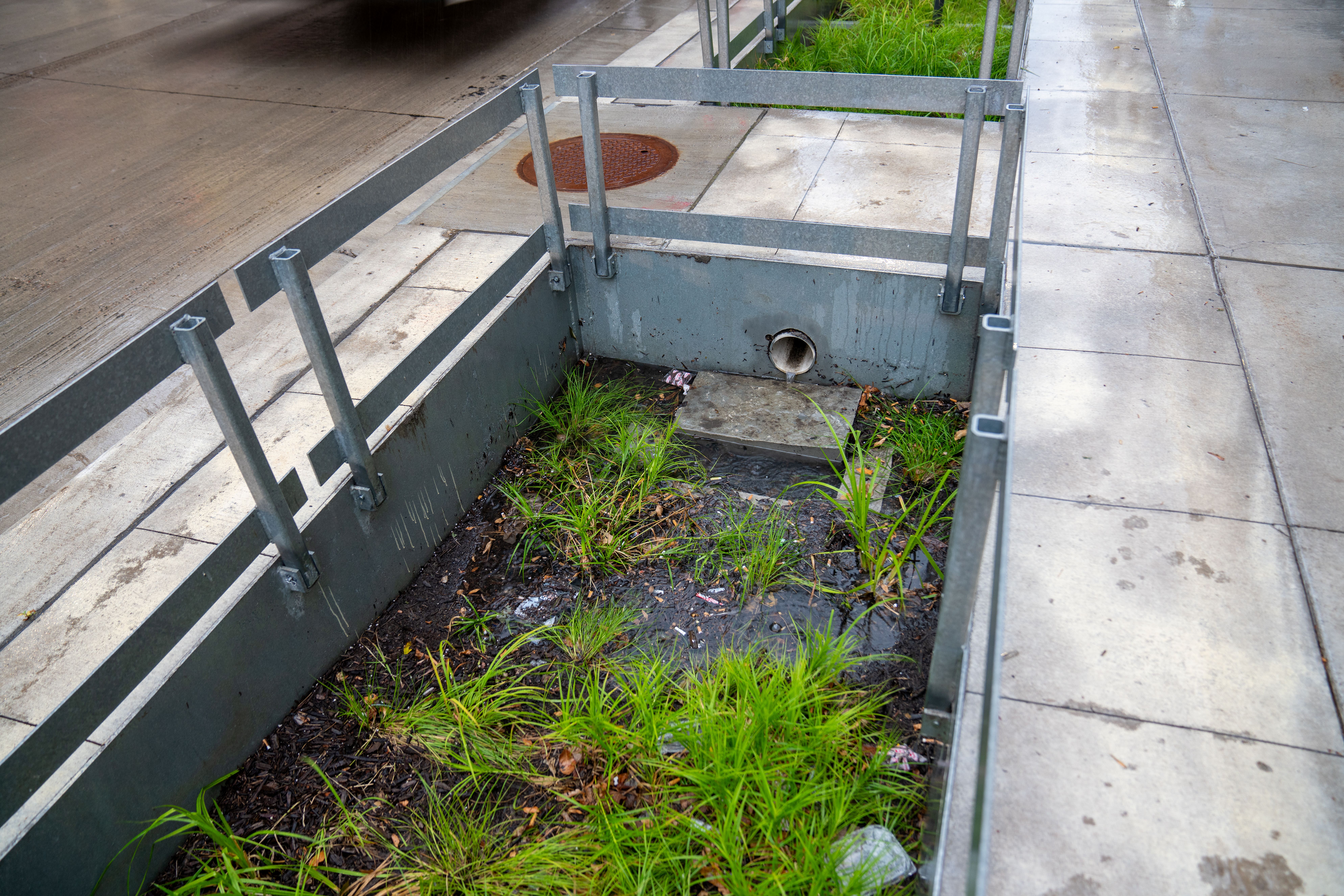
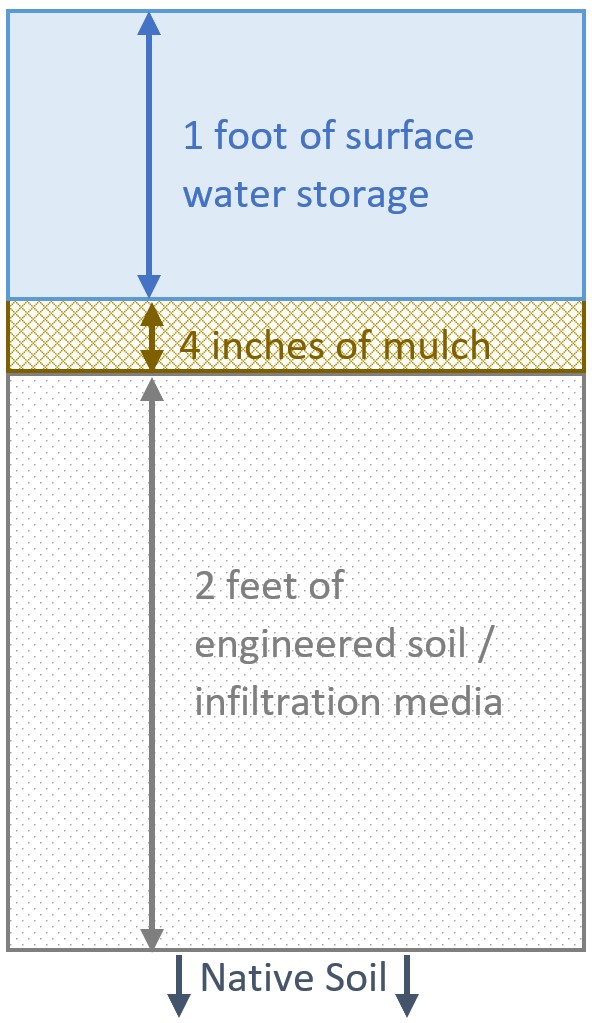
Each planter included four to six cells that collect and infiltrate stormwater. Each cell includes two feet of engineered infiltration soils, four inches of mulch, and one foot of surface water storage. The cells were designed to infiltrate stored surface water within 48 hours. The planters feature shallow footings to avoid utility conflicts and an open bottom to allow tree roots to access the native soil beneath the street and sidewalks.
The planter boxes were made with galvanized steel rather than the more common cast-in-place concrete. The galvanized steel planter boxes do not require closed-bottom frost footings and are easier and faster to install. Galvanized steel frames protect the planter boxes from foot traffic or vehicles and can easily be removed for maintenance or replaced if struck by a vehicle or snowplow. The galvanized steel box also allows for easier replicability at a slightly lower cost compared to cast-in-place concrete planters of the same dimensions.
The stormwater planters are connected to the street stormwater drainage infrastructure via the street gutter, catch basin inlet and sump, and stormwater pipe. The catch basin sump acts as pretreatment device to collect sediment and trash before the stormwater is discharged into the planters via a stormwater pipe. MWMO is monitoring the stormwater infiltration rates and volume capture at each of the five planters, observing vegetation health, and using information gathered to inform future similar projects.
The planters each contain an Accolade Elm, London Plane Tree, or Swamp White Oak trees and native sedge species. Tree species were selected from a relatively small palette of species identified by the City of Minneapolis. These species tolerate urban conditions, such as drought and exposure to road salts, as well as being relatively disease resistant and low maintenance. The sedges were selected because they are tolerant to salt and to fluctuating wet and dry conditions. The sedges are expected to fill the entire cell planting area, which creates a uniform look and makes it easy to identify and remove any weeds. The project adds green spaces in a predominantly hardened landscape, and the trees have more room to grow compared to the traditional 5-foot by 5-foot tree box.
Quick facts:
- Location: Minneapolis MN
- Owners and partners: MWMO, Downtown Improvement District, City of Minneapolis Public Works
- Designer/architect/construction firms: Alliant Engineering and Barr Engineering
- Year of Completion: 2020
- Green Infrastructure Features Included: Planter style bioretention with trees
- Special Design Features: Modular design can be installed and is adaptable to diverse and highly urbanized areas.
- GI Pretreatment Features: Catch basin sumps
- Total Drainage Area: 0.67 acres