The Bee Line is a 2.25 mile corridor along Pierce Butler Route in the Como, Frogtown, and Midway neighborhoods of St. Paul that includes a series of gardens with native and pollinator-friendly plants. This all-native planting project is a neighborhood amenity, creates habitat for native insects and birds, provides stormwater infiltration opportunities, and serves as a model for low-intensity public right of way maintenance along publicly maintained roads.
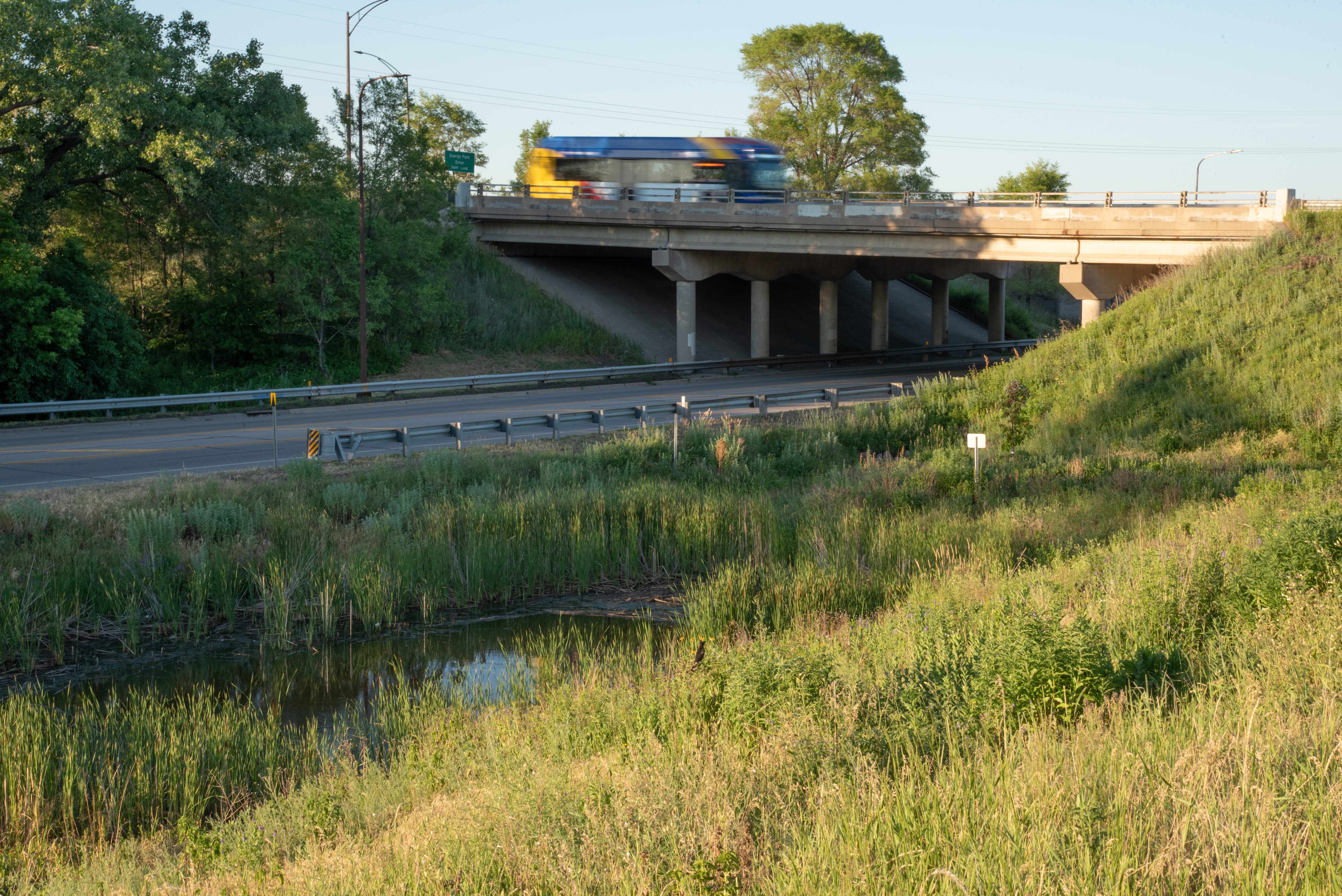
The Bee Line project started as a grassroots local neighborhood effort in 2015 with the Monarch City Garden on the eastern end of the corridor, followed by the Grotto expansion in 2016. In 2017, the Minnesota Department of Transportation improved drainage around the Snelling Avenue Bridge, and the Midway Neighborhood successfully advocated for native plantings as part of the design (Pierce Butler Meadow). The Bee Line project has grown over the years into a multi-neighborhood and multi-partner community organized effort anchored by several gardens and parks.
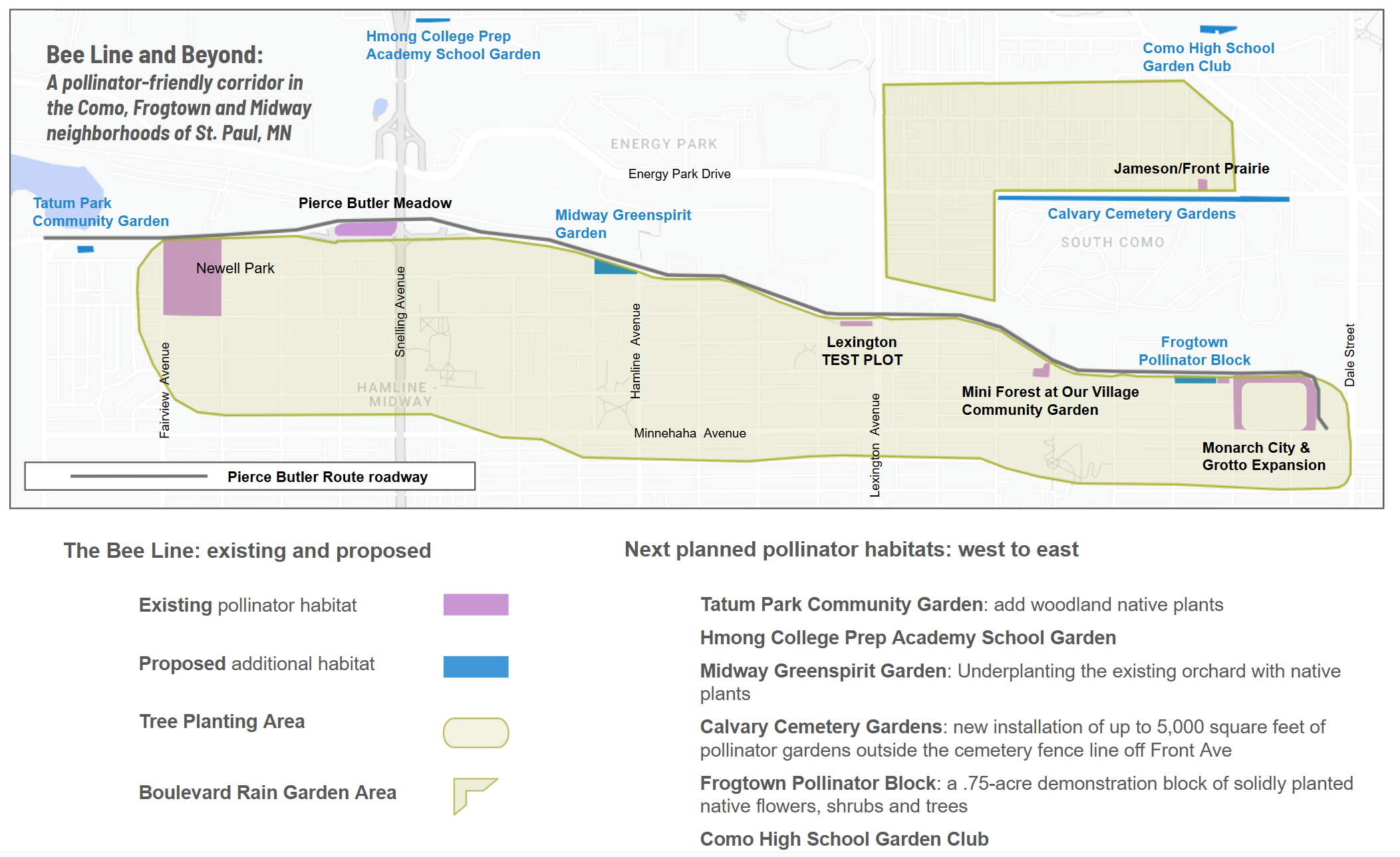
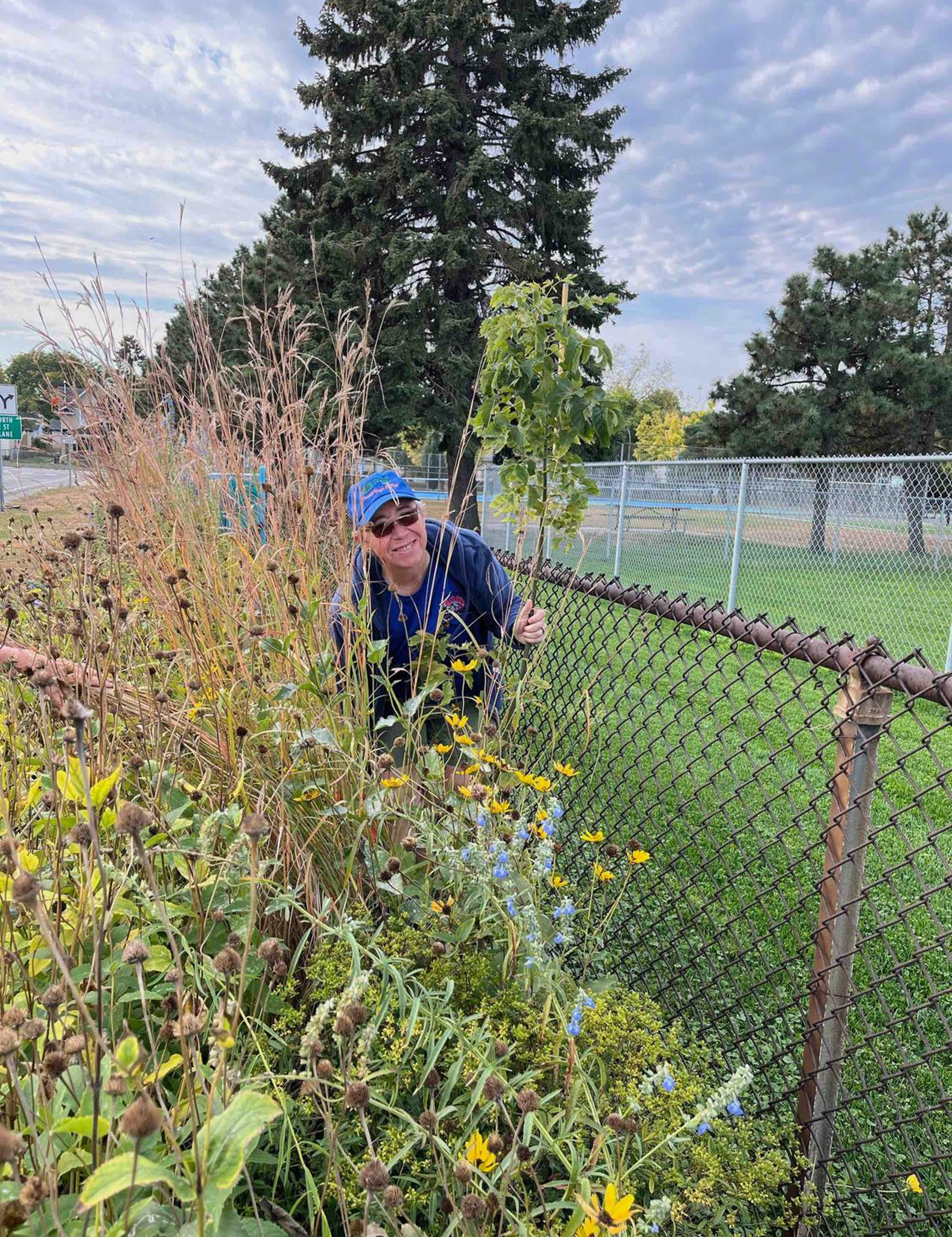
The Bee Line is spearheaded by the Hamline Midway Coalition and Frogtown Green and made possible through the contributions of many partners, including the Capitol Region Watershed District (CRWD), Ramsey County Public Works Department, the State of Minnesota Lawns to Legumes program, the MNSEED Project, Saint Paul Bird Alliance, Xerces Society, and many volunteers. Both Hamline Midway Coalition and Frogtown Green conduct outreach to different organizations to support the project. The Bee Line also provides engagement opportunities for the local community, schools and universities, youth groups, and volunteer organizations. Activities include community gardens, educational workshops, festivals, plant propagation, seed sowing, garden maintenance, and more.
The Bee Line provides much needed pollinator and wildlife habitat along this stretch of busy road, particularly for the Rusty Patched Bumblebees. Native plants used along the Bee Line include 100 species of native wildflower, grasses, trees, and shrubs, including Golden Alexanders, Purple Prairie Clover, Dotted Blazing Star, Round Headed Bush Clover, New Jersey Tea, Compass plant, Late Figwort, Bushy Aster, Sneezeweed, Prairie Onion, Foxglove Penstemon, Little Bluestem, Northern Bedstraw, Joe Pye Weed, and more. Wildlife species observed include frogs, muskrats, and red-wing blackbirds. Planting types include rain gardens, mini-forests, prairies, native meadows, and wetlands.
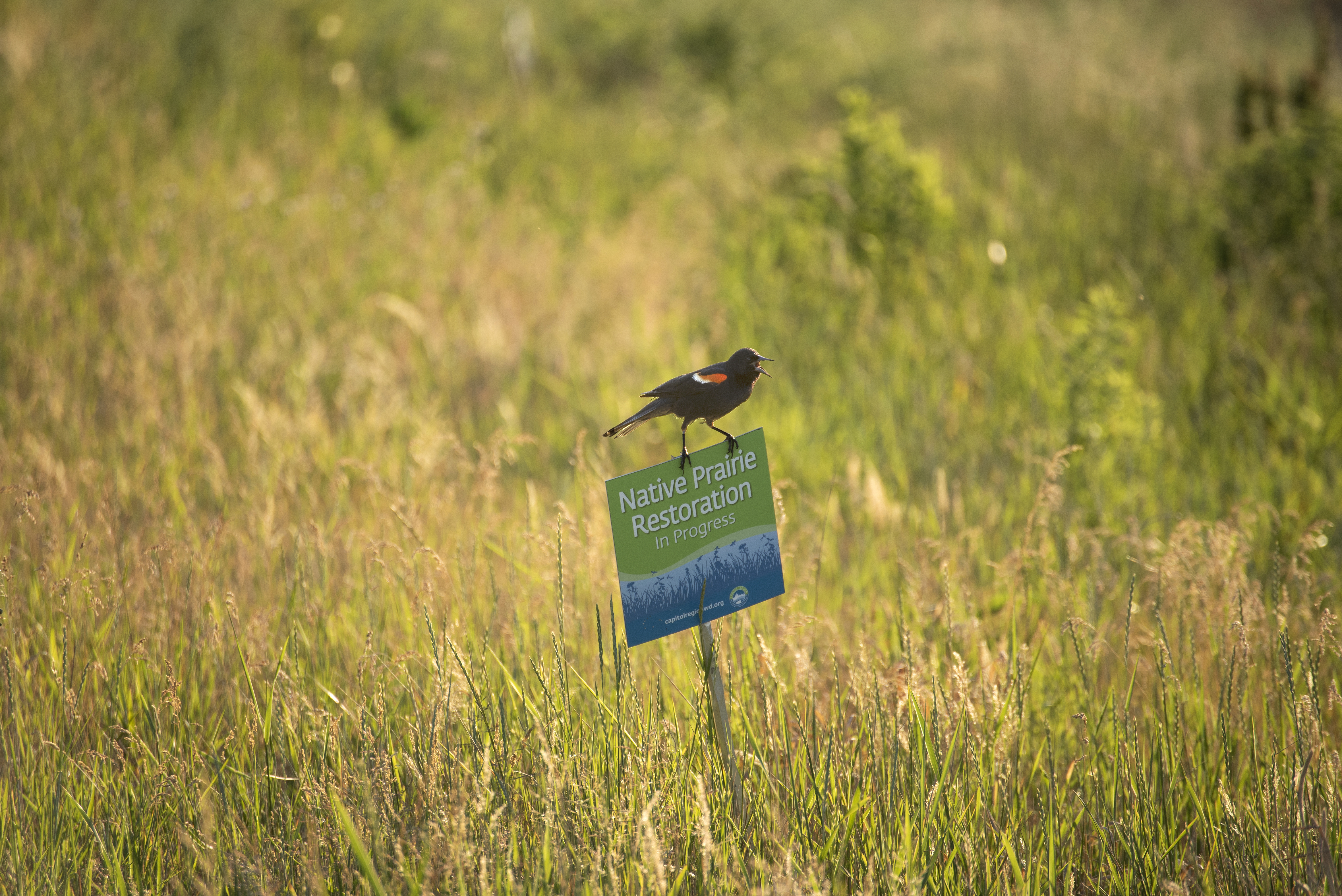
This project has not been without its challenges. Traditional County mowing practices along Pierce Butler Route have at times mown down native vegetation. Coordination with local jurisdictions on best maintenance practices is complicated by the fact that parcels along the corridor are owned and maintained by different city, county, and state partners. Maintenance of the gardens and native plants is also a continuous challenge. For some of the larger prairie-style plantings, ideally prescribed burns would be used to maintain the prairie vegetation. However, with nearby buildings and population, prescribed burns are not always possible. So, most maintenance is accomplished with a limited trained volunteer labor pool and little funding. Access to some gardens and plantings is also difficult due to the busy nature of the county road.
The feasibility of a Bee Line expansion was studied in 2024. This feasibility study was funded by Capitol Region Watershed District and Ramsey County Public Works Department, and Emmons and Olivier Resources was contracted to conduct the study. The plan identified additional areas for native vegetation to create more diverse habitats, stormwater management opportunities to improve water quality, and improvements and expansions to the existing bike trail. However, expansion of the Bee Line is dependent on additional funding and commitments from partners and volunteers.
Quick facts
- Location: Como, Frogtown, and Midway neighborhoods of St. Paul
- Owner: Land is owned by State, County, or Local government entities
- Designer/Architect/Construction Firm: Emmons and Olivier Resources (for the technical feasibility study)
- Year of Completion: ongoing since 2015
- Green Infrastructure Features Included: native vegetation, rain gardens, bioretention
- Special Design Features: Connectivity of native vegetation
- GI Pretreatment Features: n/a
- Total Drainage Area: n/a
- Pollutant Removal: n/a
- Total Cost: Costs are difficult to quantify since the project is primarily accomplished through volunteer hours, in-kind contributions, and some grant funding (including two $40,000 grants from Lawns to Legumes, for a total of $80,000).
- Documented Maintenance Practices: Invasive species removal
- Is the Site Publicly Accessible: Yes
- Notable Challenges: Unwanted mowing, adaptation to changing climate (more intense storms, longer periods of drought), limited funding to expand gardens
- Co-Benefits: pollinator habitat, stormwater treatment, air quality
References and external links
- https://hamlinemidway.org/news/hmec/bee-line-beyond/
- https://mnseedproject.org/
- https://www.stephaniehankerson.com/blog/bee-line-buzzes-on-in-2024
- https://www.ramseymastergardeners.org/post/rcmgs-make-a-bee-line-for-pollinators-in-st-paul
- https://www.frogtowngreen.com/
- https://district10comopark.org/pollinatorpathways/