The City of Rochester Public Works Transit and Operations Center (PWTOC) was constructed in 2012 to consolidate the City’s transit, maintenance, and fleet management operations. The PWTOC’s new design incorporated comprehensive stormwater management, including rain gardens, native low mow vegetation, bioretention, porous pavement, and a stormwater retention pond.
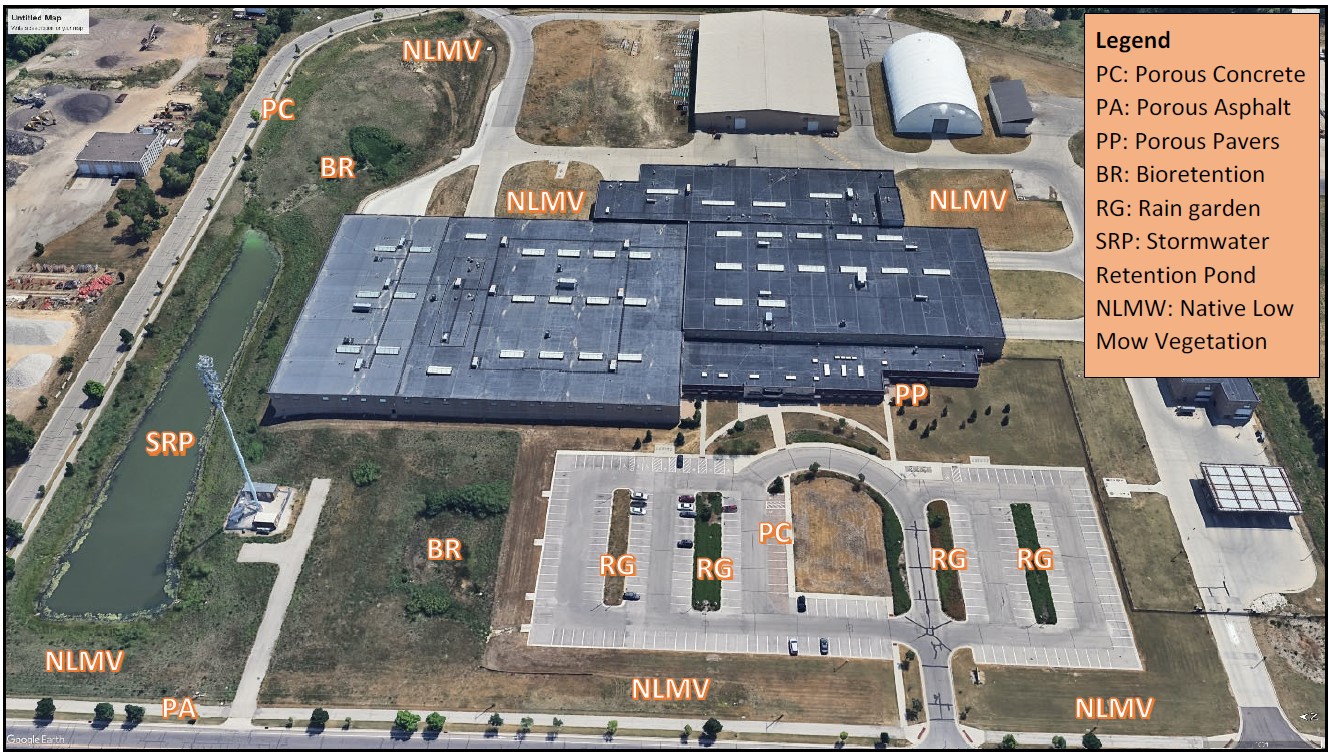
The City of Rochester wanted to incorporate green infrastructure (GI) in the new facility to showcase different GI types and sustainable features to serve as an example and inspiration for similar efforts on other public and private facilities. Since this facility was built on an empty lot, it provided a “blank slate” for adding and designing different types of green infrastructure around the site. Water quantity and quality control is primarily provided by the site’s traditional stormwater pond. But additional green infrastructure was included around the site to enhance benefits including infiltration, pollution reduction, native vegetation, and ecological co-benefits.
The GI practices were sized to retain different depths of water depending on their size and drainage area and range from about 6 inches of water (the small parking lot bioretention practices) to about 4 feet of water (the larger infiltration basins). The infiltration practices were designed to drain in 48 hours to prevent stagnant water.
Construction and planting of the green infrastructure practices were completed around 2012. With over 10 years of operations and maintenance experience of these practices, several “lessons learned” can be shared from this site:
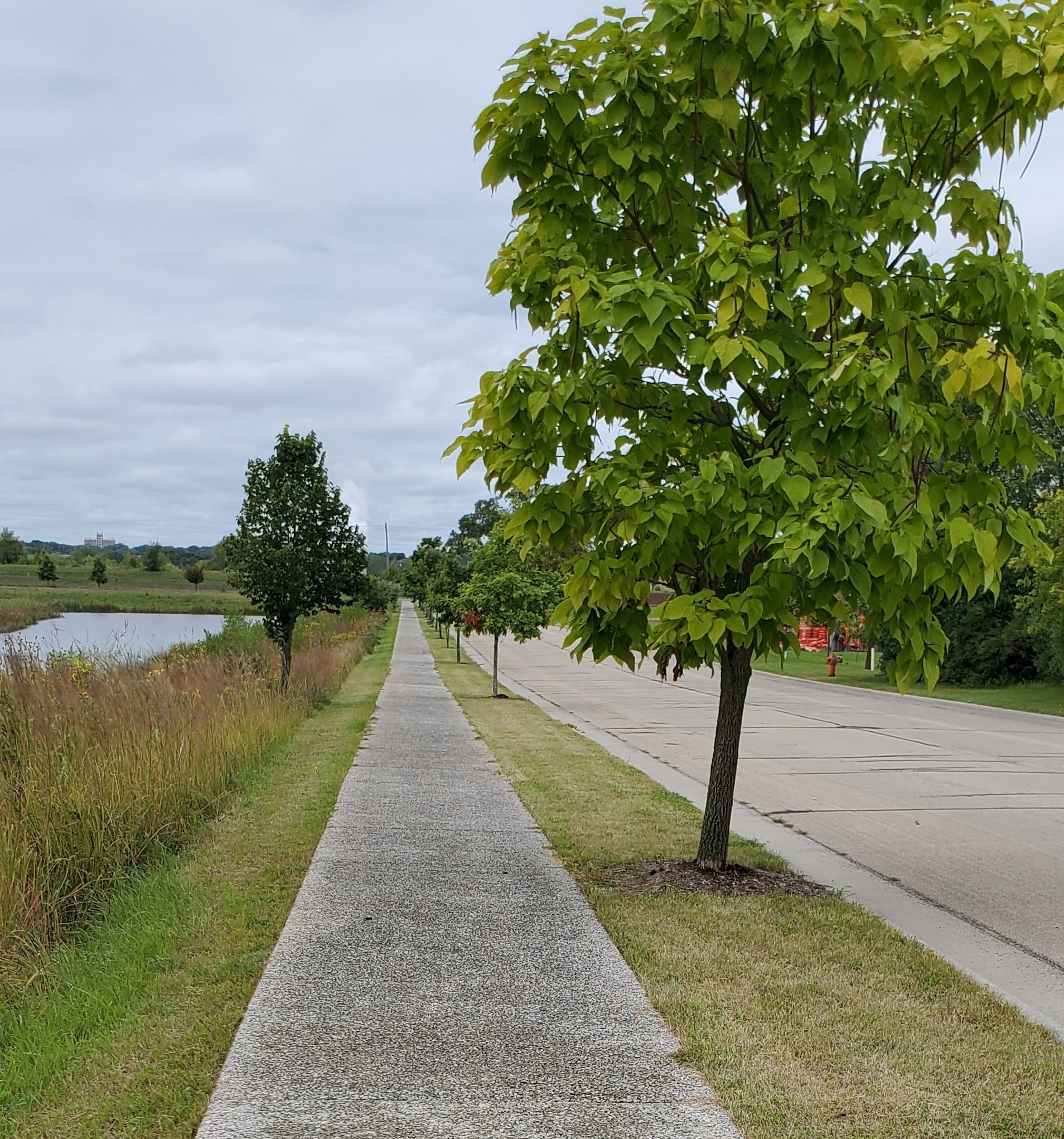
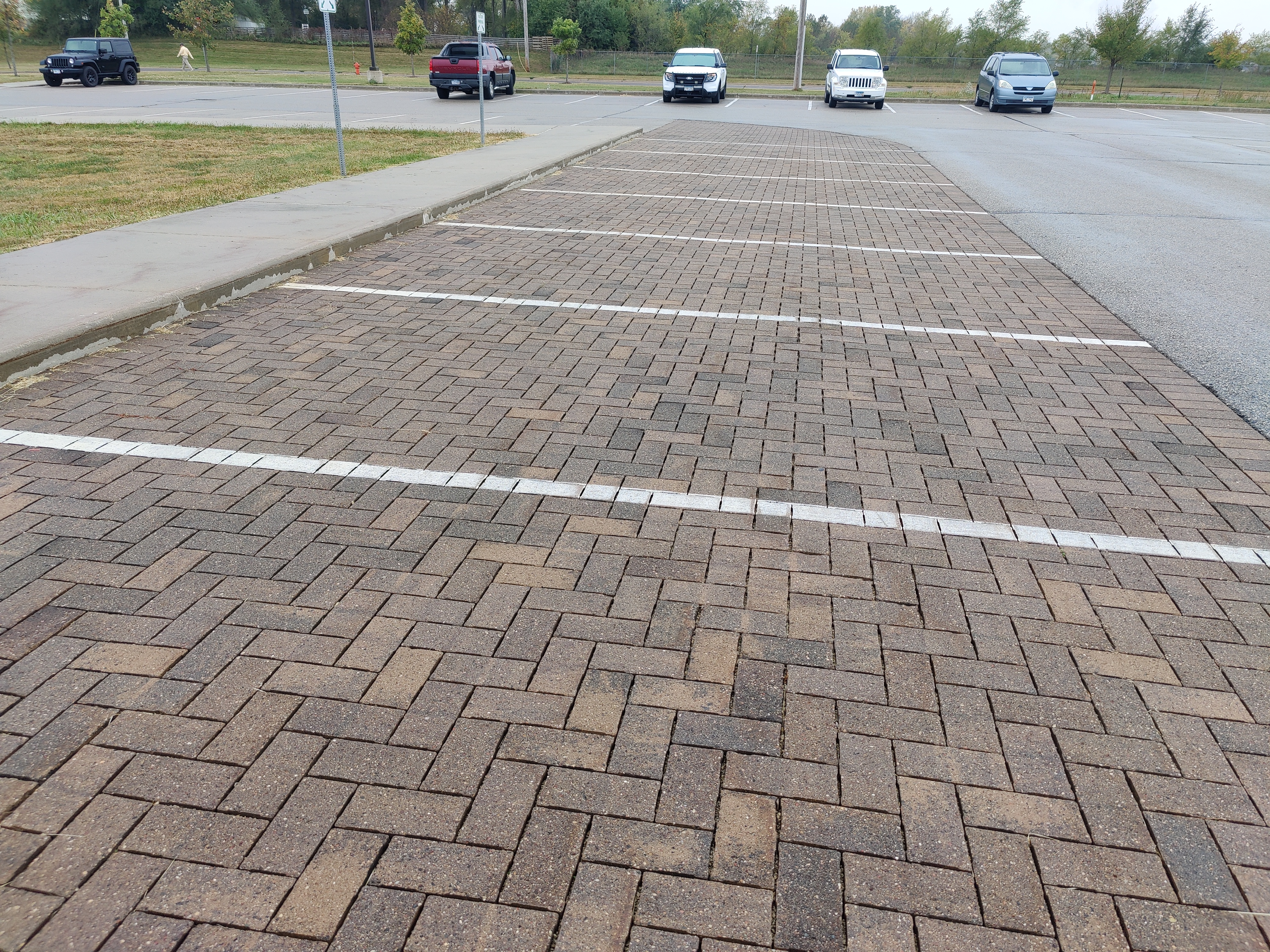
- Pervious concrete under the parking stalls in the main parking lot did not hold up, it failed completely after 3 years (the concrete fell apart in multiple locations). As a result, the pervious concrete in the parking lot was replaced with a mix of pervious pavers (for some parking stalls) and traditional bituminous pavement. In contrast, the pervious concrete that was used for the concrete sidewalk and pervious bituminous for the bike path, around the property has held up well over the years.
- Develop an overview maintenance manual for the green infrastructure practices that facilities staff can use and refer to. This is particularly helpful as facilities staff have regular turn-over and new staff have to be trained in the proper maintenance practices of green infrastructure, which is typically different from maintenance practices of conventional landscaping or paving.
- Select vegetation that is appropriate for the intended use, fits the aesthetics of the site, and conducive to the available maintenance resources. For example, the no-mow turf seed originally used was tough to establish and did not look great. These areas were overseeded with a low-mow seed mix that provided better establishment and looked better. These areas are mowed approximately once a month, which is less frequent than conventional turf grass.
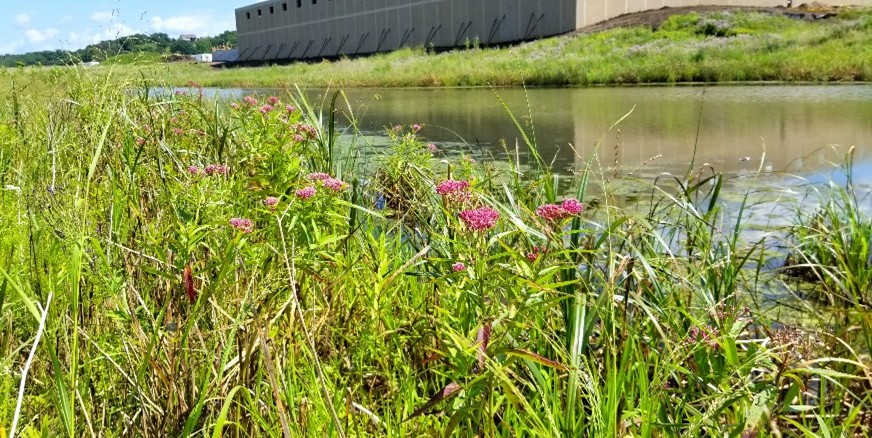
- Prescribed burns have been successful for vegetative management at the stormwater pond. The vegetation around the pond grew wilder and taller than expected and provided additional habitat for birds and insects.
- Several shrub species (red osier dogwood, dwarf bush honeysuckle, and fragrant sumac) do well in this area but require manual trimming that is time-consuming for staff. Selecting vegetation that requires less intense or less frequent maintenance should be a consideration if maintenance resources are limited.
- Reach out to other municipalities or GI owners during the GI planning phase to discuss and understand what has worked well for them and to obtain resources such as GI maintenance plans.
Quick facts:
- Location: City of Rochester, MN
- Owner: City of Rochester Public Works
- Designer/architect/construction firm: Parsons Brinckerhoff (now WSP), TSP, Kestrel Design Group, McGhie & Betts Inc. (now WSB).
- Year of Completion: 2012
- Green Infrastructure Features Included: rain gardens, pervious concrete pavement, pervious bituminous, pervious pavers, native vegetation, bioretention, stormwater retention pond
- Special Design Features: n/a
- GI Pretreatment Features: Bioretention cells have curb cuts that capture coarse sediment and can be cleaned out.
- Total Drainage Area: 54.5 acres to the Pond
- Pollutant Removal: n/a
- Total Construction Cost: n/a
- Documented Maintenance Practices: prescribed burns, monthly mowing, regular trimming of vegetation, occasional cleaning out of bioretention flumes.
- Is the Site Publicly Accessible: Yes, anyone can park in the parking lot or on the roadway and visit the stormwater GI practices.
- Notable Challenges: Pervious concrete pavement in parking lot and driveways did not hold up, the concrete fell apart after 3 years and was removed. This was replaced with traditional bituminous and pervious paver in some areas. The vegetation presented some challenges with plant heights not adapted to the site or that require too much intensive maintenance (e.g.: regular trimming).
- Missed Opportunities: Requesting GI maintenance plans from the designers for use by the maintenance crews.
- Co-Benefits: wildlife habitat (muskrat, birds, bees, beavers, ducks, and more)