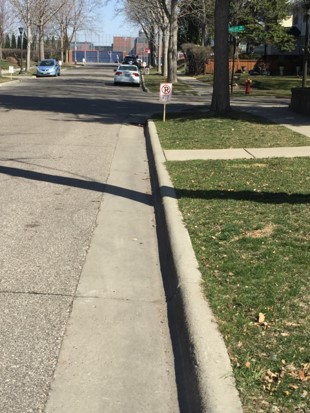
There are multiple reasons for sweeping streets. However, for water quality purposes, sweeping is best done in spring following fruit drop and autumn following leaf drop.
Information on street sweeping
- Overview, water quality benefits, and other co-benefits of street sweeping
- Recommended street sweeping practices for water quality purposes
- Pollutant removal associated with street sweeping
- Cost considerations for establishing and maintaining a street sweeping program
- Survey of street sweeping crediting approaches
- Composition, characterization, and management of street sweepings
- Disposal options for street sweeping materials
- Tracking street sweeping activities
- Case studies for street sweeping
- Lessons learned and advice from street sweeping programs
- Supporting information for street sweeping
Street sweeping crediting and Phosphorus Calculator
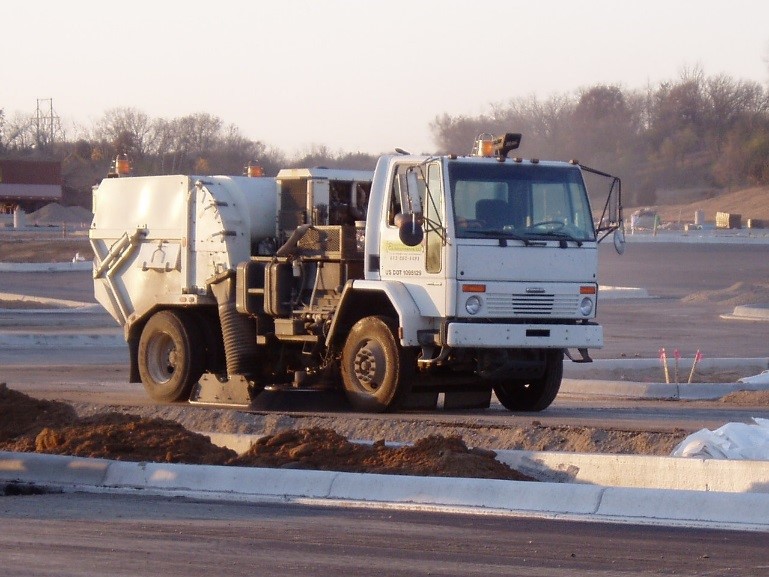
- Street Sweeping Calculator
- Methods for sampling street sweeping material - Standard Operating Procedures
- Methods for calculating pollutant reductions (credits) for street sweeping
- Accounting for phosphorus load reductions with street sweeping
- P8 Street Sweeping Modeling
- TSS credits for street sweeping
- Guidance for incorporating street sweeping into the Minimal Impact Design Standards Calculator and MPCA’s Simple Estimator
- Volume based crediting for street sweeping
- Example phosphorus calculations for street sweeping using different methods
Fact sheets, quick guides
- Benefits and cost effectiveness of street sweeping
- Recommended practices for a water quality-targeted street sweeping program
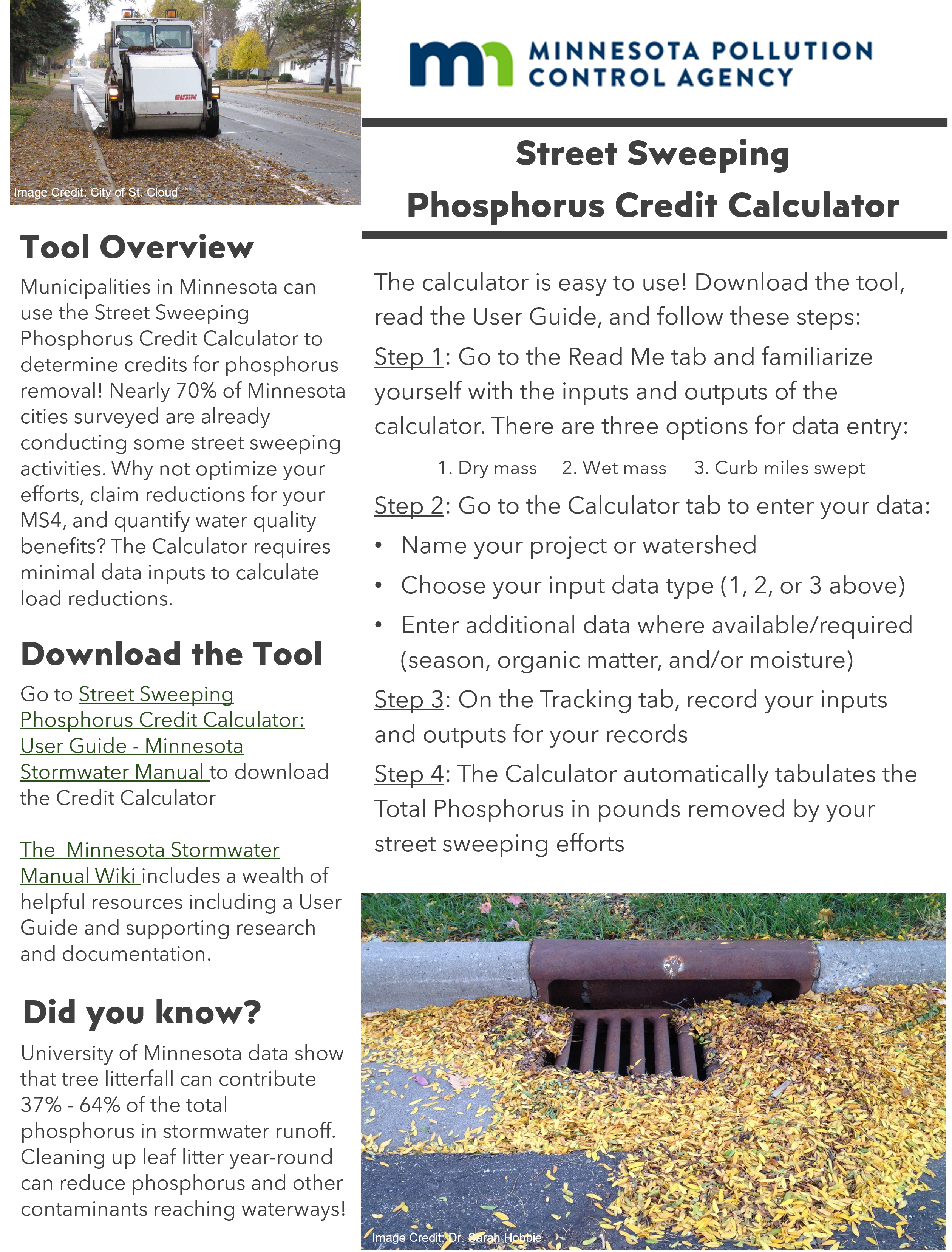
- Street Sweeping Phosphorus Credit Calculator How-to-Guide
- MS4 fact sheet - Street & Parking Lot Sweeping
University of Minnesota research on street sweeping
- Developing a street sweeping credit for stormwater phosphorus source reduction - this page contains information and the final report from the U of M study that led to development of the phosphorus calculator. Researchers: Sarah E. Hobbie, Rachel King, Tessa Belo, Lawrence A. Baker, Jacques C. Finlay.
- Quantifying Nutrient Removal through Targeted Intensive Street Sweeping - summary of Prior Lake study, 2010-2013 (Kalinosky et al., 2013). For additional information related to this project, link here
Links
- Internal
- External
- Using leaf collection and street cleaning to reduce nutrients in urban stormwater - This page summarizes on-going research by the United States Geological Survey on street sweeping. Lead researcher - William Selbig.
- Recommendations of the Expert Panel to Define Removal Rates for Street and Storm Drain Cleaning Practices - Final document produced by Chesapeake Bay expert panel
- Neat websites and articles for trees
Survey of street sweeping practices
The MPCA conducted a survey of cities to determine their street sweeping practices, their interest in a street sweeping credit, and their ability to implement different methods for crediting sweeping. We have not yet fully analyzed the data, but some general conclusions include the following.
- 75 cities responded to the survey and indicated they operate a sweeping program. This was a response rate of close to 50 percent. The responses were distributed geographically across the state and covered a wide range of city sizes (large to small).
- About 78 percent indicated they would be likely to participate in a crediting program
- All but 7 cities can track sweeping information, but 66 percent said they cannot relate material collected to a specific geographic area. This is a question we likely will follow-up with, since being able to relate material to a geographic location is potentially a way of targeting sweeping efforts.
- Most cities estimate volume or mass of material collected, but few measure volume or mass or have the ability to measure dry weight of material collected
- Most cities sweep quarterly or less and most do not specifically sweep in response to fall leave drop
The summary information can be found here.
Related pages
- Trees
- Phosphorus
- Total Suspended Solids (TSS) in stormwater
- Street sweeping for trees
- Questions and answers January 9 2018 webinar, Sweeping and leaf litter
- Guidance for managing sediment and wastes collected by pretreatment practices: Note - this page contains some information on disposal of material collected in pretreatment practices, include information on street sweepings