
Green Infrastructure: Trees can be an important tool for retention and detention of stormwater runoff. Trees provide additional benefits, including cleaner air, reduction of heat island effects, carbon sequestration, reduced noise pollution, reduced pavement maintenance needs, and cooler cars in shaded parking lots.
Information: Tree trenches and tree boxes are bioretention practices. However, because of differences in design, construction and maintenance, we have created a separate section for trees.

Use of trees to manage stormwater runoff encompasses several practices. Tree trenches and tree boxes (collectively called tree BMPs), the most commonly implemented tree BMPs, can be incorporated anywhere in the stormwater treatment train but are most often located in upland areas of the treatment train.
Tree BMPs are one component of urban forestry. Urban forestry is a broad term that applies to all publicly and privately owned trees within an urban area, including individual trees along streets and in backyards, as well as stands of remnant forest (Nowak et al. 2001). This page includes three sections covering general information about trees, tree trenches and tree boxes as BMPs, and urban forestry.
Pages with general information on trees
- Overview for trees
- Types of tree BMPs
- Plant lists for trees
- Street sweeping - this page provides a summary of an on-going project to develop a street sweeping credit
- Street sweeping for trees
- References for trees
- Supporting material for trees
- Neat websites and articles for trees
- Links to tree ordinances and forest management master plans
- Green Infrastructure benefits of tree trenches and tree boxes
Links to information on tree trenches and tree boxes
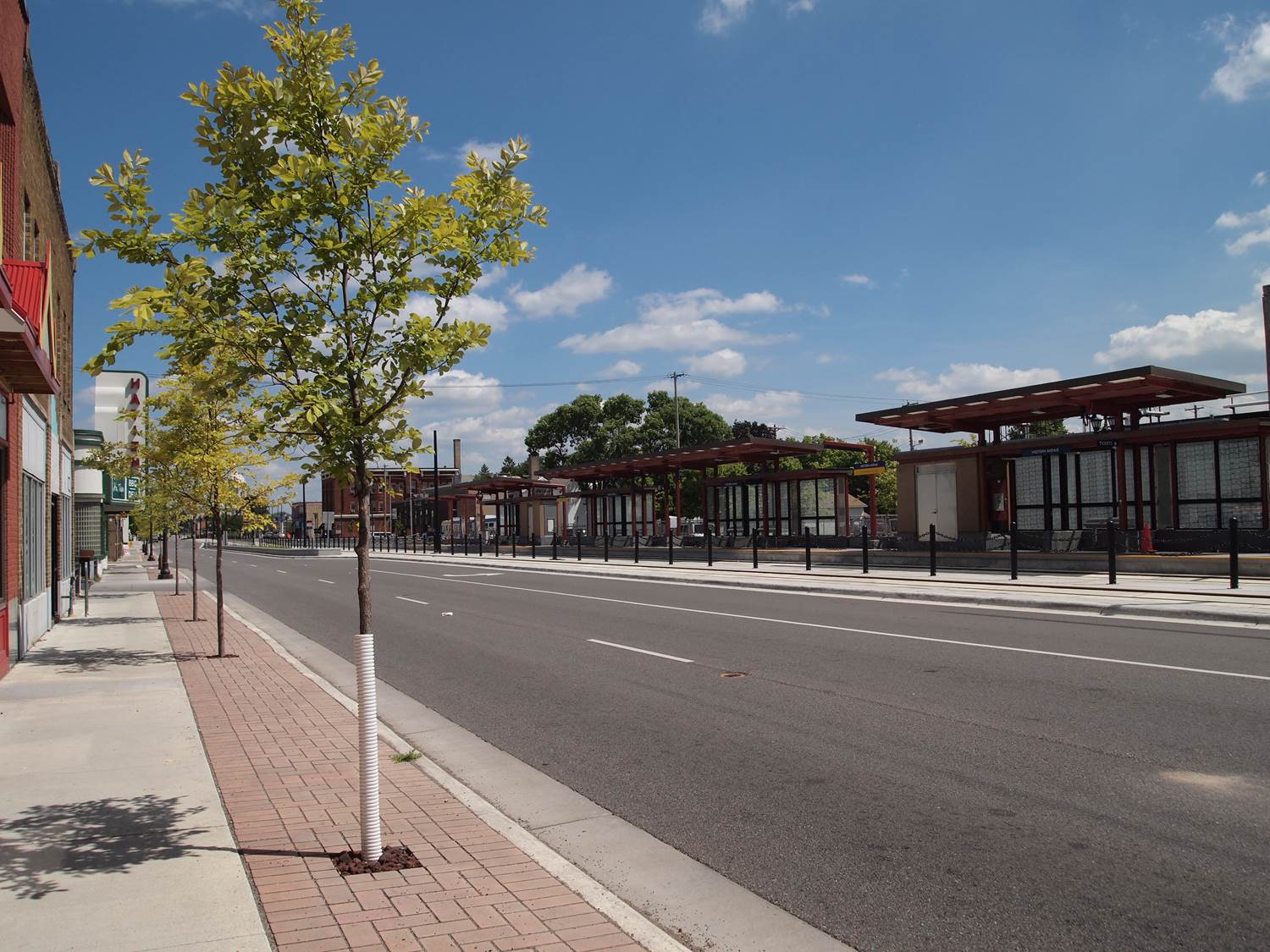
- Design guidelines for tree quality and planting - tree trenches and tree boxes
- Design guidelines for soil characteristics - tree trenches and tree boxes
- Construction guidelines for tree trenches and tree boxes
- Protection of existing trees on construction sites
- Operation and maintenance (O&M) of tree trenches and tree boxes
- Operation and maintenance of tree trenches and tree boxes - supplemental information
- Assessing the performance of tree trenches and tree boxes
- Calculating credits for tree trenches and tree boxes
- Case studies for tree trenches and tree boxes
- Soil amendments to enhance phosphorus sorption
- Green Infrastructure benefits of tree trenches and tree boxes
- Summary of permit requirements for infiltration
- Tree trench/box photo gallery
- Fact sheet for tree trenches and tree boxes
- Requirements, recommendations and information for using trees as a BMP in the MIDS calculator
- Requirements, recommendations and information for using trees with an underdrain as a BMP in the MIDS calculator
Links to tables with tree information
- Tree species list - general information
- Tree species list - morphology
- Tree species list - tolerance to stresses
- Tree species list - pH and moisture ranges
- Tree species list - tolerance to inundation
- Tree species list - additional benefits
- Tree species list - notes
- Tree species list - Suitable for CU structural soil
- Tree health troubleshooting guidelines
Urban Forestry
For more information on urban forestry, we suggest visiting the following websites.
- Urban and Community Forestry - USDA Forest Service
- Urban Forestry & Ecosystem Management - City of Philadelphia
- Watershed Forestry Resource Guide - Center for Watershed Protection and US Forest Service - Northeastern Area State & Private Forestry
- American Forests
- Urban Forestry - Virginia Tech University
- Stormwater to Street Trees: Engineering Urban Forests for Stormwater Management - U.S. EPA
- Green Step Cities. This page provides a summary of urban forestry practices that cities can implement to help become a Green Step City and a list of cities that are implementing the practices, including links.
Links to additional resources
- Deeproot blog page
- Ask Jim Urban
- How trees can retain stormwater runoff
- Trees tame stormwater, Arbor Day Foundation
- National tree benefit calculator
- USDA iTree website - i-Tree is a state-of-the-art, peer-reviewed software suite from the USDA Forest Service that provides urban and rural forestry analysis and benefits assessment tools.