Green Infrastructure: Stormwater and rainwater harvest and use systems can improve or maintain watershed hydrology, reduce pollutant loading to receiving waters, increase water conservation, reduce stress on existing infrastructure, and reduce energy consumption
This page provides guidance for operation and maintenance (O&M) of stormwater and rainwater harvest and use/reuse practices.
Supplemental information can be found on the page called Operation and maintenance (O&M) of stormwater and rainwater harvest and use/reuse practices - supplemental information. Supplemental information includes the following.
- Collection surfaces
- Collection system and pre-storage treatment components
- Storage components
- Post-storage treatment system components
- Distribution components
- Overflow and bypass systems
- Winter decommissioning and maintenance
- Resources for operation and maintenance
- Additional References
Contents
- Overview of typical O&M issues
- Design phase O&M considerations
- Construction phase O&M considerations
- Post-construction phase O&M
- Maintenance costs
- Maintenance training documents and videos
- Related pages
Overview of typical O&M issues
Stormwater and rainwater harvest and use/reuse practices are practices like rain barrels or cisterns that capture and retain stormwater for beneficial reuse. Operation and maintenance needs vary depending on the configuration and components of the harvest and use system. While many stormwater systems are designed to be relatively passive with minimal oversight needed, harvesting and use/reuse systems require managed operation where the goal is to move water from the storage unit to a point of use so that there is sufficient storage available to receive runoff from subsequent rainfall events. The timing and management of the water storage and use operation needs to be integrated into the system design.
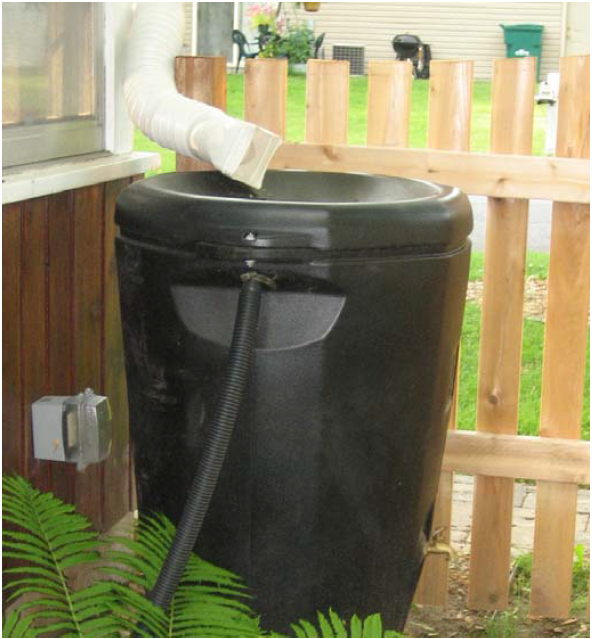
With an actively managed operating system, regular maintenance is also important to preserve the end use water quality, maintain system safety and efficiency, and minimize costs associated with repairs and downtime. A properly maintained cistern will last 20-50 years, depending on the size, design, and climate (City of Portland, 2006). The most frequently cited O&M concerns for these practices include the following.
- Sediment or organic material buildup in the storage tank
- Mosquito or insect breeding ground
- Winter freezing
- Cistern overflows or leaks
- Erosion around the overflow discharge point
The page Environmental concerns for stormwater and rainwater harvest and use/reuse addresses some of these issues.
The sections below describe best practices to prevent or minimize these common problems.
Design phase O&M considerations
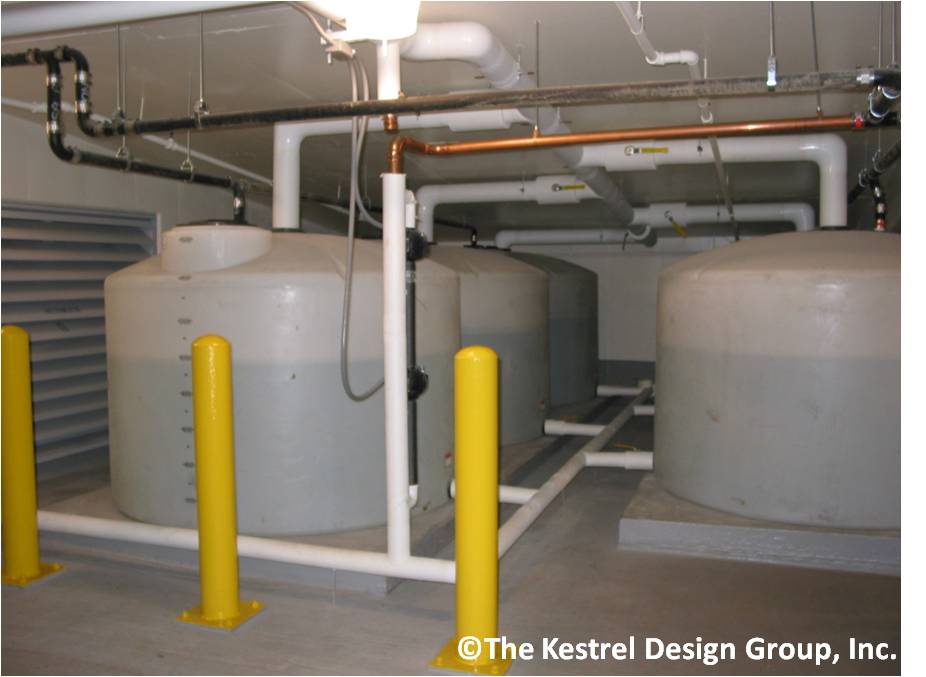
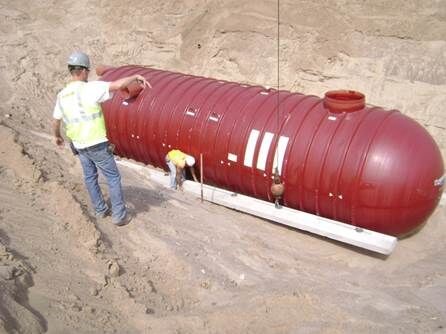
Rainwater harvesting and reuse systems store and release rainfall for future use. Rainwater that falls on a rooftop or other impervious surface is collected and conveyed into an above- or below-ground storage tank (also referred to as a cistern, rain tank, or rain barrel), where it can be used for non potable water uses and on-site stormwater disposal/infiltration. Non-potable uses may include landscape irrigation, exterior washing (e.g. vehicle, building, or sidewalk washing), or flushing of toilets and urinals. Harvesting and reuse systems require managed operation where the goal is to move water from the storage unit to a point of use so that there is sufficient storage available to receive runoff from subsequent rainfall events. The timing and management of the water storage and use operation needs to be integrated into the system design. With an actively managed operating system, regular maintenance is also important to preserve the end use water quality, maintain system safety and efficiency, and minimize costs associated with repairs and downtime.
Designers should design these practices in ways that prevent or minimize O&M issues. Examples include the following.
- Sizing the practice in accordance to its contributing drainage area and potential use(s)
- Checking that the contributing drainage area (i.e. roofs) are appropriate for rainwater reuse and will not leach metals, asbestos, or other contaminants
- Providing pretreatment, including a first flush diversion system for larger cisterns
- Checking plumbing codes for allowable indoor uses and required water treatment
- Consulting with a mechanical, electrical, plumbing (MEP) engineer for indoor use of harvesting systems
- Checking site topography and storage tank location, to ensure rainwater harvesting can occur and to determine piping and pumping needs
- Locating the tank so that it is above the groundwater table and outside of any flooding zone
- Locating underground tanks away from underground utilities
- Checking the integrity and stability of the soil or aggregate upon which the tank will be placed to avoid settling or shifting
- Providing adequate hydraulic head for the intended use of the water
Designers should consult and include any local requirements regarding green infrastructure. O&M considerations often depend on whether the practice is located on public land, private land, or in the public right of way.
Designers can incorporate design solutions to facilitate maintenance activities. Examples include the following.
- Providing adequate space around the storage tank and incorporating multiple and easy site access points to inspect around the storage tank
- For large tanks, providing a standard size manhole or equivalent opening to inspect the inside of the storage tank.
The designer should also provide a site-specific O&M plan that includes the following.
- Construction inspection schedule and checklists
- Post-construction routine maintenance and cleaning schedule and checklists
- Operating instructions for the practice (if applicable)
- A winterization plan and schedule
- A site plan
For more information on design criteria for stormwater and rainwater harvest and reuse practices, click here.
Construction phase O&M considerations
Proper construction methods and sequencing play a significant role in reducing O&M problems. However, unlike many other green infrastructure practices, typical harvesting and use systems are not as sensitive to the particular sequence of construction, as long as temporary or construction phase stormwater treatment is addressed (i.e., the storage component can serve both temporary or construction phase stormwater treatment needs as well as long-term harvesting needs). Some key items during the construction phase include the following.
- Before construction begins
- Verify that all necessary certifications, licenses, permits and approvals have been obtained, including those required by the Minnesota Plumbing Code.
- Install any needed erosion and sediment controls in your construction site and prepare a SWPPP
- Designate a stormwater supervisor to make sure someone is responsible for erosion and sediment control.
- Hold a pre-construction meeting to review the construction plans and the sequencing of construction. Suggested attendees include, but are not limited to, engineers, code officials, system provider, plumbers, electricians and excavators.
- During construction
- Perform interim tests and inspections as required by governing agencies including pressure testing of pipe/joints and tanks if required, cross connection testing, rpz (reduced pressure zone - testing pressure between two points) testing and start up water quality testing.
- Inspect the practice during construction to ensure that the rainwater harvesting system is built in accordance with the approved design and standards and specifications. Use a detailed inspection checklists that include sign-offs by qualified individuals at critical stages of construction, to ensure that the contractor’s interpretation of the plan is acceptable to the professional designer. Example construction phase inspection checklists are provided below.
- After construction
- Verify that the rainwater harvesting system was built in accordance with the approved design and standards and specifications.
- Inspect and clean all conveyance and storage elements immediately prior to system testing. Verify that the distribution intake within storage device(s) is clear of sediment and will not entrain any sediment once flow is initiated.
- Verify that the practice actually captures runoff. Conduct a full inundation test to inspect the inflows, piping, storage tank, and outflows.
- Confirm that there are no leakages in the routing to the storage device or out of the storage device.
- Use a detailed inspection checklists that include sign-offs by qualified individuals at the completion of construction, to ensure that the contractor’s interpretation of the plan is acceptable to the professional designer. Example construction phase inspection checklists are provided below.
- Review and discuss all part warranties.
- The design/construction team should provide the O&M team with the following information to be included in the O&M plan.
- The “ as-built” plans of the practice
- A list of conditions that might cause failure of the practice if not properly maintained.
More information on typical construction sequencing of rainwater harvesting practices will be found on the Construction specifications for stormwater and rainwater harvest and use/reuse page.
Post-construction phase O&M
Stormwater harvesting and use/reuse systems rely on being properly operated and maintained, especially for larger underground tanks. Proper operation and maintenance will only increase the expected lifespan of the facility. Important post-construction considerations are provided below.
- A site-specific Operations and Maintenance Plan should be prepared by the designer prior to putting the stormwater practice into operation. This plan should provide any operating procedures related to the practices. The plan should also provide clear maintenance expectations, activities, and schedules. Include photos if possible. Be clear about who is responsible for the maintenance and the type of expertise that will be needed for distinct O&M activities. The O&M plan should include an anticipated budget for O&M activities. The O&M plan should also include an example O&M inspection checklist and an example maintenance report, as well as site plan(s) and as-built drawings. Example O&M plans are provided below.
- A legally binding and enforceable maintenance agreement should be executed between the practice owner and the local review authority. Example maintenance agreements are provided below.
- Inspection and maintenance activities are distinct and can be done as separate activities or together. Inspection will typically assess the practice for any O&M issues, whereas maintenance will address the O&M issues identified by the inspection. A dedicated inspection effort on a large number of BMPs can help prioritize maintenance activities.
- If stormwater harvesting systems are not fully winterized to withstand seasonal temperature fluctuations, systems should be decommissioned before the cold weather season. Winter decommissioning also provides an opportunity to perform annual inspection and maintenance. More information about winter decommissioning and maintenance tasks can be found on the Operation and maintenance (O&M) of stormwater and rainwater harvest and use/reuse practices - supplemental information page.
The table below provides an overview and schedule of general maintenance activities. A more detailed maintenance list can be found on the General inspection and maintenance guidelines for stormwater harvest and use systems page.
| Activity | Frequency | Time Period | Level of Effort per Visit | O&M Benefit* | |
|---|---|---|---|---|---|
| First Year of Operation | Check operation of mechanical parts like pumps | At least twice after the system becomes operational | During a storm event | 2-4 hours | 1 |
| Check condition of first flush and high flow diverters | At least twice after storm events > 0.5 inches | Within the first 6 months | 1-2 hours | 1 | |
| Check for clogging | At least twice after storm events > 0.5 inches | Within the first 6 months | 1-2 hours | 1 | |
| Check for erosion downstream of the high flow diverter | At least twice after storm events > 0.5 inches | Within the first 6 months | 1 hour | 1 | |
| Check for leaks | At least twice after storm events > 0.5 inches | Within the first 6 months | 1 hour | 1 | |
| Check performance of water treatment system and adjust treatment parameters | After tank has filled up | Within first month | 2 hours | 4 | |
| After First Year of Operation | Inspect and clean pre screening devices and first flush diverters | Quarterly | Seasonally | 2 hours | 1 |
| Check and clean any filters to prevent clogging | 3 times per year and/or after each event that exceeds the design capacity of the collection system | 1-2 hours | 1 | ||
| Remove leaves and debris from the gutters and downspouts | Semi-annually | Spring and Fall | 2-4 hours | 1 | |
| Clean out tank to remove sediment and algae | Semi-annually | Spring and Fall | 4 hours | 1,4 | |
| Check and repair damage to collection surface and collection tanks | Annually | Spring or Fall | 2-4 hours | 1 | |
| Check and repair erosion along the diversion pathways | Annually | After large storm | 1-2 hours | 1 | |
| Check and repair any leaks | Annually | Spring or Fall | 2-4 hours | 1 | |
| Inspect and repair mosquito screens | Annually | Spring or Fall | 1-2 hours | 1 | |
| Clear overhanging vegetation and trees over roof | Annually | Winter | 1 | ||
| Winterize or disconnect the storage system before the winter | Annually | Late Fall | Depends on system | 1 | |
| Check structural integrity of tank, pump, pipe, and electrical system and repair any damages as needed | Every 3 years | As convenient | Depends on repairs needed | 1 | |
| After 5+ Years of Operation (non-routine maintenance) | After long term operation of the practice, some occasional and infrequent maintenance activities might be required, such as replacement of structural materials, conveyance equipment, or storage tanks. | As needed | As needed | Could be significant depending on the activity | 1,4 |
|
Key to Maintenance Benefits:
|
|||||
Cisterns that are used within on-site non-potable systems require daily, weekly, monthly, and periodic maintenance to keep a healthy operating system. Routine daily maintenance activities include checking for leaks, monitoring the system and responding to alarms, replacing buffers and reagents, grabbing required samples, and conducting system walkthroughs. Weekly maintenance should be performed to prevent issues from developing or worsening. These preventative tasks should be performed in accordance with the specific equipment, but should include checking chemical levels, draining condensate, inspecting screens, and collecting samples. Monthly checks should be performed to assess service levels and calibration of operational equipment, and longer-term periodic maintenance tasks should be performed to repair or replace probes, screens, and other key components of the system. More information on non-potable systems and their maintenance by the Water Research Foundation can be found in their Onsite Non-Potable Water System Guidance Manual.
Maintenance costs
Maintenance costs will vary depending on the size of the practice and the type of rainwater harvest system (cistern or rain barrel). Example costs are shown in the table below. Maintenance may be lower the first few years while parts are new, and more expensive in later years when components may need to be replaced.
| Activity | Frequency | Annual Cost | Reference |
|---|---|---|---|
| Inspection, Reporting & Information Management | Semi-Annually | $260 | 2009 WERF |
| Roof Washing, Cleaning Inflow Filters | Semi-Annually | $480 | 2009 WERF |
| Intermittent System Maintenance (System flush, debris/sediment removal from tank) | Every 3 years | $130 | 2009 WERF |
| Pump Replacement | Every 3 years | $198 | 2009 WERF |
| Cartridge Filter | Annually | $20-60 | MPCA Cost-Benefit Considerations |
| Reverse Osmosis Filter | Annually | $400-1,500 | MPCA Cost-Benefit Considerations |
| UV Light Disinfection | Every 10,000 hours or 14 months | $350-1,000; $80 to replace UV bulb | MPCA Cost-Benefit Considerations |
| Ozone Disinfection | As needed | $700-2,600; $1,200+ for in-line monitor to test effectiveness | MPCA Cost-Benefit Considerations |
| Chlorine Disinfection | Monthly | $1/month manual dose or a $600-3,000 automatic self-dosing system | MPCA Cost-Benefit Considerations |
Maintenance training documents and videos
- Water Harvesting Certificate Program
- RESIDENTIAL RAINWATER HARVESTING TRAINING OVERVIEW
- What is rainwater harvesting?
| Document | Link |
|---|---|
| Operation & Maintenance Plan | |
| Construction phase inspection checklist | |
| O&M inspection checklist | |
| O&M example report |
|
| Maintenance Agreements |
|
Additional detailed O&M information
More detailed information regarding specific maintenance activities are provided here. Topics discussed include the following.
- Collection surfaces
- Collection system and pre-storage treatment components
- Storage components
- Post-storage treatment system components
- Distribution components
- Overflow and bypass systems
- Winter decommissioning and maintenance
- Resources for operation and maintenance
- Additional References
Case studies
- Ju Young Lee, Hyoungju Kim, Mooyoung Han. 2016. Importance of maintenance in rainwater harvesting systems: a case study. Water Science and Technology. Water Supply 16(1), 97–103. doi: 10.2166/ws.2015.115
Maintenance training documents and videos
- DOEE Rain Barrel Maintenance video
- Montgomery County (MD) DEP Rain Barrels and Cisterns video
- The American Rainwater Catchment Systems Association (ARCSA) Rainwater Harvesting Training and Certification
O&M resource catalog
MPCA has compiled publicly available O&M resources related to green infrastructure. This non-exhaustive catalog is intended as a resource to practitioners.
References
- City of Portland. 2006. Cisterns. Environmental Services.
Related pages
Rainwater harvest and reuse
- Overview for stormwater and rainwater harvest and use/reuse
- Design criteria for stormwater and rainwater harvest and use/reuse
- Construction specifications for stormwater and rainwater harvest and use/reuse
- Operation and maintenance for stormwater and rainwater harvest and use/reuse
- Water quality considerations for stormwater and rainwater harvest and use/reuse
- Environmental concerns for stormwater and rainwater harvest and use/reuse
- Cost-benefit considerations for stormwater and rainwater harvest and use/reuse
- Case studies for stormwater and rainwater harvest and use/reuse
- Calculating credits for stormwater and rainwater harvest and use/reuse
- Definitions for stormwater and rainwater harvest and use/reuse
- Requirements, recommendations and information for using Harvest and re-use/cistern as a BMP in the MIDS calculator
- References for stormwater and rainwater harvest and use/reuse
- Technical support for stormwater and rainwater harvest and use/reuse
Green Infrastructure
- Green Stormwater Infrastructure (GSI) and sustainable stormwater management
- Operation and maintenance of green infrastructure practices
- Operation and maintenance of bioretention and other stormwater infiltration practices
- Operation and maintenance of bioretention and other stormwater infiltration practices - supplemental information
- Operation and maintenance (O&M) of tree trenches and tree boxes
- Operation and maintenance of tree trenches and tree boxes - supplemental information
- Operation and maintenance (O&M) of green roofs
- Operation and maintenance of green roofs - supplemental information
- Operation and maintenance (O&M) of swales
- Operation and maintenance of swales - supplemental information
- Operation and maintenance (O&M) of filter strips
- Operation and maintenance of filter strips - supplemental information
- Operation and maintenance (O&M) of stormwater and rainwater harvest and use/reuse practices
- Operation and maintenance (O&M) of stormwater and rainwater harvest and use/reuse practices - supplemental information
- Operation and maintenance (O&M) of stormwater treatment wetland practices
- Operation and maintenance (O&M) of permeable pavement
- Operation and maintenance (O&M) of permeable pavement - supplemental information