This section of the manual is currently under construction.
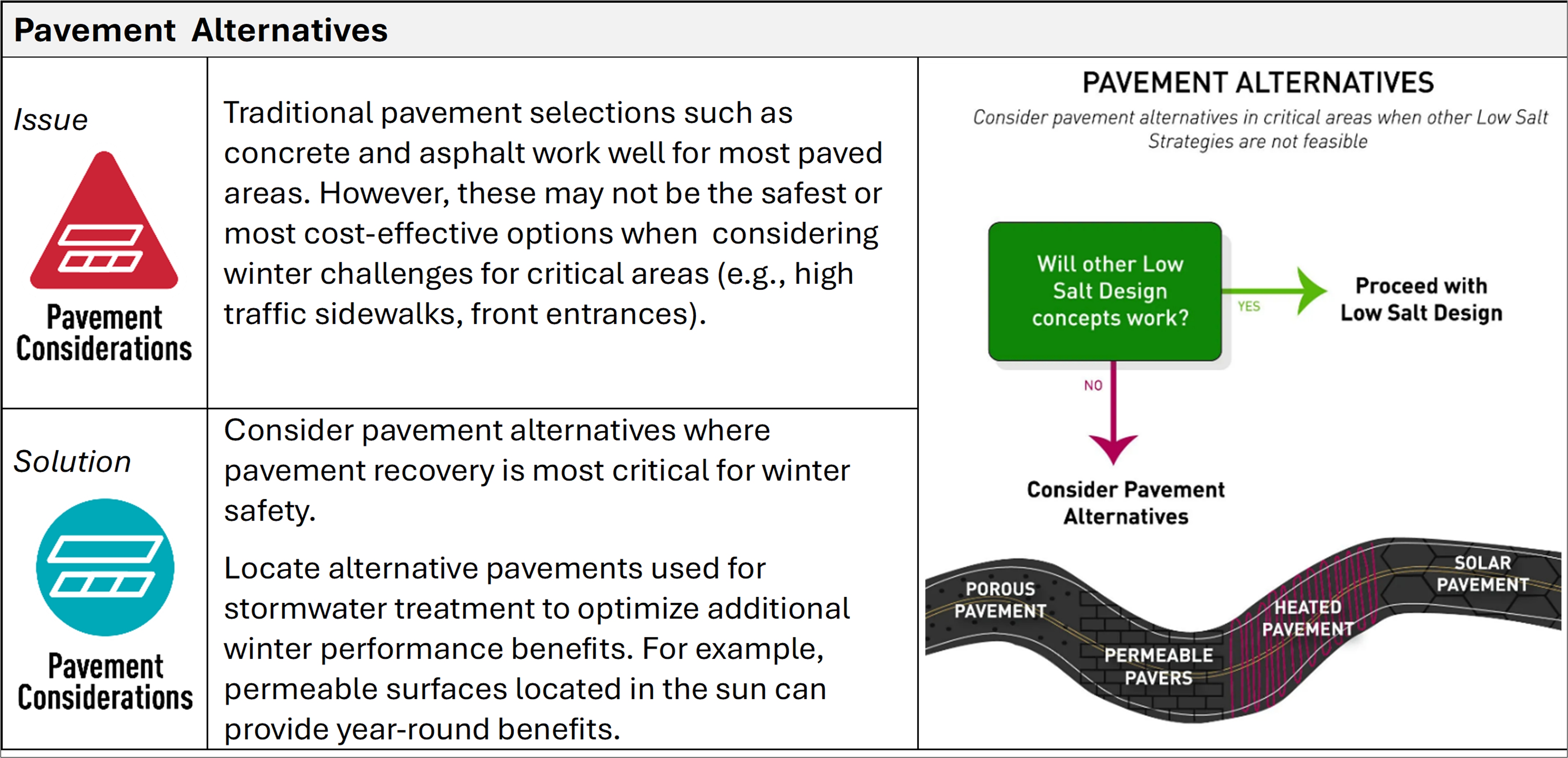
In Low Salt Design, as we become aware of the sun, the wind, the meltwater sprawl and how these intersect with critical areas (braking zones, front steps, emergency vehicle entrances, etc.) we better see where our designs shine or fall short. With many competing factors in design, we may discover a future winter performance problem in a critical area. That is the perfect time to consider alternative pavements.
Applicability
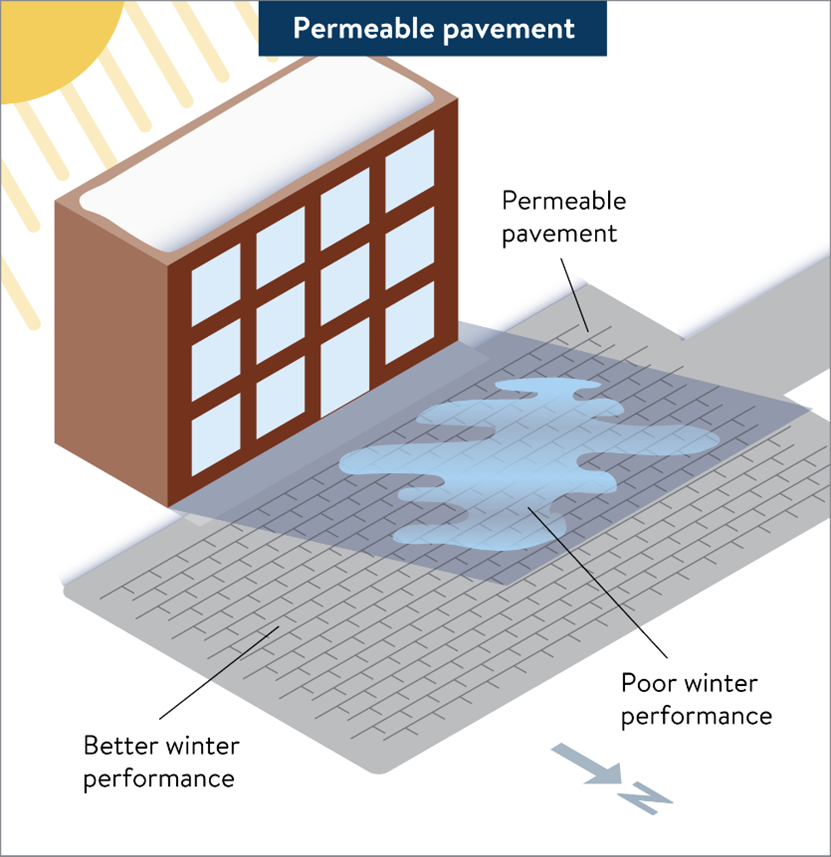
In areas where alternative pavements are already used to solve other design problems such as rainwater management (i.e., permeable pavers to increase stormwater infiltration), look at where they are located and how those locations might be optimized to include a winter benefit. Permeable surfaces located in the sun provide year-round benefits. Permeable surfaces in the shade will have much more limited winter benefits.
Benefits and Limitations
Permeable Surfaces
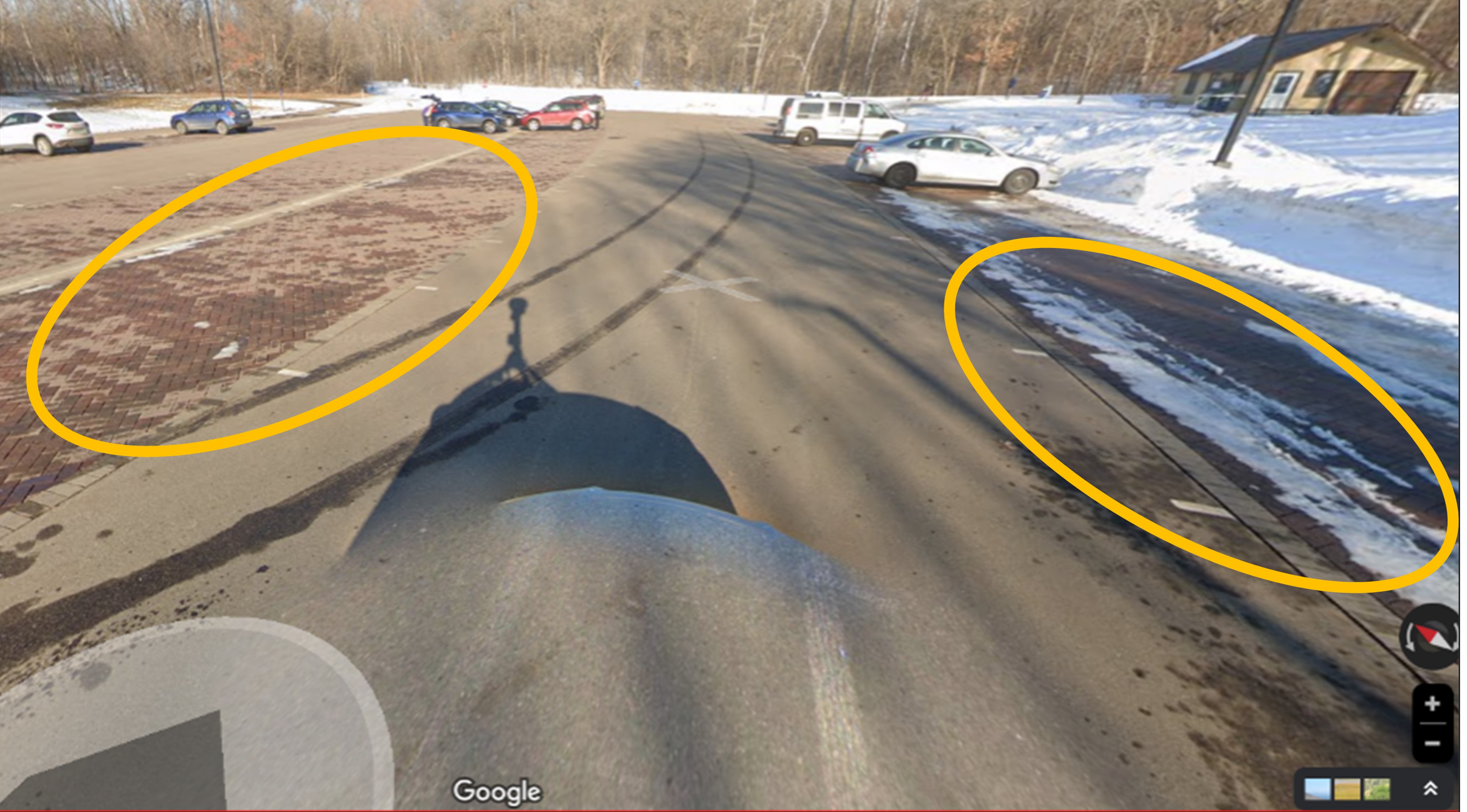
Permeable surfaces can increase their usefulness in the winter if placed in the sun. In the image below, the permeable pavers on the left are in the sun and perform well in winter. Pavers on the right are in the shade and have reduced winter performance.
Heated Surfaces
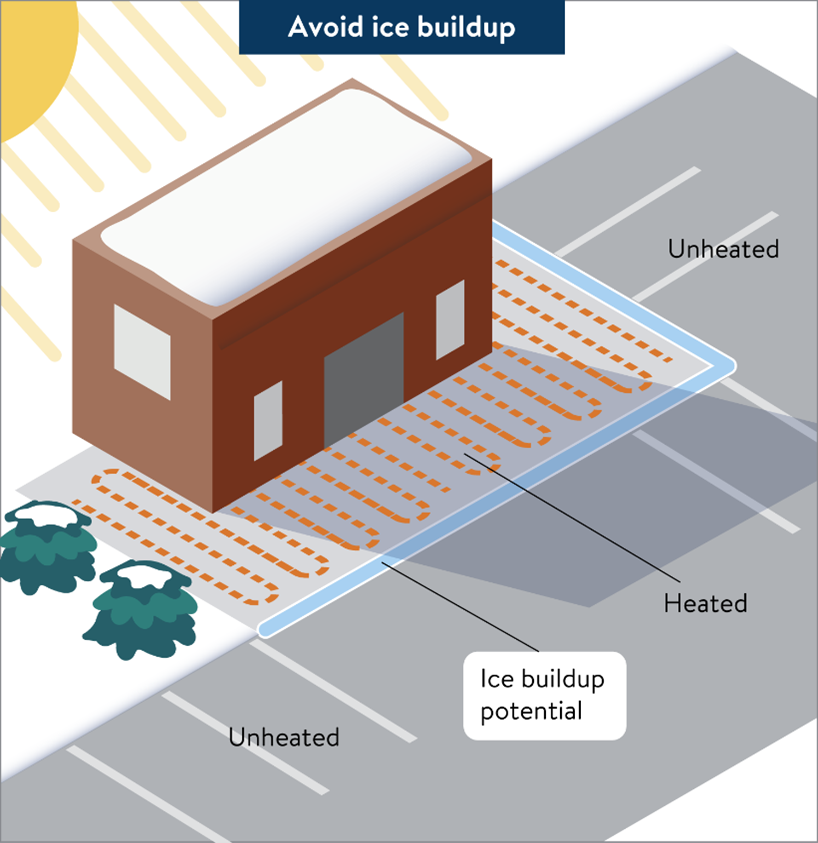
Heated pavements can drive up energy use. Yet heated pavements can drive up safety, reduce the need for salt use, and reduce salt tracking into buildings. They may be a consideration for critical areas such as main entrances of buildings.
Small scale research has been conducted on the use of heated surfaces such as conductive concrete and solar panels for road and sidewalk surfaces.
Design Criteria and Considerations
Optimize four-season use of permeable surfaces by installing them in sunny areas.
For heated pavements, pay attention to the heated/unheated interface when it occurs on saltable surfaces. Design a route for meltwater to flow to avoid creating an ice dam at the interface.
Retrofit suitability
Small-scale retrofits of existing surfaces such as high-use building entrances, loading ramps, underground parking ramps, or first responder exits/entrances with heated pavement would improve safety and may provide a good return on investment, especially on the north side of a building and in the low spots. Consider the shortened life of infrastructure that experience high salt use, the indoor tracking of salt, and the maintenance worry of these winter safety problems.
Potential conflicts
Heated pavements can create higher energy use. Whenever possible consider using waste heat for heated pavements. Heated pavements can drive up safety, reduce salt tracking into buildings and drive down the need for salt.
Newer technologies in heated pavements have had less use, less testing, and many unknowns compared to traditional asphalt and concrete. The installation and testing of heated pavements would help to increase familiarity, better understand potential solutions, and to continue to push forward to a better winter solution.
Permeable surfaces designed for summer stormwater management may not be consider sun exposure. By relocating permeable surfaces to areas in the winter sun, the design for precipitation/stormwater management may become more complicated. Permeable surfaces designed with one season in mind, e.g., for summer stormwater management or for meltwater management, might not offer a four-season benefit.
Research needed
- What winter performance boost is expected if permeable surfaces are in the sun versus shade?
- Seasonal trade off in pavement design: Darker colored pavements retain more heat relative to lighter colored pavements. In summer months, heat retention in pavement may be undesirable, but during winter months it can aid pavement recovery.
Examples and resources
- City of Holland Michigan, reuse of waste heat for heated pavements: https://www.cityofholland.com/879/Snowmelt-System
- Solar panels as pavers for roadway/sidewalks: https://solarroadways.com/
- Self-heating electrically conductive concrete: https://prosper.intrans.iastate.edu/research/completed/self-heating-electrically-conductive-concrete-demonstration-project/
- Conductive asphalt: https://www.asme.org/topics-resources/content/conductive-asphalt-deices-itself