This section of the manual is currently under construction.
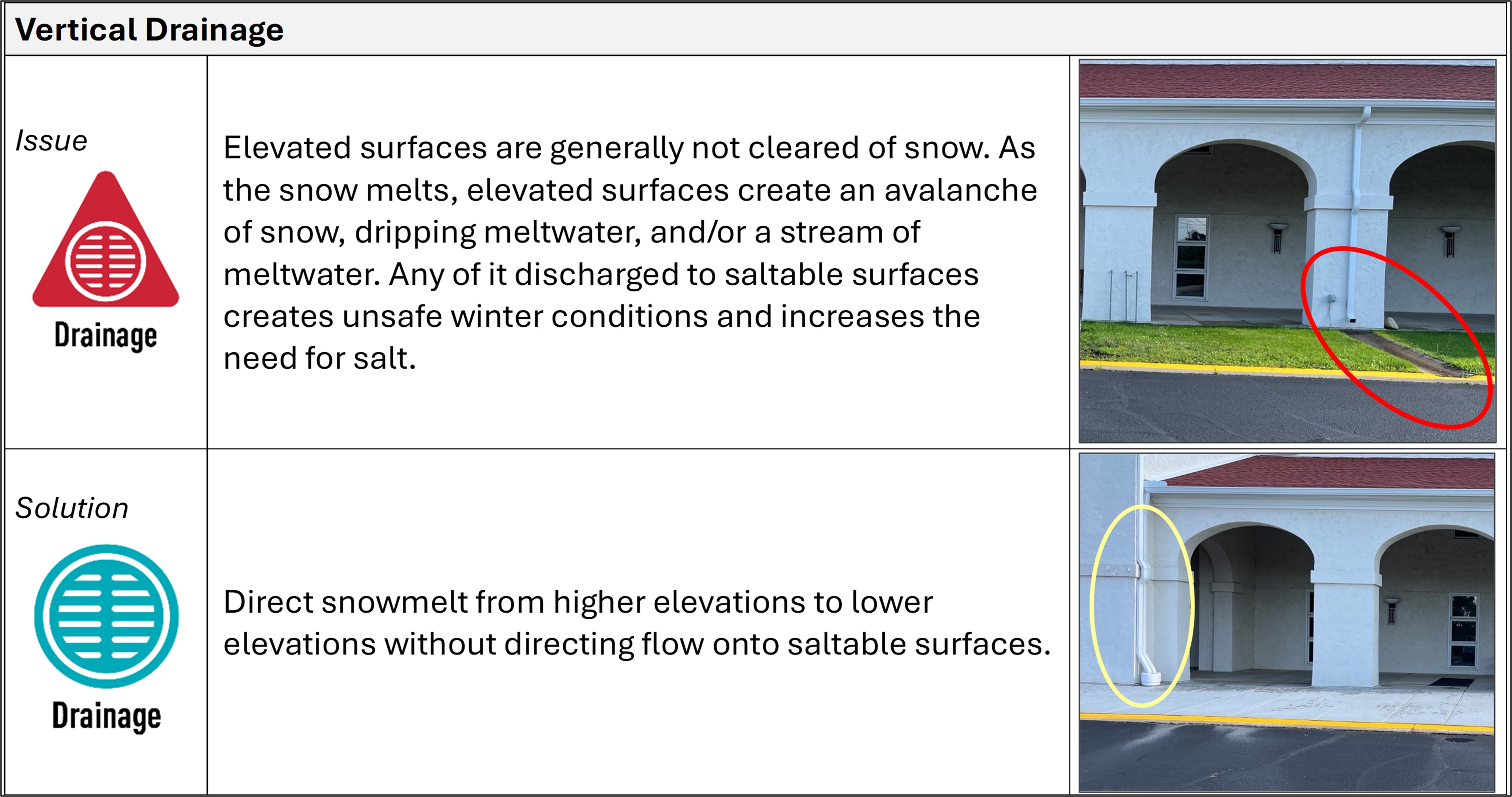
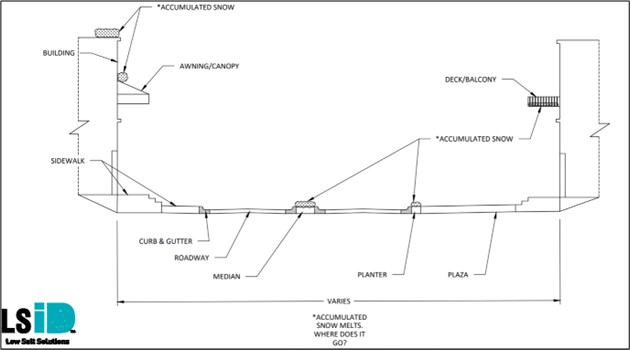
Vertical snowmelt is commonly associated with structures, trees, bridges, awnings, decks, and other elevated surfaces that collect snow can direct meltwater to saltable surfaces. Elevated surfaces are generally not cleared of snow. As the snow melts, elevated surfaces create an avalanche of snow, dripping meltwater, and/or a stream of meltwater. If discharged to saltable surfaces, melting snow and dripping meltwater can create unsafe winter conditions, accelerating the need for salt and increasing infrastructure damage.
Applicability
Controlling the meltwater path from elevated surfaces has two main challenges - flowing meltwater and dripping meltwater. These create similar level of winter hazard and need for salting but may involve unique considerations. Some sources of vertical meltwater drainage, like trees or decks, may be difficult to mitigate.
To minimize repeat salting due to vertical drainage:
- Design gutters and downspouts to direct flow away from saltable surfaces.
- Where disconnection of rooftops or other non-saltable, elevated surfaces is not possible, considering routing runoff to directly storm sewers to avoid contamination from salt or deicing chemical applied to pavements during winter months.
- Use retractable or seasonally removable awnings where possible.
- If awnings are low enough, remove snow from awnings when snow is removed from adjacent, saltable surface.
- Standardize awning depth, create a linear sidewalk dripline catch area (planting zone, linear drain, etc.)
Benefits and limitations
Benefit: Routing meltwater away from saltable surfaces can improve public safety by reducing ice formation. It can also extend infrastructure life because salt and deicing chemicals can corrode concrete and other building materials. Finally, routing meltwater away from saltable surfaces reduces the risk that meltwater will transport salt and deicing chemical to downstream conveyances.
Limitations: Winter safety issues from dripping awnings often conflict with a community’s desire for facade beautification. Safety is further complicated because each tenant along the same sidewalk can add structures that create drip-line hazards at different offsets, making slip/trip hazards along a shared sidewalk difficult to manage. It is not always feasible to route meltwater to a downstream conveyance without flowing across saltable surfaces. especially in areas with high impervious cover, (e.g., shopping centers, ultra urban areas).
Design criteria and considerations
Look up! Look at the entire site/corridor for vertical snow catches. Map out where the snowmelt will drain. Intercept the melt and route it away from saltable surfaces.
For snow catches like decks, avoid placing steps, sidewalks or parking lots under them. If sidewalks must run under decks, capture the meltwater and convey it away from a saltable surface.
Retrofit suitability
Low - High (see limitations above.)
Permits and regulations
Check local regulations for downspout placement and limitation on how to direct flow from downspouts.
Potential conflicts
Awnings
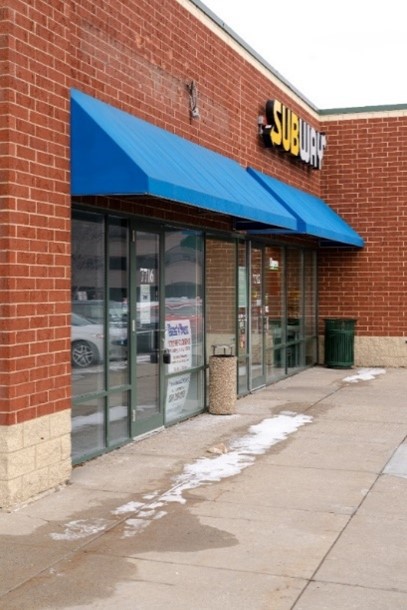
It is difficult to control meltwater from awnings. Awnings are often placed in critical areas such as high-use doorways and sidewalks. Awnings add beauty to the building facade but create winter danger and extra salting. Awnings on a stretch of sidewalk vary in height from the building down to the sidewalk, making a system-wide awning catch or retrofit nearly impossible to install.
If awnings are low enough to be reached by maintenance staff, the snow should be removed from the awning during the sidewalk snow removal process. Other possible strategies include:
- Restricting awning use in critical areas
- Requiring three-season use awnings that are retracted/removed in winter
- Capturing meltwater and routing it away from saltable surfaces towards vegetation or a drainage system
- Standardizing awning depth and creating a linear sidewalk dripline catch area (planting zone, linear drain, etc.).
Research needed
- Awning meltwater management
- What share of repeat salting events come from vertical drainage?