In Minnesota, our storm sewer systems carry water directly to our lakes, rivers, and wetlands. This water does not go to a treatment plant before entering our surface water. To maintain fishable, swimmable, and drinkable water and prevent pollution from entering our waterbodies, only stormwater should enter a storm sewer system. If anything else, such as oil, chemicals, or sediment, enters the system it is usually an illicit discharge. Minimum Control Measure (MCM) 3 of the MS4 General Permit requires permittees to develop and implement a program to detect and eliminate illicit discharges within their storm sewer system.
Contents
MS4 General Permit requirements for MCM 3
The illicit discharge detection and elimination (IDDE) program must include:
- A map of the MS4 that includes all pipes 12 inches or greater and their flow direction; outfalls, including the unique identifier and geographic coordinates; municipally owned or operated structural stormwater best management practices (BMPs); and all receiving waters.
- A regulatory mechanism to prohibit illicit discharges.
- Cities, townships, and counties must implement a pet waste regulatory mechanism.
- Cities and townships must implement a salt storage regulatory mechanism at commercial, institutional, and non-NPDES permitted industrial facilities.
- The incorporation of illicit discharge detection into all municipal operation inspection and maintenance activities, such as those conducted on ponds, outfalls, and other structural stormwater BMPs. These inspections should be conducted during dry weather, when possible.
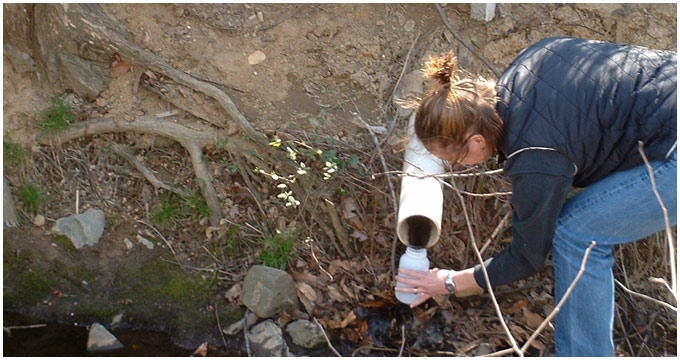
- Detecting and tracking the source of illicit discharges using visual inspections.
- Training of all field staff on illicit discharge recognition. Field staff includes, but is not limited to, police, fire department, public works, and parks staff.
- Identifying priority areas likely to have illicit discharges by evaluating land uses associated with business and industrial activities, areas where illicit discharges have been observed in the past, areas with storage of large quantities of materials that could result in an illicit discharge. These locations should have additional illicit discharge inspections. In addition, these areas need to be kept in a written or mapped inventory.
- Procedures for investigating, locating, and eliminating the source of illicit discharges.
- Spill response procedures. These procedures must include the requirement to notify the Minnesota Duty Officer.
- Enforcement Response Procedures to compel compliance with the illicit discharge prohibition regulatory mechanism.
- Documentation as required here.
Resources
Click on the blue links above in the "MS4 General Permit requirements" section to jump to the referenced section or page. Links to specific resources related to MCM 3 are listed below.
Fact sheets and guidance
Fact sheets and guidance documents should provide background information and tips to inform your approach to implementing MCM 3 - Illicit Discharge Detection and Elimination.
- EPA MCM 3 guidance - EPA guidance and suggested BMPs for an effective illicit discharge detection and elimination program
- EPA Illicit Discharge Fact sheet - EPA fact sheet on MCM 3
- Illicit Discharge Detection and Elimination A Guidance Manual for Program Development and Technical Assessments - EPA's manual on techniques to detect and correct discharges in municipal storm drains
- Tracking and Eliminating Illicit Discharges - Chesapeake Stormwater Network's archived webcast on how to track and eliminate illicit discharges
- Illicit Discharge Detection and Elimination Field Guide - Hampton Roads Planning District Commission's field guide on illicit discharge detection and elimination
Model language
Fill in the blanks and adopt ordinance language that meets the regulatory mechanism requirements for MCM 3 - Illicit Discharge Detection and Elimination.
- Pet Waste Ordinance Model Language - Model ordinance language for municipalities to prohibit pet waste
- Illicit Discharge Model Ordinance Language - EPA's model ordinance language for municipalities to prohibit illicit discharges and connections
Documentation and tracking templates
Documentation and tracking templates are examples that local stormwater staff are currently using to meet the MS4 General Permit requirements for MCM 3 - Illicit Discharge Detection and Elimination.
- Illicit Discharge documentation template - MPCA template to track the required information related to illicit discharges discovered or observed by municipal staff and reports (e.g. complaints, referrals) of illicit discharges received by the municipality
- Illicit Discharge documentation template - Empire Township's template to track the required information related to illicit discharges discovered or observed by municipal staff and reports (e.g. complaints, referrals) of illicit discharges received by the municipality
- Illicit Discharge documentation template - Minnesota State's (MnSCU) template to track the required information related to illicit discharges discovered or observed by staff
- Illicit Discharge documentation template - Minnesota State's (MnSCU) template to track reports (e.g. complaints, referrals) of illicit discharges
- Enforcement action documentation template - MPCA's template for documenting all enforcement actions used to compel compliance with your regulatory mechanisms
- Employee training tracking template - MPCA template to document all required information related to employee training events
Example procedures
Example procedures are those that local stormwater staff are currently using to meet the MS4 General Permit requirements for MCM 3 - Illicit Discharge Detection and Elimination.
- Procedure for Illicit discharge detection and elimination - City of Arden Hills' procedure for investigating, locating, and eliminating the source of illicit discharges
- Procedure for Illicit discharge detection and elimination City of Cloquet's procedure for investigating, locating, and eliminating the source of illicit discharges
- Procedure for responding to spills - City of Elk River's spill response procedure
- Enforcement response procedure - City of Red Wing's enforcement response procedure
Training tools
Below are examples, tools, or other resources to jump-start your illicit discharge detection and elimination training program.
- Good Housekeeping employee training example - The City of Columbia Heights' employee training presentation
- Annual MS4 employee training example - City of Owatonna's employee training presentation
- Illicit Discharge Staff Training - City of Big Lake's illicit discharge detection and elimination training presentation
- Illicit Discharge Identification Training video - North Central Texas Council of Governments' (NCTCOG) illicit discharge detection and elimination video - what to look for and where illicit discharges may be observed
- Illicit Discharge Detection and Elimination Training video - Minnesota Pollution Control (MPCA) illicit discharge detection and elimination training video
Checklists
These checklists can be used to meet the MS4 General Permit requirement for incorporating illicit discharge inspections into municipal inspections.
- Rain garden/bioretention basin inspection checklist - University of Minnesota's (U of M) checklist for inspecting bioretention systems, such as rain gardens
- Constructed wetland inspection checklist - U of M's checklist for inspecting constructed wetlands
- Dry pond inspection checklist - U of M's checklist for inspecting dry ponds
- Filter strips and swales inspection checklist - U of M's checklist for inspecting filter strips and swales
- Filtration system inspection checklist - U of M's checklist for inspecting filtration systems
- Infiltration system inspection checklist - U of M's checklist for inspecting infiltration systems
- Underground sedimentation inspection checklist - U of M's checklist for inspecting underground sedimentation devices
- Wet pond inspection checklist - U of M's checklist for inspecting wet ponds
- Permeable pavements inspection checklist - U of M's checklist for inspecting permeable pavers
- Outfall inspection checklist - City of Rochester's checklist for inspecting outfalls
- Outfall inspection checklist - City of Arden Hills' checklist for inspecting outfalls
- Stockpile and storage/material handling area inspection checklist - Minnesota State's (MnSCU) checklist for inspecting stockpiles and storage/material handling areas